
Small CNC Router: What to Look For and What to Buy
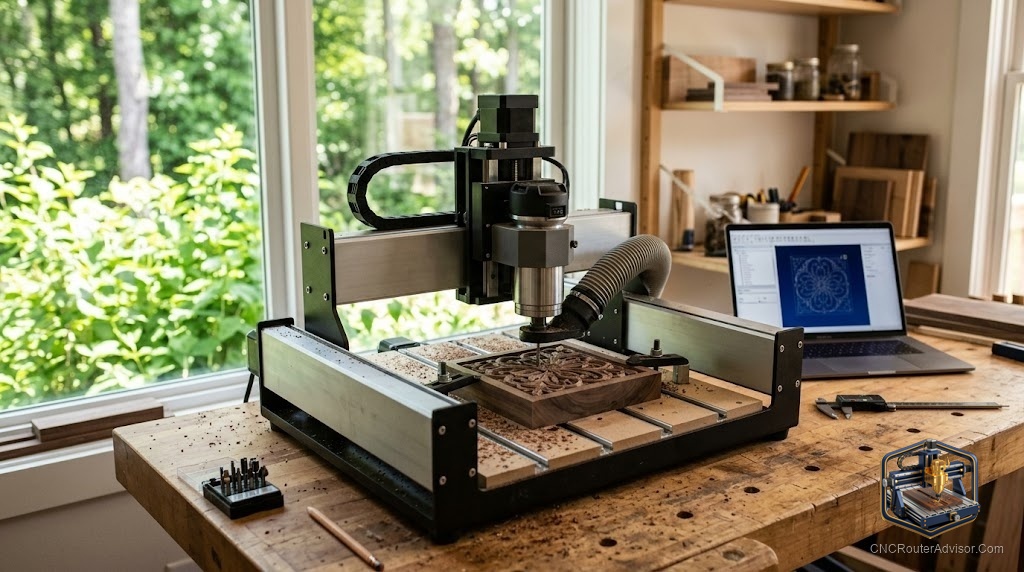
A small CNC router is the machine most people should actually start with, and the one many talk themselves out of because bigger sounds better. It is not. A small machine that fits your space, your budget, and your real projects will teach you more and frustrate you less than a large one you cannot properly house, power, or feed with work. The trick is knowing what “small” gives up and what it does not.
This guide covers what a small CNC router does well, the specs that matter at this size, and how to tell whether small is exactly right for you or a compromise you will regret.
What a small CNC router is
A small CNC router is a compact Computer Numerical Control machine, usually a desktop or benchtop unit, that moves a spinning cutter across the X, Y, and Z axes according to G-code to carve wood, plastics, and on rigid models, soft metals. Its defining trait is a modest work area and footprint, which is exactly what makes it fit a home, an apartment, or a corner of a shared shop.
That compact size is a feature, not just a limitation. A small machine is easier to house, quieter to live with, cheaper to buy, and simpler to learn on. What it gives up is the ability to cut large parts in one pass and, on the lightest models, some frame rigidity. The art of buying well at this size is getting the rigidity you need in the smallest package that still fits your actual projects.
The short answer
For a small CNC router, prioritize frame rigidity and a work area that matches your real parts, then confirm the software and support suit you. A compact machine with lead-screw or ball-screw motion cuts cleanly, and a stiffer small machine always beats a larger flimsy one for edge quality.
For learning and small parts, the Genmitsu 3018-PROVer V2 is the classic low-risk pick with a huge community: Check on Amazon . If you want a small machine that also handles aluminum, the ball-screw Genmitsu 3030-PROVer Ultra brings real rigidity in a compact frame: Check on Amazon
The specs that matter at small size
Rigidity above all
On a small machine, rigidity matters even more than headline work area. A light frame flexes under cutting forces, producing chatter and rough edges, while a stiff small frame gives clean cuts and tight detail. Weight is a useful clue, since a heavier small machine is usually the more rigid one.
Honest work area
Measure your typical parts before you buy. A small work area is perfect for signs, boxes, inlays, jewelry, and small components, and you can tile larger parts in sections. If most of your projects are big, though, a small machine will have you tiling constantly, so match the size to reality.
Motion and spindle
Lead-screw motion is common and reliable on small machines, while ball screws add stiffness and precision at higher cost. Many small routers use a trim router as the cutter, which is loud but proven, while some use a quieter VFD spindle. More power helps only if the frame can hold the tool steady, so rigidity and spindle should be matched.
How small machines compare
| Class | Best for | Trade-off |
| Compact starter | Learning, engraving, small parts | Light frame, small bed |
| Rigid small desktop | Cleaner wood detail | Higher cost, still small bed |
| Metal-capable compact | Wood plus light aluminum | Costs more, smaller area |
Living with a small machine
Two realities shape daily use. First, noise: a trim router in a home is loud, so plan when you can run it and wear hearing protection. Second, dust: even a small router throws fine dust, so a dust shoe with a shop vac plus eye and respiratory protection belong in your setup from the start. A small, inexpensive touch probe also saves time and prevents a common cause of ruined cuts by finding the top of your material automatically, which is especially handy on a machine where you change stock often.
Who should skip small
Skip a small CNC router if most of your work is large panels or furniture, since endless tiling will frustrate you and a bigger machine is the right answer. Skip the very lightest models if you already know you want clean hardwood joinery or metal, because a flimsy frame will fight you and a rigid small machine is worth the extra cost. And if you truly have the space, budget, and steady demand for larger parts, do not force small for its own sake. Otherwise, small is often the smart choice, not the compromise.
The verdict
A small CNC router is the right machine for most beginners and for anyone whose projects fit a modest bed, provided you buy for rigidity rather than the lowest price. It is easier to house, cheaper, quieter, and simpler to learn on, and a stiff small machine produces clean, precise work that belies its size. Add dust control and a touch probe, choose the size your real parts need, and a small router earns its bench space for years. Big is not better. Right-sized is better, and for a great many makers that means small.
Buy the machine that fits your space and your actual work, and you will use it far more than a large one gathering dust.
Frequently asked questions
Is a small CNC router good for beginners? Yes. Small machines are cheaper, quieter, easier to house, and simpler to learn on, which makes them an ideal first machine for most people.
What can a small CNC router make? Signs, boxes, inlays, jewelry, and small components, plus light aluminum on rigid models. Larger parts can be tiled in sections with careful alignment.
Is a small machine rigid enough for hardwood? A stiff small machine cuts hardwood cleanly, while a light frame flexes and chatters. Prioritize rigidity over work area for good detail in hardwood.
Can a small CNC router cut metal? Rigid compact machines with ball screws and a real spindle cut soft metals like aluminum. Light entry machines only nibble it slowly.
How loud is a small CNC router? Machines using a trim router are loud, so plan your timing and wear hearing protection. Some models use a quieter VFD spindle at higher cost.
Should I buy small or size up? Buy small if your parts fit a modest bed and space or budget is limited. Size up only if most of your work is genuinely large and you can house and feed a bigger machine.
References
- CNCRouterInfo, how to choose a CNC router: https://cncrouterinfo.com/guides/how-to-choose-a-cnc-router/
- CNC Dad, best CNC router for beginners: https://www.cnc-dad.com/blog/best-cnc-router-for-beginners/
- Genmitsu / SainSmart machine specifications: https://www.sainsmart.com