CNC Router Services Near Me: How to Compare Local Options
At some point almost everyone interested in CNC types “cnc router services near me” into a search bar. The reason is usually one of two things. Either you have a part you need cut and no machine to cut it, or you are shopping for a machine and want to see, touch, and maybe buy one locally rather than trusting a photo online. Both are smart instincts, and both deserve a clear way to compare what you find.
This guide sorts out what local really offers, when it beats buying online, and how to judge a nearby shop or dealer so you do not overpay or end up with the wrong machine.
What “CNC router services near me” can mean
The phrase covers two different needs. The first is a cutting service, a local shop that owns a CNC router and will cut your parts for a fee. You bring a design or a rough idea, and they produce finished pieces. The second is a local dealer or supplier, a business that sells machines and often provides setup help, training, and after-sale support you can reach in person.
Both revolve around the same machine. A CNC router uses Computer Numerical Control to move a spinning cutter across the X, Y, and Z axes, guided by G-code, to carve wood, plastics, and soft metals. Whether you hire someone who owns one or buy your own, the questions you ask are similar: how rigid is the machine, how large is the work area, what materials can it handle, and how good is the support behind it.
The short answer
Use a local cutting service when you need a few parts, a large part your own machine cannot handle, or a material you are not set up for. Buy from a local dealer when in-person support and training matter more to you than the lowest price. Buy online when you want the widest selection and the best value and you are comfortable setting the machine up yourself.
For most hobbyists who expect to make parts regularly, owning a machine quickly beats paying per job. A capable desktop router such as the Genmitsu 4040-PRO covers a huge range of projects and pays back fast if you cut often: Check on Amazon . If you only need occasional parts, a local service is the cheaper and simpler choice.
When a local cutting service makes sense
Hiring a shop to cut your parts is the right call more often than hobbyists admit. If you need a one-off part, a service saves you the cost and learning curve of a machine. If your part is larger than any machine you could reasonably own, a shop with a large-format router solves it in one pass. And if the material is difficult or messy, letting an equipped shop handle it spares you the setup.
When you approach a service, come prepared. A clear drawing with real dimensions, the material you want, and the quantity you need let them quote accurately. Ask what file formats they accept, what their tolerance is, and what the turnaround looks like. A good shop will tell you plainly whether your design is practical or needs changes before cutting.
When buying local beats buying online
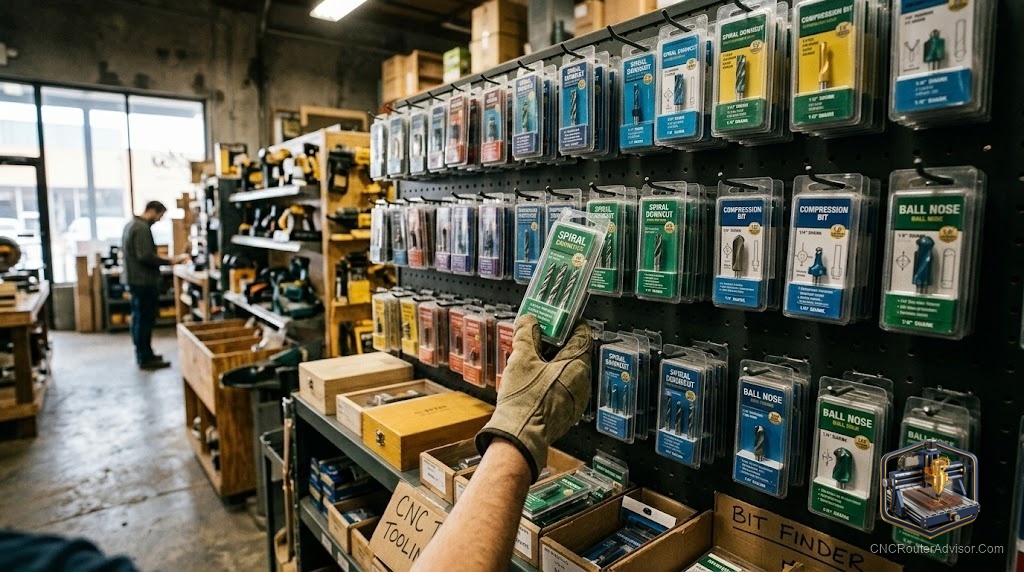
A local dealer earns its keep through support. Being able to see a machine run, ask questions face to face, and reach a human when setup goes sideways has real value, especially for a first machine. Some dealers include training or a setup session, which can shorten your path to a working machine considerably.
The tradeoff is selection and value. Local dealers stock fewer models and rarely match online value, since they carry the cost of a storefront and staff. If in-person help is worth that difference to you, buy local. If you are confident with assembly and setup, online selection is hard to beat.
How to judge what you find nearby
| What to check | Why it matters |
| Machine rigidity and size | Determines cut quality and the parts they can make |
| Materials handled | Confirms they can cut your specific material |
| Tolerance and finish samples | Shows real quality, not just claims |
| Turnaround and minimums | Tells you if small jobs are welcome |
| Support and training (dealers) | The main reason to pay a local premium |
Ask to see finished samples in person. A shop proud of its work will happily show you edges, joinery, and carving. For a dealer, ask specifically what happens when you get stuck during setup, since that answer separates a real support relationship from a simple sale.
Who should skip local and just buy online
If value and selection matter most and you enjoy setting things up yourself, a local dealer rarely competes with online options, and there is no shame in buying a well-supported machine online and joining its community for help. Likewise, if you plan to make parts regularly, paying a service per job gets expensive fast, and owning even a modest machine soon costs less than repeated orders. Do the simple math on how many parts you expect to make before committing to a service relationship.
The verdict
“CNC router services near me” leads to two good answers depending on your goal. For occasional parts, large pieces, or difficult materials, a local cutting service is the sensible, low-commitment choice. For a first machine where hands-on support matters, a local dealer can be worth a premium. But if you cut often or value selection and value, owning a machine bought online usually wins, since it pays back quickly and puts the capability permanently in your own shop.
Decide based on how often you will actually cut. That single honest estimate tells you whether to hire, buy local, or buy online.
Frequently asked questions
Is it cheaper to use a CNC service or buy my own machine? For occasional parts, a service is cheaper. If you cut regularly, owning even a modest machine soon costs less than repeated per-job fees.
What should I bring to a CNC routing service? A clear drawing with real dimensions, your chosen material, and the quantity you need. Ask about accepted file formats, tolerance, and turnaround.
Are local dealers worth more than online sellers? They are if you value in-person support and training for a first machine. Online sellers usually win on selection and value for confident buyers.
How do I judge the quality of a local shop? Ask to see finished samples in person and check edges, joints, and carving. Confirm the materials they handle and their typical tolerance.
Can a local service cut metal parts? Some can, depending on their machines. Confirm they have a rigid, metal-capable router before committing, since not every wood shop is set up for aluminum.
Should I buy my first machine locally? If face-to-face setup help matters to you, yes. If you are comfortable assembling and troubleshooting, a well-supported online machine offers more choice and better value.
References
- CNCRouterInfo, how to choose a CNC router: https://cncrouterinfo.com/guides/how-to-choose-a-cnc-router/
- CNC Dad, best CNC router for beginners: https://www.cnc-dad.com/blog/best-cnc-router-for-beginners/