
Baileigh CNC Router Review: Features, Limitations, and Alternatives
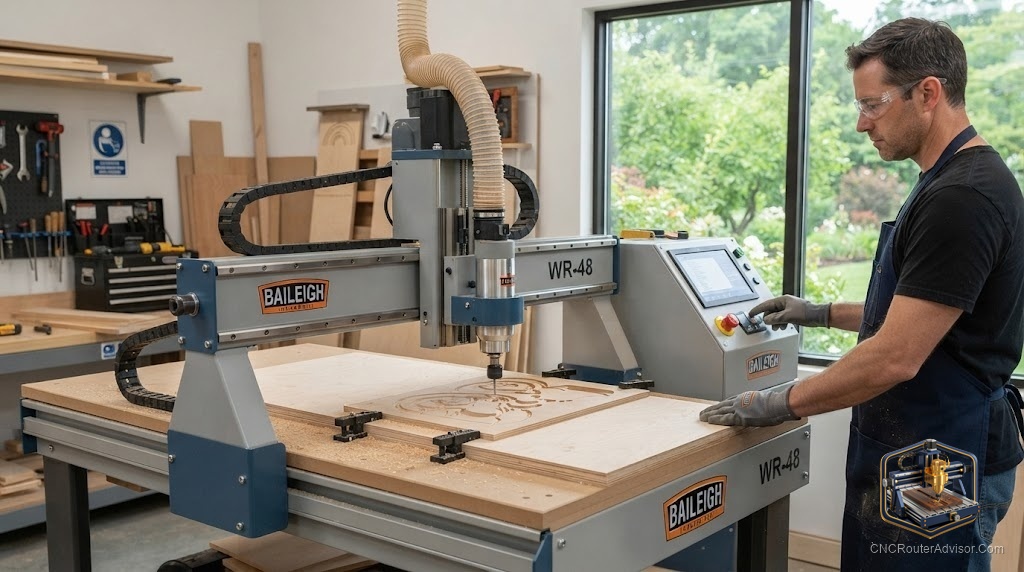
Baileigh Industrial built a solid reputation for heavy-duty metalworking and woodworking machinery - and its WR-series CNC routers were part of that. But there’s an important development every prospective buyer needs to know before shopping, so this review covers what the machines are, how they performed, that key update, and the alternatives worth considering.
What Baileigh CNC routers are
Baileigh Industrial (founded 1999, based in Manitowoc, Wisconsin, part of JPW Industries) built industrial-grade CNC router machines in its WR series - including the WR-84V (a 4’×8’-class machine), the larger WR-105V, and the smaller WR-32. In Baileigh’s naming, the numbers reflect the table size in feet, “V” denotes a vacuum table, and ATC models add an automatic tool changer. These were welded-steel, floor-standing production machines aimed at professional shops.
The important update: discontinued line
Here’s the key thing to know up front: Baileigh has discontinued its woodworking equipment line, including the WR-series CNC routers. The company has refocused on its metalworking machinery, and new WR routers are no longer being sold - though Baileigh has indicated ongoing parts and support for existing machines. If you’re shopping, that means new Baileigh routers generally aren’t available, and any you find will be existing inventory or used units. Factor parts and support longevity into any purchase decision.
What the WR routers did well
When in production, the WR series had real strengths:
- Industrial build. Welded steel frame construction for strong frame rigidity and heavy-duty cutting.
- Vacuum hold-down. “V” models included vacuum tables for efficient full-sheet workholding.
- Production features. ATC models offered automatic tool changing for multi-tool jobs.
- Backed by an industrial brand. Baileigh’s reputation, warranty, and support network (for supported products).
- Full-sheet capacity. The WR-84V and WR-105V handled full and oversized sheets for production work.
The limitations to weigh
- Discontinued. The biggest factor - no new machines, and long-term parts/support to verify.
- Industrial commitment. Footprint, power (often 3-phase), dust collection, and vacuum systems required.
- Not for hobbyists. These were professional production machines, not benchtop routers.
- Resale considerations. Any purchase now is essentially used/legacy - inspect carefully and confirm support.
Who it was for - and what to do now
The WR series suited professional shops needing full-sheet industrial routing. Today, with the line discontinued, most buyers should either (a) buy used only after thorough inspection and confirmed parts support, or (b) look to current alternatives - whether another industrial brand for full-sheet production, or a smaller machine for hobby and small-shop work.
Alternatives to consider
For hobby, small-shop, and prosumer needs, these ready-to-run machines are available now:
- The all-metal, ball-screw AnoleX 4030-Evo Ultra 2 for compact precision and metal capability.
- The OCASAMI 6090 router or Axiscreat A6060 for a larger spindle-driven work area.
- The Genmitsu 3020-PRO MAX V2 for an affordable, proven desktop machine.
For genuine full-sheet industrial production, look to a current industrial router brand with active support.
The bottom line
Baileigh’s WR-series CNC routers were well-built, industrial full-sheet machines - but the company has discontinued its woodworking line, so new units generally aren’t available and support longevity must be confirmed. If you find a used one, inspect it thoroughly and verify parts. For most buyers today, a current ready-to-run machine (for hobby and small-shop work) or an actively supported industrial router (for full-sheet production) is the smarter path.
Frequently asked questions
Are Baileigh CNC routers still made? No - Baileigh has discontinued its woodworking equipment line, including the WR-series routers, and refocused on metalworking. Parts and support for existing machines have been indicated, but new machines generally aren’t sold.
What did the WR model numbers mean? Table size in feet (e.g., WR-84V ≈ 4’×8’), with “V” for a vacuum table and ATC denoting an automatic tool changer.
What should I buy instead? For hobby/small-shop work, ready-to-run machines like the AnoleX 4030-Evo Ultra 2, OCASAMI 6090, Axiscreat A6060, or Genmitsu 3020-PRO MAX V2; for full-sheet production, a currently supported industrial router brand.