
4 by 8 CNC Router: What Full-Sheet Capability Really Costs and Demands
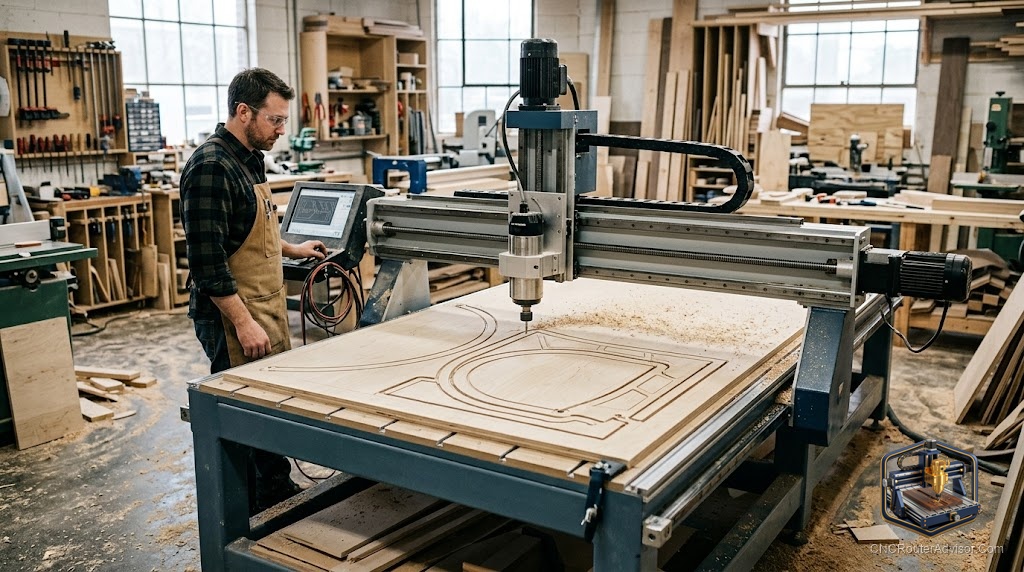
You load a full 4x8 sheet of 3/4-inch plywood and run 14 cabinet parts in one nested setup. When the dust settles an hour later, you have a complete cabinet box cut to dimension, labeled with part numbers engraved into the waste area. That’s the real production case for a 4 by 8 CNC router. It’s not a hobbyist machine. It’s the bottom end of production shop equipment, and the infrastructure it requires reflects that.
A 4 by 8 CNC router has a 4-foot by 8-foot cutting area, matching a standard plywood sheet. This format is the entry point for production cabinet shops, sign fabricators, and furniture manufacturers who cut sheet goods at volume.
The direct answer: entry-level 4x8 production machines include the Avid CNC PRO4896, ShopBot Desktop MAX, and Camaster Stinger series. All require a dedicated space, proper dust collection, a vacuum table for sheet workholding, and a VFD spindle of 2.2kW or more. These are not machines you set up on a workbench.
What Changes at the 4x8 Format
Space: A 4x8 machine occupies roughly 6x12 feet of floor space including clearance for sheet loading. Budget a dedicated shop area, not a shared bench.
Weight: Production 4x8 machines weigh 300 to 2,000+ lbs. Proper floor support and routing for the machine’s power supply are part of installation.
Workholding: Tape and clamps don’t scale to 4x8. A vacuum table with zone valving is the production standard. The vacuum pump (typically 2 to 5 HP) is a significant additional investment.
Dust collection: Full-sheet production generates significant chip volume. A shop-grade dust collector (4-inch minimum intake) is required.
Spindle: 2.2kW minimum. 3kW to 4kW for routing thick hardwood or dense sign foam at production speeds.
Machine Options
Avid CNC PRO4896: Rack-and-pinion X/Y, ball screw Z, NEMA 23/34 or servo options, CNC12 controller. Built in the US, well-supported, scalable. The most popular choice in the high-end hobbyist to light-production segment.
ShopBot Desktop MAX: American-made, well-established in the woodworking community. Good CAM software integration and support.
Camaster Stinger series: Dedicated furniture and cabinet shop machines. Heavier construction, designed for production cycles.
Concrete flaw for all: These are significant capital investments. Evaluate running cost (vacuum pump power, bit consumption, spoilboard replacement) alongside upfront cost before committing.
Verdict
A 4x8 CNC router is a production tool, not a hobbyist upgrade. The capability is real and transformative for cabinet and sign shops. The investment (machine, vacuum, dust collection, space) is proportional. Evaluate the business case before purchase.
- 4x8 format = production cabinetry, sign fabrication, sheet goods nesting
- Vacuum table and proper dust collection are required, not optional
- 2.2kW minimum spindle; 3 to 4kW for production speeds
- Avid CNC PRO4896, ShopBot, and Camaster are the main options at entry production level
FAQ
What is a 4x8 CNC router? A CNC router with a 4-foot by 8-foot cutting area, matching a standard plywood sheet. The entry format for production cabinet and sign shops.
Do I need a vacuum table for a 4x8 CNC router? For production sheet work, yes. Clamps are inadequate for securing full sheets during routing. A vacuum table with zone valving is the production standard.
What spindle power does a 4x8 machine need? 2.2kW minimum for woodworking. 3kW to 4kW for production routing in thick hardwood or dense sign materials.
How much space does a 4x8 CNC router need? Approximately 6x12 feet of floor space including sheet-loading clearance. A dedicated shop area, not a shared bench.
References
- Avid CNC PRO4896: avidcnc.com
- ShopBot Desktop MAX: shopbottools.com
- Camaster Stinger: camaster.com