
3-Axis CNC Router Price Guide: What Drives Cost at Every Tier
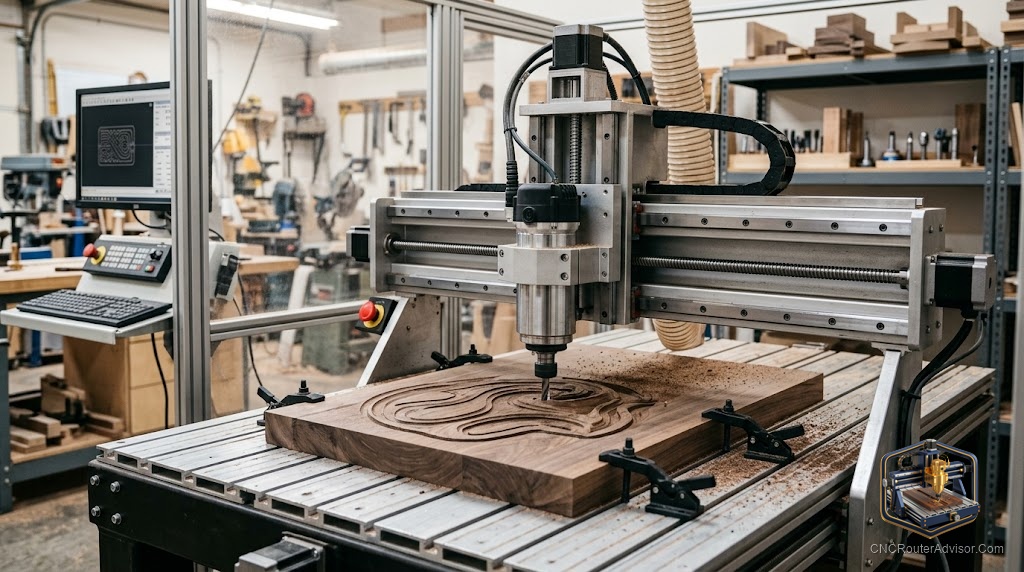
A 3-axis CNC router can cost $200 or $200,000, and both of those numbers describe real machines that are genuinely useful to someone. The difference is not in the axis count - they are both three-axis machines - it is in every other variable: work area, frame construction, drive system, spindle power, controller sophistication, vacuum table, automatic tool changer, and the service infrastructure that comes with the purchase. Understanding what each of these variables costs and what it buys is the framework that lets you evaluate a machine’s price against its specifications rationally, rather than comparing numbers without context.
A 3-axis CNC router’s price is determined by the combination of: work area size, drive system type and quality, frame construction, spindle specification, included accessories (vacuum table, ATC), controller and software, and the service and support infrastructure provided by the seller. Each of these has a measurable impact on the machine’s production capability and total cost of ownership. The acquisition price is only one input into total cost of ownership; service availability, downtime costs, and tooling investment are the others.
The short guide: do not optimize exclusively for the lowest acquisition price. A machine that costs less but has belt drive instead of ball screw, an undersized spindle, or no service support often costs more in total than a better-specified machine at a higher entry price, once you account for limitations, repairs, and frustrated hours. Optimize for the specification that matches your work at the best total cost of ownership.
What each specification adds to the price
Work area. Larger machines cost more. A 12×12 inch machine is fundamentally less expensive than a 4×8 machine because the structural materials, drive hardware, vacuum pump, and servo/stepper motors scale with work area. Buy the work area your work genuinely needs; excess capacity costs money and occupies floor space.
Drive system. Ball screws cost more than rack-and-pinion, which costs more than lead screws, which costs more than belt drive. At any given work area, the drive system has a significant impact on machine price. Ball screw adds cost because the screws, anti-backlash nuts, and careful alignment all add precision manufacturing cost. The premium is real and the performance benefit is real.
Frame construction. Welded steel gantry and frame costs more to manufacture than bolted extrusion frames. The rigidity premium is most valuable on machines with large work areas running production loads. On small desktop machines where cutting forces are modest, the premium may not be justified.
Spindle. A 3.2kW Italian HSD spindle costs more than a 2.2kW Chinese domestic spindle costs more than a trim router. The spindle adds cost through bearing quality, power rating, and manufacturing precision. For production duty, the premium spindle cost is amortized across more hours of reliable running before bearing replacement.
Vacuum table and pump. Adding vacuum table hold-down to a machine adds the pump cost, the table construction, and the zone valving. For production sheet goods, this is essential; for occasional use, it is optional.
ATC (automatic tool changer). The ATC adds significant cost - the carousel mechanism, the ISO/BT30 spindle interface, and the controller integration all add cost. The payback is in operator time saved on multi-tool programs.
Service infrastructure. A machine from a manufacturer with domestic service, spare parts availability, and an active user community is worth more than the same specification from a manufacturer without support, because when something breaks the cost difference inverts rapidly.
Price ranges by class (as of 2025 market conditions)
Market prices change constantly. Rather than cite specific numbers, the relative pricing by class holds:
- Entry desktop hobby (3018, 12×12): Entry tier
- Prosumer desktop (24×24 to 24×48): Moderate tier
- Production prosumer (4×8 domestic brand): Mid-tier
- Commercial (1325 import with US distribution): Mid to upper tier
- Industrial (1530, 2550, large-format with ATC): Upper tier
Research current pricing from specific manufacturers directly, as prices vary with supply chain conditions, tariffs, and exchange rates.
For tooling investment, budget the Amana Tool 46170-K, Whiteside RD2100, and SpeTool downcut as the core production bit investment for any mid-size or larger machine.
Our guide on how to choose a CNC router covers the complete specification and value framework.
The takeaway: 3-axis CNC router price reflects the combination of work area, drive system, spindle, frame, accessories, and service. Each premium specification has a real benefit. Match the specification to your work requirements and evaluate total cost of ownership, not just the sticker price.
Frequently asked questions
Why do two 3-axis CNC routers with the same work area have very different prices? Drive system type, spindle quality, frame construction, accessories (ATC, vacuum table), and service infrastructure all vary within the same nominal format and each has significant cost impact.
Is a cheap belt-drive CNC router worth buying? For light hobby use at small work areas, yes. For production use or larger work areas, the belt drive’s limitations make it a poor value compared to a better-specified machine.
What is the most cost-effective 3-axis machine for production cabinet work? A well-specified 1325-format machine from an established importer with US service support is typically the best cost-per-capability option for production cabinet production.
Does buying used save money overall? Frequently yes, when the mechanical condition is good. The savings are real; the risk is in the inspection. A thorough pre-purchase inspection eliminates most used-machine risk.
What tooling should I budget for alongside a new CNC router? Compression spiral, downcut spiral, V-bit, spoilboard surfacing bit, and a starter pack of collets for your machine’s size. Budget this as part of the machine purchase, not an afterthought.
How much does service infrastructure affect total cost of ownership? Significantly. A machine with no service support that requires a week of downtime and significant repair cost for a failed driver board costs more in total than a better-supported machine at a higher acquisition price.
References
- Avid CNC, machine pricing and specifications — https://www.avidcnc.com/
- ShopSabre, CNC router pricing — https://www.shopsabre.com/
- CNC Router Info, machine evaluation and pricing guide — https://cncrouterinfo.com/guides/how-to-choose-a-cnc-router/