
STV CNC Router Buying Guide: What It Is and What Buyers Should Know
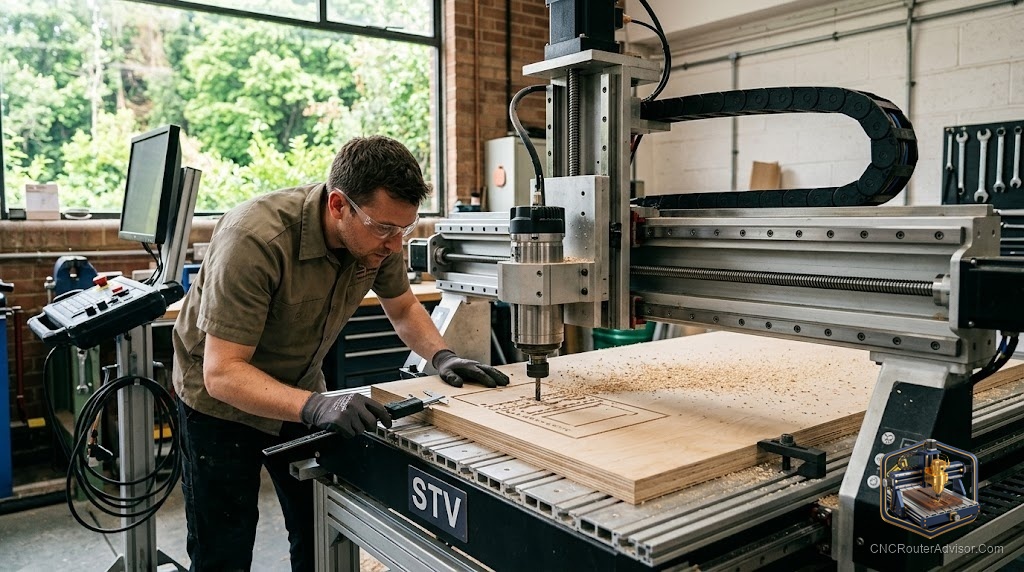
Searching for an STV CNC router surfaces a confusing mix of results because “STV” is not a single established brand with a consistent product line in the CNC market. It appears as a label on various small CNC routers sold through import channels, sometimes as a model designation and sometimes as a brand abbreviation. Before spending money on a machine sold under this name, understanding what you are actually looking at, and what questions to ask, is more valuable than any spec sheet.
The name “STV” in the CNC router space refers to machines sold under that label primarily through direct import and marketplace channels, typically desktop-class CNC routers in the compact to medium-size range. These are usually value-market machines in the same product category as other Chinese-manufactured desktop routers, and their quality, support, and specifications vary significantly depending on the specific listing, seller, and configuration.
The short buying guide: evaluate any machine sold as an STV CNC router on its specific specs (frame material, drive system, spindle, controller), the seller’s return and support policy, and the availability of documentation in your language, rather than on the brand name alone. A machine is a machine; the name on the box matters far less than what is inside it and who stands behind it.
How to read any desktop CNC router listing honestly
Because STV is not a single manufacturer with a standardized product, the buying guidance applies to evaluating the specific machine in front of you, using principles that apply to any direct-import desktop CNC router.
Frame material and construction. Aluminum extrusion is the standard for desktop machines and acceptable for light work. A steel frame adds rigidity. A flimsy plastic frame is a red flag regardless of the brand name.
Drive system. Belt drive is the most common on entry machines: affordable and fine for wood and plastic, less accurate than lead screws. Lead screws improve accuracy modestly. Ball screws on a desktop machine at this price are unusual and worth verifying.
Spindle. A trim router (like a 300W to 500W brushed motor) is standard entry-level. Check wattage against what the spindle will actually deliver under load, because headline numbers can be optimistic on low-cost machines.
Controller and software. What controller does it use? GRBL-based boards are the most common and most broadly supported, with free sender software and a large community. Proprietary controllers limit your software options and community support.
Work area. Verify the actual cutting area, which is usually smaller than the machine’s overall footprint, and confirm it matches the projects you have in mind.
What to demand from the seller
For any import-channel machine, the seller’s support quality is often more important than the machine’s specs. Before buying, confirm:
- Return or replacement policy if the machine arrives damaged or non-functional
- Whether documentation (assembly instructions, wiring diagrams) is available in English
- Whether replacement parts (limit switches, stepper drivers, spindle collets) are available separately
- Whether the seller or any community forum can answer basic setup questions
A machine with known spare parts availability and an English-language community of owners is far more valuable than an identical machine with no documentation and an unresponsive seller. The hobby CNC community on Reddit (r/hobbycnc and r/CNC) is a good place to search for any machine by name or model before buying, because owners share honest experiences.
How it compares to better-known desktop machines
The direct competitor class for machines sold as STV CNC routers is the wide category of Chinese-manufactured desktop CNC routers, including well-documented brands like Genmitsu (SainSmart), RATTMMOTOR, and others with established US seller presences and English documentation. For a buyer choosing between an obscure label and a better-known name in the same price range, the better-known option usually wins on documentation, parts availability, and community support, even if the underlying hardware is similar.
For a step up from bare-kit machines with real convenience features included, the Genmitsu 3018-PROVer V2 is a well-documented option with limit switches, a Z-probe, and emergency stop at a competitive price, sold through Amazon with clear return policies.
Our guide on how to choose a CNC router walks through the spec-by-spec evaluation for any desktop machine.
The takeaway: the STV name tells you less than the specs tell you. Evaluate the frame, drive, spindle, and controller. Evaluate the seller. Buy from a channel with documentation and support. Those decisions matter far more than which three letters are printed on the box.
Frequently asked questions
Is STV a reliable CNC router brand? STV does not correspond to a single established manufacturer with a track record. Evaluate any machine sold under this label on its specific specs, seller support, and documentation availability.
What drive system do STV CNC routers use? Typically belt drive or lead screw, depending on the specific model. Verify the specific listing’s specs.
What software works with an STV CNC router? Most use a GRBL-based controller, which is compatible with widely available free sender software like UGS, Candle, and LaserGRBL.
What is a better-known alternative at the same price? Genmitsu (SainSmart), RATTMMOTOR, and FoxAlien are better-documented desktop CNC brands with English-language support communities and known Amazon seller policies.
What should I check before buying any import-channel CNC router? Frame material, drive system, spindle type and power, controller board, work area, seller return policy, and parts availability.
Can an STV CNC router cut aluminum? Light aluminum work is possible with the right bit and conservative settings on a rigid desktop machine, but verify the frame and spindle specs for the specific model before attempting it.
References
- Reddit r/hobbycnc, import CNC router buyer discussions — https://www.reddit.com/r/hobbycnc/
- CNC Router Info, desktop CNC buying guide — https://cncrouterinfo.com/guides/how-to-choose-a-cnc-router/
- CNC Dad, “Best CNC Routers for Beginners” — https://www.cnc-dad.com/blog/best-cnc-router-for-beginners/