
CNC Hand Router: Buying Guide, Prices, Features, and What to Check
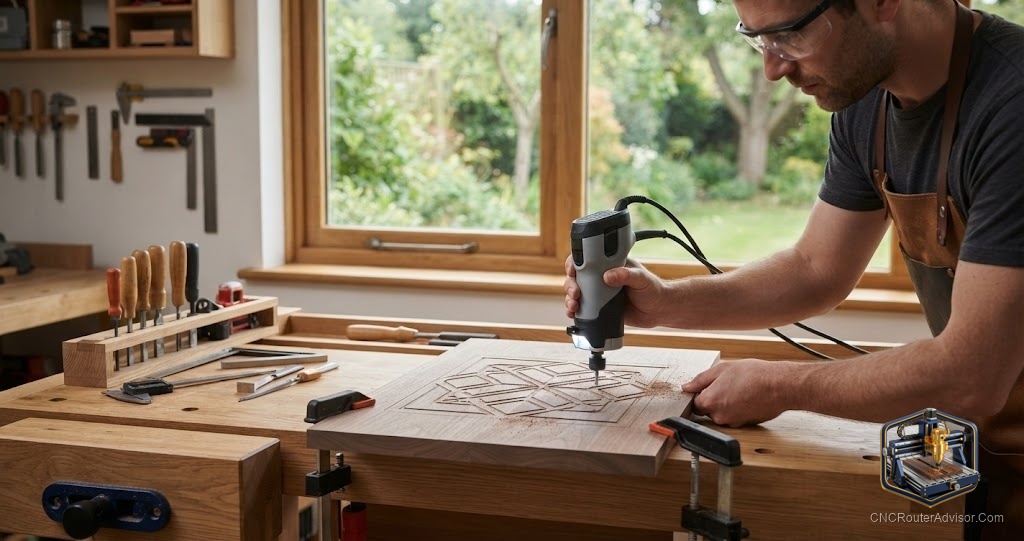
A CNC hand router, sometimes called a handheld CNC device, takes a different approach from a fixed-bed router: instead of the material staying still and the machine moving over it, a compact CNC-guided router moves over the material or follows a defined path while you guide it. The most prominent example of this approach is the Shaper Origin, which uses computer-guided movement and a vision system to keep cuts precisely on the intended path even as the operator moves the tool. This buying guide explains how handheld CNC routers work, the features to consider, and what to check before buying one.
Handheld CNC routing offers a different workflow from a fixed-bed machine, suited to specific use cases, so understanding the features and trade-offs helps you judge whether it fits your work.
A CNC hand router is a compact, operator-guided device that uses computer-assisted control to keep cuts on a programmed path as the operator moves the tool over the material, rather than routing on a fixed table. The best-known example uses a vision system to track position and auto-correct for operator error. Features to compare include accuracy and the guidance system (how well it holds the intended path), material capability (cut depth and router power), the material size it suits (large and awkward pieces benefit most from a hand approach), software for designing and importing cut files, and the learning curve. What to check: whether the workflow fits your work (fixed-bed machines are faster for repeated, sheet-based production; handheld suits large or installed parts and on-site work), the accuracy specifications, what support and software the ecosystem provides, and the overall cost. Handheld CNC suits woodworkers who need to rout large panels, assembled furniture, or on-site parts that cannot go on a table.
Handheld CNC suits large, awkward, or installed parts that cannot go on a fixed table; check accuracy, workflow fit, and software before buying.
How CNC hand routing works
Unlike a fixed-bed CNC router where the machine moves over a stationary workpiece on a table, a CNC hand router reverses the relationship:
- The operator moves the tool over the material, which can be any size, installed, or awkward to fixture.
- The computer guides and corrects the path, using a vision system (such as fiducial tape read by an on-board camera) to track the tool’s position and steer it onto the intended cut.
- The result is CNC-accurate cuts that do not require a fixed table, making it practical for large panels, assembled furniture, and on-site work.
This approach trades raw throughput for flexibility with large and awkward material.
Features to compare
Accuracy and guidance system. The core feature: how precisely does the system hold the intended path under operator movement? Check the specified accuracy and how the vision or tracking system works in practice.
Router power and cut depth. Match the built-in router’s power and maximum cut depth to your materials and joint types.
Material size compatibility. The main advantage of the handheld approach is working on large, assembled, or installed parts. Confirm the system suits the material sizes and scenarios you face.
Software and file import. A good software ecosystem lets you design or import cut files and set up paths efficiently. Check what design formats are supported and how the workflow runs.
Learning curve. Handheld CNC is a different skill from fixed-bed routing. The best systems minimize the learning curve with clear interfaces and reliable guidance, but still require practice.
What to check before buying
Workflow fit. A fixed-bed machine is faster and better for repeated, sheet-based production. A CNC hand router suits large or assembled parts, custom on-site work, and situations where bringing the material to a table is impractical. Confirm the workflow matches your actual needs.
Accuracy specifications. Confirm the manufacturer’s accuracy claims and look for independent user feedback on real-world results.
Software and ecosystem. Verify the software is capable of your file types and workflows, and that the ecosystem, updates, support, and accessories, is healthy.
Total cost. Include the device, any required accessories, the material (such as registration tape), and software in the total.
Support and warranty. Confirm support is available and the warranty is reasonable for the investment.
The verdict
A CNC hand router offers precise, computer-guided cuts on large, assembled, or on-site parts that cannot go on a fixed table, making it a compelling tool for specific woodworking and joinery scenarios. Compare accuracy and the guidance system, router power and cut depth, material size compatibility, software, and learning curve, and check carefully that the workflow fits your work, since a fixed-bed machine is faster for sheet-based production. Verify accuracy specifications with independent feedback, confirm the software ecosystem is capable and healthy, and factor the total cost including accessories and registration materials into the decision. For the right use case, it is an elegant, flexible approach.
Three things to take with you:
- A CNC hand router moves over the material rather than clamping it to a table, making it ideal for large panels, assembled furniture, and on-site work that cannot go on a fixed table.
- Compare accuracy and the guidance system, router power, material size compatibility, software and file import, and learning curve.
- Check workflow fit first: fixed-bed machines are faster for sheet-based production; handheld suits large, awkward, or on-site parts. Also confirm accuracy specs, software ecosystem health, and total cost.
FAQ
What is a CNC hand router? A compact, computer-guided device where the operator moves the router over the material and the computer tracks position and corrects the path, enabling CNC-accurate cuts on large, assembled, or on-site parts that cannot go on a fixed table. The best-known example uses a vision system and fiducial tape to track and correct the tool’s position.
How accurate is a handheld CNC router? Good systems deliver CNC-accurate cuts despite operator movement, thanks to real-time position tracking and path correction. Accuracy depends on the guidance system, registration setup, and how carefully the operator follows the device’s instructions. Check the manufacturer’s specifications and seek independent user feedback for real-world accuracy.
When should I use a CNC hand router instead of a fixed-bed machine? When the material is too large, assembled, or awkward to bring to a fixed table, or when you are doing on-site work. For repeated, sheet-based production on standard-sized material, a fixed-bed machine is faster and more efficient; the handheld approach excels in flexibility for large and unusual situations.
What materials can a CNC hand router cut? Mostly wood and wood composites, including solid wood, plywood, and MDF, suited to furniture, cabinetry, and joinery. Cut depth and material capability depend on the built-in router’s power; confirm these against your actual materials and joint types before buying.
Is a CNC hand router easy to learn? Easier than it sounds for basic work, since the guidance system handles the precision. However, it is still a different skill from both traditional hand routing and fixed-bed CNC, requiring practice with setup, registration, and the software workflow. The best systems minimize the learning curve with clear interfaces.
What is the total cost of ownership for a CNC hand router? Include the device, any required accessories, registration material (such as vision tape used by some systems), and software subscriptions. The initial investment is significant, so confirm the workflow suits your actual needs before committing, and check support and warranty terms.
References
- Wikipedia, CNC router and handheld routing overview: https://en.wikipedia.org/wiki/CNC_router
- Shaper Tools, Shaper Origin handheld CNC (manufacturer): https://www.shapertools.com