
Cheap 4 x 8 CNC Router: Budget Options and Trade-Offs to Understand
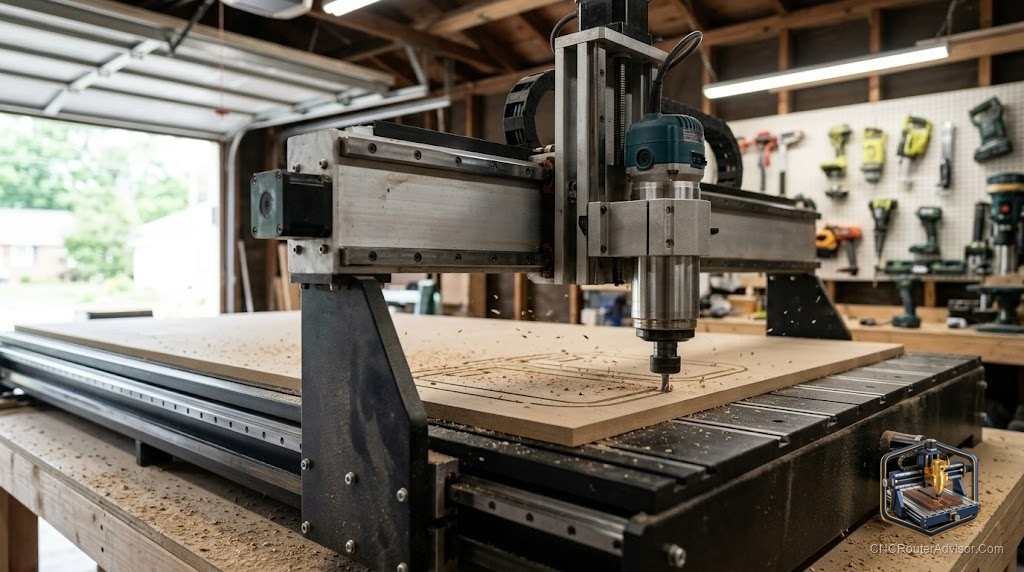
A 4 by 8 CNC router that cuts full sheets for as little money as possible is a tempting idea, but full-sheet size is exactly where cutting corners hurts most. At this scale, the frame spans a large distance and the machine must move accurately over eight feet, so the compromises that make a large machine cheap, a lighter frame, a simpler drive, a smaller spindle, can undermine the very capability you are buying it for. This guide maps the trade-offs behind affordable full-sheet machines so you understand what a low price costs and how to buy one that still works.
At full-sheet size, low price and adequate performance pull hard against each other, so the goal is to understand the trade-offs and judge whether a cheap large machine still meets your needs.
A cheap 4 by 8 CNC router keeps cost down through trade-offs that matter more at full-sheet size than on a small machine: a lighter frame (which flexes over the large span, hurting cut quality and accuracy), a simpler drive (belt or basic rack-and-pinion with more backlash), a smaller spindle (which struggles with production cutting), and minimal support and parts (a real risk on a large investment). The trade-off that hurts most is rigidity, because a frame that flexes over eight feet cannot cut a full sheet cleanly. If you buy affordable, protect frame rigidity and an adequate spindle above all, accept lighter-duty use and slower speeds, plan to add dust collection and workholding, and confirm support and parts availability. Be realistic: a very cheap full-sheet machine suits lighter-duty and hobby-scale sheet work, not heavy production.
Rigidity is where cheap large machines fail; protect it and the spindle, accept lighter-duty use, and set realistic expectations.
Why cheap hurts more at 4x8
On a small machine, a modest compromise costs little. At full-sheet size, the same compromise compounds:
- The frame spans a large distance, so any lack of stiffness shows up as flex, poor cuts, and lost accuracy across the sheet.
- The machine must move accurately over eight feet, so a cheap drive with backlash produces visible errors over the long travel.
- Full-sheet cutting is demanding, so an underpowered spindle bogs and forces slow, shallow passes.
This is why frame rigidity is the trade-off to protect most on an affordable large machine.
Where cheap 4x8 machines save money
Common compromises on low-cost full-sheet machines:
- Lighter frame: thinner or lighter material instead of heavy steel. The biggest risk, since it flexes over the span.
- Simpler drive: belt drive or basic rack-and-pinion with more backlash than precision ball screws or quality rack-and-pinion.
- Smaller spindle: less power than production cutting wants, limiting depth and speed.
- Basic control: simpler electronics and software.
- Minimal support and parts: less service and fewer readily available spares, a real concern on a large, hard-to-replace machine.
Knowing these lets you judge whether a cheap machine cut corners you can live with.
Trade-offs and how to manage them
Protect rigidity. Choose the stiffest frame your budget allows, even at the cost of size or features. A rigid large machine that cuts cleanly beats a flimsy one that does not.
Protect the spindle. Ensure enough spindle power for your materials, or favor a machine you can upgrade.
Accept lighter-duty use. A cheap full-sheet machine may cut well at lighter depths and slower speeds. Set expectations accordingly rather than expecting heavy production performance.
Plan the extras. Budget for dust collection and reliable workholding (clamps or vacuum), since full-sheet cutting demands both and cheap machines rarely include them.
Confirm support and parts. On a large investment, verify that support and spare parts exist, since problems are costly to fix without them.
Setting realistic expectations
Be honest about what a very cheap 4 by 8 machine is for:
- Good for: lighter-duty and hobby-scale full-sheet work, cutting soft materials and sheet goods at moderate speeds, learning large-format CNC.
- Not ideal for: heavy production, hard materials at speed, or shops needing high uptime and consistent throughput, where a more capable machine pays back.
Matched to lighter-duty work, an affordable full-sheet machine can serve well; pushed into heavy production, it will disappoint.
The verdict
A cheap 4 by 8 CNC router is a set of trade-offs that bite harder at full-sheet size, where a lighter frame flexes over the span, a simpler drive shows backlash over long travel, and a smaller spindle struggles with demanding cuts. The trade-off to protect most is rigidity, because a flexing frame cannot cut a full sheet cleanly. If you buy affordable, protect frame rigidity and an adequate spindle, accept lighter-duty use and slower speeds, plan to add dust collection and workholding, and confirm support and parts. Set realistic expectations: a very cheap large machine suits lighter-duty and hobby-scale sheet work, not heavy production. Judged that way, it can still be a sound entry into large-format CNC.
Three things to take with you:
- Cheap compromises hurt more at 4 by 8, since the frame spans a large distance and the machine must move accurately over eight feet; rigidity is the trade-off to protect most.
- If buying affordable, protect frame rigidity and an adequate spindle, accept lighter-duty use, and budget separately for dust collection and reliable workholding.
- Confirm support and parts on a large investment, and set realistic expectations: a very cheap full-sheet machine suits lighter-duty and hobby-scale work, not heavy production.
FAQ
Is a cheap 4x8 CNC router worth it? It can be, for lighter-duty and hobby-scale full-sheet work, if you protect frame rigidity and an adequate spindle and set realistic expectations. For heavy production, hard materials at speed, or high-uptime shops, a more capable machine usually pays back. Match the machine to the work you actually do.
Why does cutting corners hurt more on a large CNC router? Because full-sheet size amplifies compromises. The frame spans a large distance, so any lack of stiffness flexes and ruins cut quality; the machine moves over eight feet, so drive backlash shows as errors; and full-sheet cutting is demanding, so an underpowered spindle bogs. Small-machine compromises become large-machine problems.
What is the most important thing in a cheap 4x8 router? Frame rigidity. Over a large span, a flexing frame cannot cut a full sheet cleanly no matter what else the machine offers. Choose the stiffest frame your budget allows, even at the cost of size or features, and protect an adequate spindle next.
Can a cheap 4x8 CNC router cut hardwood? Lighter cuts in hardwood may be possible with a rigid-enough frame and adequate spindle, but a very cheap machine will struggle with heavy hardwood production, needing slow, shallow passes. It is better suited to soft materials and sheet goods at moderate speeds than to demanding hardwood work at production speed.
What extra costs come with a cheap full-sheet machine? Usually dust collection and reliable workholding (clamps or vacuum), which full-sheet cutting demands but cheap machines rarely include. You may also need to budget for a spindle upgrade, better tooling, and a solid, level base. Factor these into the true cost before buying.
How do I avoid a bad cheap 4x8 purchase? Protect rigidity and spindle power, confirm support and spare-parts availability on such a large investment, set realistic expectations for lighter-duty use, and plan for dust collection and workholding. Seek feedback from current users, and be wary of the flimsiest frames, which are the corner not worth cutting.
References
- Wikipedia, CNC router configurations and rigidity: https://en.wikipedia.org/wiki/CNC_router
- All3DP, large-format CNC router buyer’s guide: https://all3dp.com