
Biesse CNC Router Buying Guide: Prices, Features, and What to Check
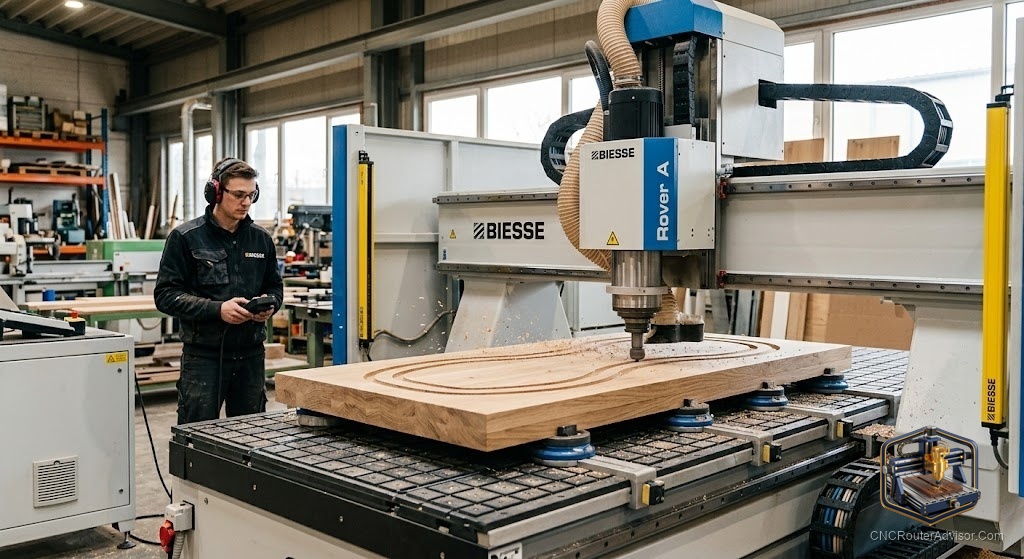
Biesse is one of the best-known names in industrial woodworking machinery, and its CNC routers and machining centers are built for professional production rather than the hobby shop. Buying at this level is a different exercise from picking a desktop machine: the cost is a major capital investment, the machine must integrate into a production workflow, and the service relationship matters as much as the specifications. This guide explains what drives the price of an industrial router like a Biesse, the features to expect, and what to check before committing, so you can approach the purchase with the right questions.
At the industrial tier, price reflects capability, build, and support, so understanding what you are paying for, and what to verify, is the key to a sound investment.
A Biesse CNC router is an industrial machining center for professional woodworking, cabinetry, and panel processing, and its price reflects work area, spindle power, automation (such as automatic tool change and pod-and-rail or nesting tables), build quality, and the service and support that come with it. Features to expect include large work areas, powerful VFD spindles, automatic tool change, advanced control and software, and automation for production throughput. Before buying, check that capability matches your production volume and part sizes, that your shop can supply the power (typically three-phase), space, compressed air, and dust extraction, and that service, spare parts, and training are available. Because this is a major capital investment, weigh total cost of ownership and the service relationship, and confirm details with the manufacturer or dealer and current users.
Industrial price buys capability, automation, build, and support; verify each matches your production needs before committing.
What drives the price
At the industrial level, cost reflects real capability, not markup:
- Work area and machine size: larger beds and heavier structures cost more and enable full-sheet and larger production.
- Spindle power and automation: powerful spindles, automatic tool change, and multi-spindle or aggregate heads add capability and cost.
- Table and workholding: pod-and-rail systems, nesting tables, and vacuum systems suit different production and add to price.
- Control and software: advanced controls and production software (nesting, optimization) are part of the package.
- Build quality and reliability: heavy, precise construction for sustained production commands a premium that pays back in uptime.
- Service and support: installation, training, warranty, and ongoing service are bundled into the value.
Understanding these lets you judge whether a machine’s price matches the capability you actually need.
Features to expect
Professional machining centers like Biesse’s typically offer:
- Large work areas for full-sheet and production parts.
- Powerful VFD spindles for sustained cutting across materials.
- Automatic tool change for efficient multi-tool jobs and unattended running.
- Advanced control and software for production workflows, including nesting and optimization.
- Automation options such as loading and unloading, boring heads, and aggregate tooling.
- Solid construction built for high duty cycles and long service life.
These aim at throughput, repeatability, and uptime in a production environment.
What to check before buying
Capability versus your production needs. Match work area, spindle power, tool change, and automation to your volume and part sizes, with sensible headroom. Do not overbuy automation you will not use, or underbuy capacity you will outgrow.
Shop requirements. Confirm three-phase power, floor space and a solid level floor, compressed air, and industrial dust extraction before purchase, since these installations are substantial.
Service, parts, and training. Verify what installation, training, warranty, spare-parts availability, and ongoing service the manufacturer or dealer provides, including response times. At this level, service is central to the value.
Total cost of ownership. Look beyond purchase price to installation, tooling, maintenance, software, and service over the machine’s life. Uptime and service often matter more than a specification edge.
References. Where possible, speak with current users about reliability and support, and confirm all specifications with the manufacturer or dealer rather than relying on marketing.
The verdict
A Biesse CNC router is an industrial machining center whose price reflects genuine capability, work area, spindle power, automation, build quality, and the service and support that come with it. Expect large work areas, powerful spindles, automatic tool change, advanced control and software, and automation for production throughput. Before buying, confirm the capability matches your production volume and part sizes, that your shop can supply the power, space, air, and dust extraction, and that service, spare parts, and training are available. Weigh total cost of ownership and the service relationship, and verify details with the manufacturer, dealer, and current users. Approached with those questions, an industrial machine is a sound long-term investment.
Three things to take with you:
- Industrial price reflects capability, work area, spindle power, automation, build, and support, so judge whether it matches the production you actually need.
- Plan shop requirements before buying: three-phase power, floor space and a level floor, compressed air, and industrial dust extraction.
- Weigh total cost of ownership and the service relationship, and confirm specifications, service, and parts availability with the manufacturer, dealer, and current users.
FAQ
What class of machine is a Biesse CNC router? An industrial machining center for professional woodworking, cabinetry, and panel processing, built for production rather than the hobby shop. Expect large work areas, powerful spindles, automatic tool change, advanced control and software, and automation for throughput.
What determines the price of an industrial CNC router? Work area and machine size, spindle power and automation (such as automatic tool change and aggregate heads), table and workholding type, control and production software, build quality and reliability, and the bundled service, installation, training, and support. Price reflects real capability rather than markup.
What power does a Biesse CNC router need? Typically three-phase industrial power, plus compressed air for tool change and pneumatic workholding. Confirm the specific machine’s requirements with the manufacturer or dealer and plan the electrical work, along with floor space and dust extraction, before purchase.
What should I check before buying an industrial CNC router? That capability (work area, spindle, tool change, automation) matches your production volume and part sizes, that your shop can supply power, space, air, and dust extraction, and that service, spare parts, and training are available. Weigh total cost of ownership and confirm details with the dealer and current users.
Is automatic tool change necessary on an industrial router? For high-volume, multi-tool production it is very valuable, since it keeps the machine cutting through multi-tool jobs and enables unattended running. Whether you need it depends on your job mix and volume; do not pay for automation you will not use, but do not underbuy if your production needs it.
Why does the service relationship matter so much? Because downtime in production directly costs money, and an industrial machine is a long-term investment. Fast service, available spare parts, training, and a strong support relationship determine how quickly you recover from problems, often mattering more day to day than a specification advantage.
References
- Wikipedia, CNC router and machining center overview: https://en.wikipedia.org/wiki/CNC_router
- Biesse, industrial CNC machining centers (manufacturer): https://www.biesse.com