
8 x 4 CNC Router for Sale: New vs. Used and What to Check
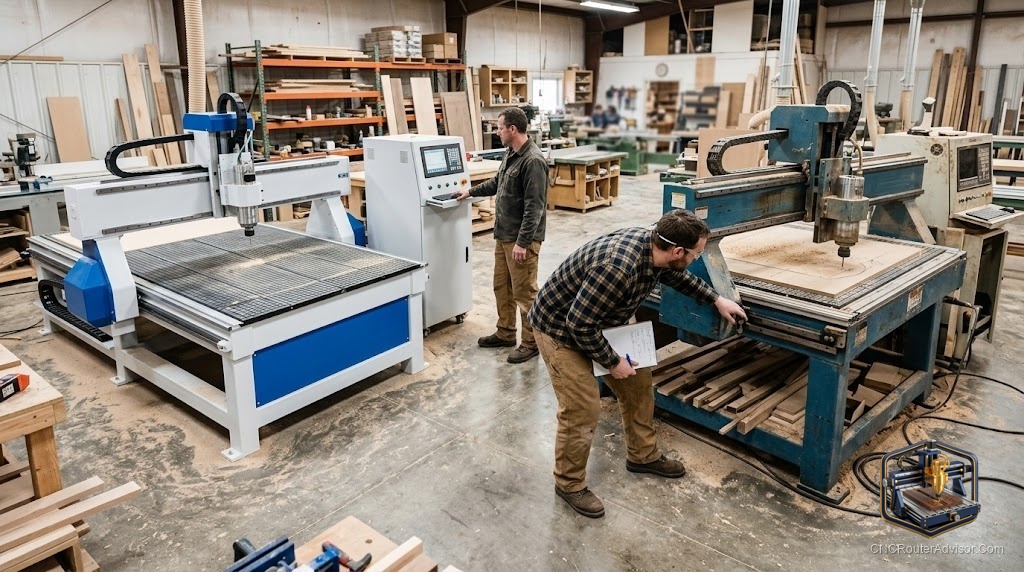
An 8 by 4 CNC router is the same full-sheet workhorse as a 4 by 8, just described with the long dimension first, and it is the machine that lets a shop process a whole sheet of plywood, MDF, or plastic in a single setup. That full-sheet capacity is what turns sheet-goods work from a two-step break-down-and-cut chore into a load-and-run production process. Buying one, new or used, means understanding what the size delivers and what a machine this large demands, and, especially for used machines, knowing exactly what to inspect before you commit. This guide covers the 8 by 4 size, the new-versus-used decision, and the checks that protect your investment.
Buying a full-sheet production router is about matching capacity to genuine volume while planning for real space, power, and dust, and, for used machines, verifying the condition of a large, heavy machine. Knowing what to look for is what separates a sound purchase from an expensive problem.
An 8 by 4 CNC router has a work area of roughly 96 by 48 inches (about 2440 by 1220 mm), the same full-sheet size as a 4 by 8, sized to cut a full 4 by 8 sheet in one setup. It is the workhorse of cabinet, sign, and sheet-goods production. When buying one, the new-versus-used decision turns on budget, support, and risk: new brings warranty, support, and known condition; used offers savings but requires careful inspection of a large machine. Key things to check are mechanical condition across the long span (rails, bearings, rack-and-pinion drive, gantry squareness), the spindle, the controller and software, workholding (often a vacuum table), and completeness. Plan the substantial space, power (often three-phase), and dust collection, and confirm your production volume justifies a full-sheet machine.
An 8 by 4 transforms full-sheet production; buy it for genuine sheet-goods volume, verify condition (especially used), and plan the infrastructure it demands.
What full-sheet capacity delivers
At roughly 96 by 48 inches, an 8 by 4 cuts a full 4 by 8 sheet in one setup, which delivers:
- No breaking sheets down first, saving a whole handling step and preserving accuracy.
- Nesting many parts on one sheet, cutting a full run of cabinet or sign parts in a single job.
- Production throughput: load a sheet, run the program, unload finished parts, repeat.
- Large single parts: full-size signs, panels, and long components cut whole.
This is the entire reason to choose a full-sheet machine, and why 8 by 4 (or 4 by 8) is the standard professional size for sheet work.
New versus used
Buying new brings warranty, manufacturer support, current control and software, and known condition, valuable for a production machine where downtime is costly. The cost is a higher price.
Buying used saves money and can put a capable full-sheet machine within reach, but the risks scale with the machine: wear across a long span, possible crash damage, outdated electronics, missing components (a vacuum system especially), and the logistics of inspecting and moving a large, heavy machine. A used 8 by 4 is a good buy only when it is sound, complete, and its long-axis motion and gantry are verified accurate. The inspection is more involved simply because there is more machine to check.
Decide based on budget, risk tolerance, and how much you value support and current integration versus savings, weighed against the logistics of a large used machine.
What to check before buying
Mechanical condition across the long span. The defining check is accuracy over the full 8-foot length:
- Linear rails and bearings: smooth motion along the entire travel of each axis, with no roughness or wear.
- Rack-and-pinion drive: the long axis is usually rack-and-pinion; inspect for wear and backlash along its full length.
- Gantry squareness and bed flatness: confirm the gantry is square and the bed flat across the span; sag or twist ruins accuracy on full sheets.
- Play: with power off, check for play in the gantry and carriage.
The spindle: check runout, listen for bearing noise, and ask about hours and cooling. Production spindles accumulate hours.
Controller and software: insist on seeing it power up, home, and run; confirm the controller and drives work, the software is supported and transferable, and it suits production nesting.
Workholding: full-sheet machines commonly use a vacuum table; confirm the pump and bed are present and working, since a vacuum system is costly to add later.
Completeness: controller, spindle and VFD, vacuum or other workholding, software and licenses, tooling, and documentation. Missing large components are expensive.
Provenance: age, hours, maintenance history, and reason for sale. Upgrading or shop closure is reassuring; unresolved faults are not.
Space, power, and dust: plan first
At full-sheet size, infrastructure is part of the purchase:
- Space: the footprint far exceeds the 96 by 48 inch work area; plan room to load and unload sheets on at least one side, plus access all around. This is a shop-floor machine.
- Power: larger 8 by 4 machines often need three-phase power for the spindle and drives; confirm supply or budget a converter.
- Dust collection: cutting full sheets produces significant dust, requiring a serious collector and dust shoe.
- Material handling: full sheets are heavy and awkward; plan lifting, staging, and how you will feed the machine.
- Moving the machine (used): confirm weight and dimensions and arrange proper rigging and transport.
Underestimating space, power, and dust is the most common regret of first-time full-sheet buyers, plan them before buying.
The verdict
An 8 by 4 CNC router is the same full-sheet workhorse as a 4 by 8, cutting a whole sheet in one setup to deliver the throughput cabinet, sign, and sheet-goods shops need. Buy it when your production volume justifies full-sheet capacity; if your work is occasional or small-part, a smaller machine fits far better. If you do need it, weigh new (warranty, support, known condition) against used (savings, but more to inspect and move), and check the machine carefully, especially accuracy across the long span, plus spindle, electronics, workholding, and completeness. Above all, plan the substantial space, power, and dust collection in advance. Matched to genuine production and properly prepared for, an 8 by 4 is the backbone of a sheet-goods shop.
Three things to take with you:
- An 8 by 4 (roughly 96 by 48 inches) is the same full-sheet size as a 4 by 8, cutting a whole sheet in one setup, the workhorse of cabinet, sign, and sheet-goods production.
- New offers warranty, support, and known condition; used offers savings but more to inspect and move. Either way, verify accuracy across the full 8-foot span, plus spindle, electronics, workholding, and completeness.
- Buy it only when your volume justifies full-sheet capacity, and plan the serious infrastructure, space, often three-phase power, and dust collection, before buying.
FAQ
Is an 8 by 4 CNC router different from a 4 by 8? No, they are the same full-sheet size, roughly 96 by 48 inches (about 2440 by 1220 mm), just described with the dimensions in a different order. Both cut a full 4 by 8 sheet in one setup and serve the same cabinet, sign, and sheet-goods production.
Why buy an 8 by 4 CNC router? For full-sheet capacity: cutting a whole sheet in one setup eliminates breaking sheets down, allows nesting many parts per sheet, and delivers production throughput. It also cuts large single parts, signs, panels, and long components, that smaller machines cannot cut whole.
Should I buy a new or used 8 by 4 CNC router? New brings warranty, support, current controls, and known condition, valuable for a production machine. Used saves money but carries scaled-up risk and logistics for inspecting and moving a large machine. Weigh budget, risk tolerance, and the value of support against savings.
What should I check on a used 8 by 4 CNC router? Accuracy across the full 8-foot span, rails and bearings, rack-and-pinion wear and backlash, and gantry squareness and bed flatness, plus the spindle, electronics (seeing it power up, home, and run), workholding (often a vacuum system), and completeness. Confirm software support and transferable licenses.
Does an 8 by 4 CNC router need three-phase power? Often yes. Larger full-sheet machines commonly need three-phase power for the spindle and drives. Confirm your shop supplies it or budget for a phase converter, and account for the substantial electrical load of a production spindle.
How much space does an 8 by 4 CNC router need? Significantly more than its 96 by 48 inch work area, since the frame, gantry travel, and material handling area extend well beyond it. Plan room to load and unload full sheets on at least one side, access all around, dust collection, and staging for heavy sheet stock.
References
- All3DP, CNC router size and production guide: https://all3dp.com
- CNCzone, full-sheet CNC router buying and setup discussions: https://www.cnczone.com