
4 x 4 CNC Router for Sale: New vs. Used and What to Check
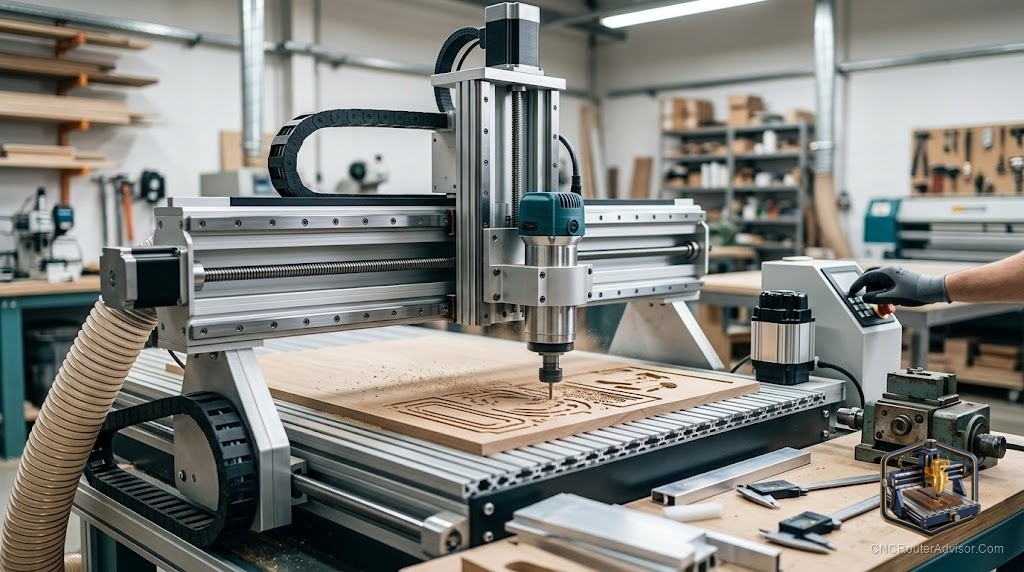
The 4 by 4 CNC router is one of the most popular sizes on the market, and for good reason: it cuts half-sheets and serious project parts, fits a normal shop, and often runs on standard power, hitting a sweet spot between capability and practicality. That popularity means there is a healthy market for them, new and used, which is good news for a buyer but also means you need to know how to sort a sound machine and a fair price from an optimistic listing. This guide covers what the 4 by 4 size offers, the new-versus-used decision, and exactly what to check before you hand over money.
Buying a router well is about matching capability to your work and verifying condition and value. The 4 by 4 size suits a wide range of shops, so the real questions become new or used, and, especially for used, is this specific machine sound and complete.
A 4 by 4 CNC router has a work area of roughly 48 by 48 inches (about 1220 by 1220 mm), a popular size that cuts half-sheets, signs, cabinet parts, and project panels while fitting a normal shop and often running on single-phase power. When buying one, the new-versus-used decision turns on budget, support, and risk: new machines bring warranty, support, and known condition; used machines offer savings but need careful inspection. Key things to check are mechanical condition (rails, bearings, ball screws or rack, and gantry for wear and play), the spindle (runout, bearing noise, hours), the electronics and controller (whether it powers up, homes, and runs), and completeness (controller, spindle, software, tooling, documentation). Confirm the work area suits your projects and plan the space and power.
A sound 4 by 4, new or used, is an excellent all-round machine; the buyer’s job is to match it to their work and verify it is what the listing claims.
What a 4 by 4 offers
The 4 by 4 balances capability and practicality:
- Half-sheet capacity: a full 4 by 8 sheet cut in two fits, so you can process sheet goods in halves.
- Real project parts: signs, cabinet and furniture parts, panels, and medium-to-large work.
- Normal-shop footprint: it fits a home shop, garage, or small workshop, unlike a 4 by 8.
- Often standard power: many 4 by 4 machines run on single-phase household power, depending on the spindle, a real practical advantage.
This combination is why the 4 by 4 is so popular: enough size for serious work without the space and power demands of a full-sheet machine.
New versus used
Buying new brings warranty, manufacturer support, current control and software, and a known, undamaged condition. If you value support and want to start cutting without troubleshooting someone else’s wear, new is reassuring. The cost is a higher price.
Buying used saves money and can put a more capable or better-built machine within reach, but it carries risk: wear on rails, bearings, and drives, possible crash damage, outdated electronics, and missing components. A used 4 by 4 is an excellent value when it is sound, complete, and well maintained, and a poor one when it hides wear or missing parts. The difference is entirely in the inspection.
Decide based on budget, appetite for risk, and how much you value warranty and support versus savings.
What to check before buying
Mechanical condition (especially used):
- Linear rails and bearings: feel for smooth motion along the full travel of each axis; roughness or pitting means wear or damage.
- Play and backlash: with power off, try to move the gantry and carriage by hand. Excessive play means worn bearings, loose fasteners, or worn drives.
- Ball screws or rack: inspect the drive system for wear and backlash, which directly affects accuracy.
- Gantry and frame: check squareness and any sign of crash damage or bends.
The spindle: check for runout and listen for bearing noise (grinding, whining); ask about hours and cooling type. A worn spindle ruins finish and accuracy.
Electronics and controller: insist on seeing the machine power up, home its axes, and ideally run a simple job or jog all axes. Confirm the controller and drives are functional and the software is supported and transferable. A seller unable to demonstrate the machine running is a serious warning sign.
Completeness: controller, spindle and VFD, software and licenses, documentation, tooling, and accessories (dust boot, probe, clamps). A complete machine is worth far more than a bare gantry.
Provenance: ask the machine’s age, hours, maintenance history, and why it is being sold. Upgrading or shop closure is reassuring; unresolved problems are not.
Fit, space, and power
Confirm the work area suits your projects. If your parts fit within about 48 by 48 inches (or half-sheets), a 4 by 4 is well matched. If you regularly need full sheets, consider a 4 by 8; if your work is small, a smaller machine saves money and space.
Plan space and power. The footprint exceeds the 48 by 48 inch work area, so allow room for material overhang, access, and dust collection. Confirm the machine’s power requirement (single- or three-phase) matches your shop, and plan dust collection, which sheet work demands.
Plan the move (used, especially). A 4 by 4 is heavy; confirm weight and dimensions and arrange proper equipment and transport.
The verdict
A 4 by 4 CNC router is an excellent all-round size, cutting half-sheets and serious project parts while fitting a normal shop and often running on standard power. Decide between new (warranty, support, known condition) and used (savings, but requiring careful inspection) based on your budget and risk tolerance. For any machine, confirm the work area suits your projects and plan space and power; for used machines especially, check the mechanics, spindle, and electronics, insist on seeing it run, and confirm completeness. Matched to your work and properly verified, a 4 by 4 is one of the most versatile routers you can buy.
Three things to take with you:
- A 4 by 4 (roughly 48 by 48 inches) cuts half-sheets and real project parts while fitting a normal shop and often running on single-phase power, which is why it is so popular.
- New offers warranty, support, and known condition; used offers savings but demands careful inspection. Choose based on budget and risk tolerance.
- For used machines, check the mechanics, spindle, and electronics, insist on seeing it power up, home, and run, and confirm completeness; for any machine, confirm fit and plan space, power, and dust collection.
FAQ
What is the work area of a 4 by 4 CNC router? Roughly 48 by 48 inches (about 1220 by 1220 mm). It cuts half-sheets, signs, cabinet parts, and project panels, with a physical footprint somewhat larger than the work area.
Should I buy a new or used 4 by 4 CNC router? New brings warranty, support, current controls, and known condition. Used saves money but carries risk of wear, crash damage, outdated electronics, and missing parts. Choose based on your budget, appetite for risk, and how much you value support versus savings.
What should I check on a used 4 by 4 CNC router? Mechanical condition (rails, bearings, ball screws or rack, gantry squareness, and play), the spindle (runout, bearing noise, hours), the electronics (whether it powers up, homes, and runs), and completeness (controller, spindle, software, tooling, documentation). Insist on seeing it run.
Does a 4 by 4 CNC router run on standard power? Often yes. Many 4 by 4 machines run on single-phase household power, depending on the spindle, which is a practical advantage over full-sheet machines that often need three-phase. Confirm the specific machine’s requirement, especially with a larger VFD spindle.
Is a 4 by 4 CNC router big enough for a business? Yes, for many, signs, cabinet and furniture parts, and half-sheet work all fit. It is a popular professional and prosumer size. If you need full-sheet production volume, step up to a 4 by 8; otherwise a 4 by 4 balances capability and practicality well.
Why should the seller demonstrate the machine running? Seeing it power on, home, and run a job confirms the electronics, motion, and spindle work, the most expensive things to fix. A seller unwilling or unable to demonstrate the machine running is a serious warning sign of hidden problems.
References
- CNCzone, used CNC router buying and inspection discussions: https://www.cnczone.com
- All3DP, CNC router size and buyer’s guide: https://all3dp.com