
FoxAlien Masuter Pro CNC Router Review: Real Performance, Honest Limitations
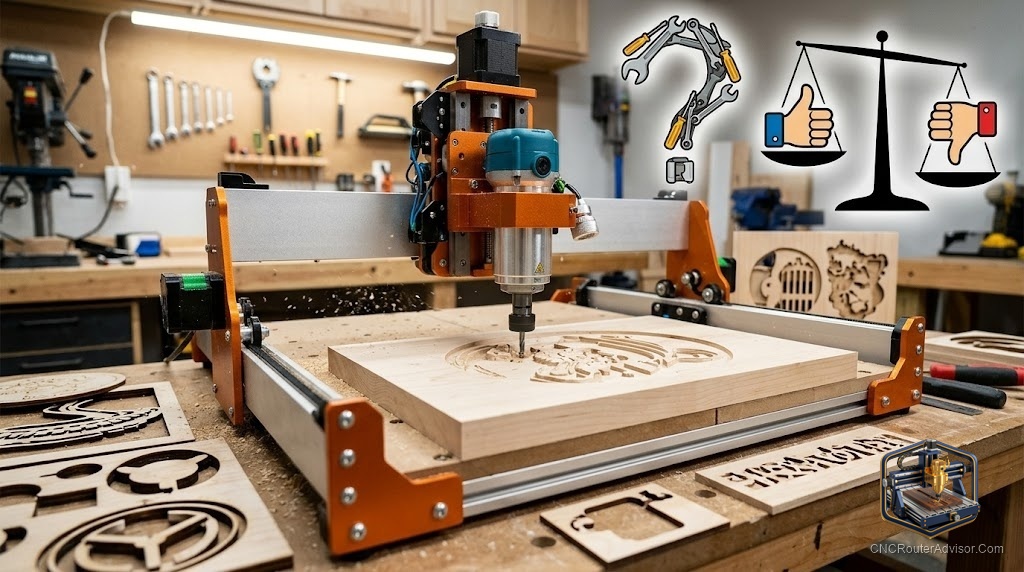
The Masuter Pro landed in a category that needed a better answer. Budget CNC routers below the Shapeoko tier had long been synonymous with plastic frames, wobbly Z axes, and spindles that could barely push through balsa wood before asking for sympathy. FoxAlien put an all-aluminum frame on the Masuter Pro, moved to a linear-rail Z axis, and shipped it in a form that takes fifteen minutes to assemble. For a beginner trying to understand what a metal-framed desktop router actually feels like without spending three times as much, it was a meaningful step.
The question is whether it lives up to the frame. The honest answer is: for the work it is actually designed for, yes. For the work people often try to push it into, the frame is not the limiting factor, the spindle and drive system are.
The FoxAlien Masuter Pro is a desktop CNC router with a 400 by 400 mm work area and 60 mm of Z-axis clearance. It has an all-aluminum construction, a linear-rail Z axis with T8 lead screw, and belt-plus-rubber-wheel drives on the X and Y axes. The base machine ships with a 60W spindle, with upgrade paths to a 300W spindle kit or an aftermarket 710W trim router. Pre-wired and pre-assembled main parts mean setup takes around ten to fifteen minutes.
For someone who wants a structurally more rigid entry-level router than a plastic-frame machine, with a real upgrade path for the spindle, the Masuter Pro is a legitimate choice. For anyone expecting production-grade cutting performance out of the box, the 60W spindle and NEMA17 rubber-wheel drive system define the ceiling.
What the frame upgrade actually gives you
All-aluminum construction means the frame does not flex the way ABS plastic or thin MDF-based machines flex under cutting loads. That translates to more accurate cuts, better edge quality, and less vibration noise at the spoilboard. On a machine in this size and price range, aluminum extrusion is a genuine upgrade over plastic, not a marketing description.
The linear-rail Z axis is the other structural win. A Z axis that rides on linear rails rather than V-slot wheels does not have the same side-to-side play as a wheel-based system under cutting pressure. For engraving and pocketing work where Z accuracy matters, the linear rail keeps the bit where you told it to be.
What the frame does not fix: the XY axes still use rubber wheels on V-slot extrusion and belt drives. Rubber wheels wear and lose preload over time, and belts stretch. On a machine this size, that limits the maximum cutting forces you can apply before you see positional error. It is not a deal-breaker for wood, MDF, and acrylic at appropriate feeds. It is the constraint you will notice if you try to cut aluminum at any real rate.
The 60mm Z clearance problem
This is the most frequently cited practical limitation, and it is real. Sixty millimeters of Z clearance between the spindle nose and the spoilboard is enough for flat sheet work and shallow carvings. It is not enough for a 65mm-diameter rotary module, which is the extension that would let you do round stock and fourth-axis work without modification. The community workaround, mounting the frame plates on the underside of the machine, recovers some clearance but is a non-trivial modification. If you know you want rotary work, plan for that before you buy.
For standard flat-sheet engraving, sign work, coasters, and inlays, the 60mm clearance is fine. Know what you are buying it for.
The spindle reality
The 60W spindle that ships with the base machine is an entry-level 775 motor running at up to 10,000 RPM. It works for light engraving in soft materials and gentle passes in wood and acrylic. It is not the spindle for pushing through hardwood at production feeds. FoxAlien sells a 300W spindle kit as an add-on, and the 52mm and 65mm clamps that come with the machine support aftermarket trim routers like the popular 710W alternatives. The upgrade path is real and well-supported, which makes the base machine a reasonable entry point if you are comfortable with the idea that the spindle is the first upgrade.
For anyone wanting a capable machine out of the box without a spindle upgrade, the Masuter Pro’s newer sibling, the Masuter 3 (launched 2024), ships with a 60W spindle and upgraded NEMA17 motors with a 32-bit board, and the Masuter 3S ships with a 400W spindle and closed-loop NEMA23 motors. Either of those is a more capable machine for heavier cutting, at a higher price.
What it cuts well
The Masuter Pro is most at home in the work that suits its frame and spindle: MDF engraving and profiling, acrylic cuts with the right O-flute bit, balsa and basswood for maker projects, coasters, signs, and light wood inlays. V-carving text in soft woods and MDF is where it genuinely shines, because the linear Z and aluminum frame keep depth consistent in a way plastic-frame machines cannot match at comparable prices. PCB milling with a proper V-bit is also well-suited to the machine’s accuracy.
Light aluminum is technically within the machine’s capability with a proper spindle, very light passes, and patience. The belt drive limits feed forces, so this is experimental territory, not a primary use case.
Who it is for and who should skip it
For: A beginner who wants a step up from plastic-frame entry machines, understands the spindle will likely be upgraded, and is primarily doing wood engraving, MDF signs, acrylic work, and light maker projects. The fifteen-minute assembly and included Z probe make it genuinely approachable.
Who should skip it: Anyone expecting to run hardwood or aluminum at production rates without a spindle and motion system upgrade, anyone who needs more than 60mm of Z clearance for their primary application, and anyone whose budget can stretch to the Masuter 3S or a comparable ball-screw machine.
View the FoxAlien Masuter Pro on Amazon
The verdict
The Masuter Pro is a genuine step up from the entry-level plastic-frame field, with an aluminum construction and linear Z axis that pay back in accuracy and longevity. The 60W base spindle and rubber-wheel belt drives are the honest ceiling, not the frame. Buy it for flat-sheet wood and sign work, plan the spindle upgrade as a near-term addition, and know the Z clearance limit before you commit.
Three things to take with you:
- The aluminum frame and linear Z axis are real improvements over plastic-frame entry routers; the XY belt drive and rubber wheels are where the class shows.
- The 60mm Z clearance is a real constraint for rotary work; know your application before you buy.
- The spindle upgrade path (300W kit, or a 65mm aftermarket trim router) is well-supported and is the first practical modification most owners make.
FAQ
What is the FoxAlien Masuter Pro’s work area? 400 by 400 mm (about 15.75 by 15.75 inches), with 60 mm of Z-axis clearance.
What spindle does the Masuter Pro come with? The base machine ships with a 60W 775 motor. FoxAlien offers a 300W spindle kit add-on, and the included 52mm and 65mm spindle clamps support aftermarket trim routers up to 65mm in diameter.
Can the FoxAlien Masuter Pro cut aluminum? With a proper spindle upgrade and very light passes, light aluminum cutting is technically possible. The belt-drive XY axes limit the cutting forces the machine can apply, so this is experimental rather than a primary capability.
How long does the Masuter Pro take to assemble? Around ten to fifteen minutes, since the main components arrive pre-assembled and pre-wired. Users confirm this in reviews; it is one of the machine’s practical advantages.
What is the difference between the Masuter Pro and the Masuter 3S? The Masuter 3S (2024) ships with a 400W spindle, closed-loop NEMA23 motors, a 32-bit control board, and dust baffles, making it a significantly more capable machine for harder materials. The Pro is the older, lower-cost entry point with a 60W base spindle and NEMA17 motors.
What materials does the Masuter Pro cut well? MDF, plywood, soft woods, acrylic, PVC foam, and PCBs. V-carving text in wood and MDF is a particular strength. Light balsa and basswood for maker projects are well within its capability.
References
- FoxAlien, Masuter Pro specifications: https://www.foxalien.com/products/cnc-router-masuter-pro
- FoxAlien, Masuter Pro vs Masuter 3 vs Masuter 3S buying guide: https://www.foxalien.com/blogs/news/foxalien-cnc-router-masuter-pro-masuter-3-and-masuter-3s-buying-guide