
Used CNC Router Buying Guide: Inspection Checklist and Hidden Costs
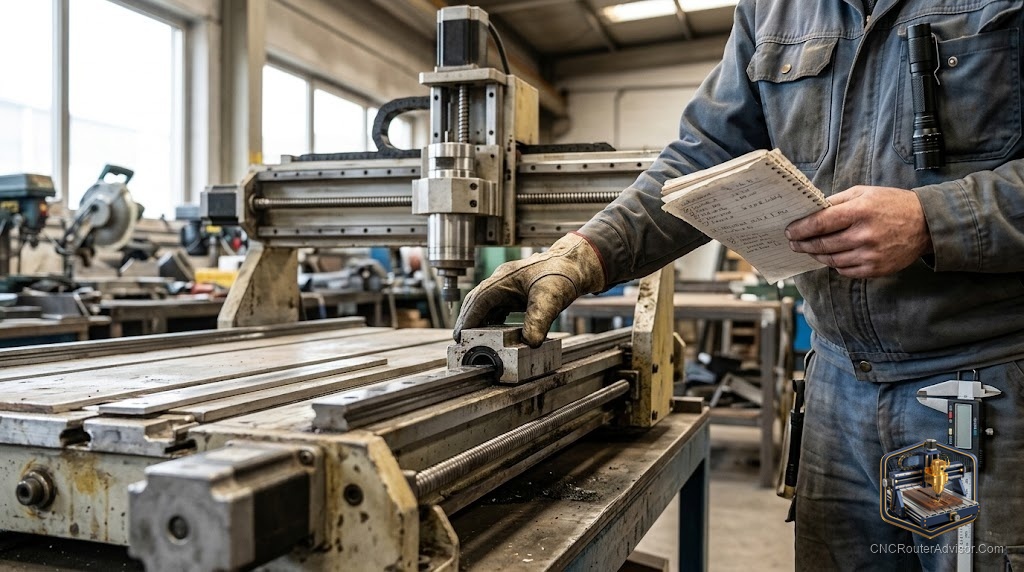
The listing photo is always the same. A clean-ish gantry, a folded-up dust shoe, a phone number, and a price that feels like a favor. You borrow a trailer, talk a friend into helping, and forty minutes into the drive home you start doing the math on a spindle that sounds like a coffee grinder and a controller nobody has the password for.
A used CNC router can be the smartest money you spend in your shop, or it can be a very heavy paperweight. The thing that decides which one you brought home is almost never the sticker price. It is the ten minutes you spent checking the right parts before any money changed hands. This guide is the checklist I wish every first-time buyer carried into the garage.
A used CNC router is simply a pre-owned computer-controlled cutting machine, from a desktop hobby unit up to a full 4 by 8 production table, sold secondhand by a shop upgrading, a business closing, or a hobbyist who ran out of room. The machine itself rarely fails outright. What wears is everything that moves and everything that spins, and those are the parts a seller cannot hide if you know where to put your hands.
The short version: a used CNC router is worth buying when the frame is true, the spindle runs quiet, the motion system moves without slop, and the controller still talks to a computer you can actually use. If any one of those four is wrong, the repair can cost more than the machine, so you inspect all four before you commit.
Start at the controller, not the pretty parts
The first thing to test is the least photogenic: does the machine turn on and take a command. Ask the seller to power it up cold, in front of you, and jog each axis through its full travel. You are listening and watching, not admiring. Motion should be smooth and even end to end. Hesitation, a shudder halfway across the table, or a grinding sound points to worn guideways, a tired ball screw, or a failing drive, and any of those changes the deal completely.
Then ask the harder question: what runs this thing. Older industrial routers often ride on a proprietary controller and a copy of software tied to a dongle or a specific old PC. If the seller cannot show you the machine cutting a real file, or cannot produce the post processor and the software license, treat the control system as a possible full retrofit. Swapping a dead proprietary controller for something open like a modern GRBL or a commercial retrofit is doable, but it is a project with its own cost and learning curve, not a weekend fix.
The spindle is where the money hides
The spindle is the heart of the machine and the single most common hidden cost in a used purchase. A rebuild or replacement is never cheap, so this part earns real attention. With the machine off, grab the tool holder or collet nut and try to rock it. There should be no play. Then run the spindle up through its speed range and listen. A healthy spindle spins with a steady hum. Rumble, a rising whine, or any knock means worn bearings, and bearings on a used spindle are a when, not an if.
Ask how the spindle is cooled. Air-cooled units are simple. Water-cooled spindles need a pump and clean coolant, so check the reservoir and lines for gunk and leaks. If it is a machine that uses a trim router instead of a true spindle, that is not a flaw on a hobby unit, it just means the wear item is a cheap consumable you can replace yourself.
Motion system: chase the slop
With power off, push the gantry and the carriage by hand along each axis. You are feeling for backlash, that tiny dead zone where the part moves before the screw or belt catches. A little is normal on a belt-driven hobby machine. A lot, especially on a ball-screw machine, means worn screws or nuts. Look at the linear rails and bearing blocks for pitting, rust, and dry spots where the grease gave up. Rails are replaceable, but sourcing the exact size and re-squaring the machine is slow, fussy work.
Run a finger along the exposed screws and rails for grit. A machine caked in fine dust that was never blown out or re-greased has usually lived a hard life, and that tells you more about the seller than any spec sheet will.
Frame and squareness: the flaw you cannot fix cheaply
Everything else can be rebuilt. A tweaked frame usually cannot, at least not without more effort than the machine is worth. Sight down the extrusions and the gantry for any bow. Measure the diagonals of the work area corner to corner. If those two numbers do not match, the machine is out of square, and while small errors tune out, a real twist in a welded steel frame or a bent gantry is a reason to walk away. Aluminum extrusion frames are lighter and easier to adjust; heavy steel frames hold tolerance better but punish you on rigging and moving.
The hidden costs nobody lists
The price on the ad is the down payment on the real number. Budget mentally for the things that bite after the sale:
- Rigging and transport. A desktop unit rides in a car. A full-size table needs a forklift on both ends, a proper trailer, and sometimes a rigger. This alone can rival the machine cost on big iron.
- Tooling and collets. Used machines rarely come with a useful set of good bits, and worn collets ruin cut quality no matter how healthy the spindle is.
- Software and post. A control retrofit or a fresh CAM seat is a real line item if the original license does not transfer.
- Consumables and first repairs. New belts, bearings, brushes, a fresh spoilboard, and lubricant are the normal cost of bringing a tired machine back to trustworthy.
- Downtime. Every week the machine is apart is a week it earns nothing, which matters most if you bought it to make money.
Used desktop vs used full-size: who each one is for
A used desktop or benchtop router, the hobby-class machines, is the low-risk end of this market. Parts are cheap, the controller is usually something standard, and worst case you are out a modest sum and a Saturday. If you are new to CNC and buying used mostly to learn, this is the smart lane, and a handheld or compact unit gets you cutting without a rigging bill.
A used full-size production router is a different animal. The upside is enormous, since a machine that cost as much as a car new can change hands for a fraction of that. The downside is that every mistake scales with the weight. Buy full-size used only if you can inspect it running, verify the control system, and move it without wrecking it. If you cannot do all three, the savings are a mirage.
The verdict
Buy the machine that runs quiet, moves clean, sits square, and takes a command in front of you. Everything else is negotiable, and everything else can be fixed. Walk from a bent frame, a screaming spindle, or a controller the seller cannot demonstrate, no matter how good the price looks, because those three are where used routers go to become scrap.
Four things to carry out the door with you:
- Never buy one you have not seen cut a real file, in person or on video the seller shoots live.
- Put your hands on the spindle and the motion system yourself, since your ears and fingers find what photos hide.
- Add rigging, tooling, and first repairs to the price before you decide it is a deal.
- If it is your first machine, a healthy used desktop teaches you more, and costs you less when you make the beginner mistakes everyone makes.
FAQ
Is it worth buying a used CNC router? Yes, if you can inspect it in person and confirm the frame, spindle, motion system, and controller are all sound. A well-kept used machine is often the best value in the shop. A neglected one is a repair project wearing a bargain price tag.
What should I check first on a used CNC router? Power it on and jog every axis through full travel before anything else. Smooth, quiet, even motion tells you the expensive parts are probably healthy. Grinding, hesitation, or slop tells you to slow down and look closer.
How many hours is too many on a used CNC router? Hours matter less than maintenance. A high-hour machine that was cleaned, greased, and stored indoors can outlast a low-hour machine that lived in dust. Ask for maintenance records and judge the wear parts directly.
What are the hidden costs of a used CNC router? Rigging and transport, fresh tooling and collets, possible control or software retrofit, new belts and bearings, a new spoilboard, and the downtime spent bringing it back to reliable. On big machines, moving it can cost as much as the machine.
Can I move a full-size CNC router myself? A desktop unit, yes. A full-size table usually needs a forklift, a trailer rated for the weight, and often a professional rigger. Underestimating this is the classic first-timer mistake, so plan the move before you plan the purchase.
Should a beginner buy new or used? A healthy used desktop machine is a great first router because it is cheap to learn on and cheap to fix. Buying used full-size gear is better left until you know enough to inspect it properly and move it safely.
What is a red flag that means walk away? A bent or twisted frame, a spindle that knocks or whines, or a controller the seller cannot demonstrate cutting. Any one of those can cost more to fix than the machine is worth.
References
- Premier Equipment, “The 7-Step Guide to Inspecting a Used CNC Machine Before Purchase”: https://premierequipment.com/cnc-blog/the-7-step-guide-to-inspecting-a-used-cnc-machine-before-purchase/
- Billor McDowell, “Used CNC Machine Buying Guide: What to Inspect Before You Invest”: https://billor.com/used-cnc-machine-buying-guide-what-to-inspect-before-you-invest/
- MachineStation, “Used CNC Machine Inspection Checklist”: https://www.machinestation.us/used-cnc-machine-inspection-checklist-what-to-look-for-before-you-buy-used-cnc-machines/
- Practical Machinist Forum, “Buying Used CNC Equipment: What do you look for?”: https://www.practicalmachinist.com/forum/threads/buying-used-cnc-equipment-what-do-you-look-for.297178/