
Open Source CNC Router: The Best Builds, What They Cost, and How to Choose
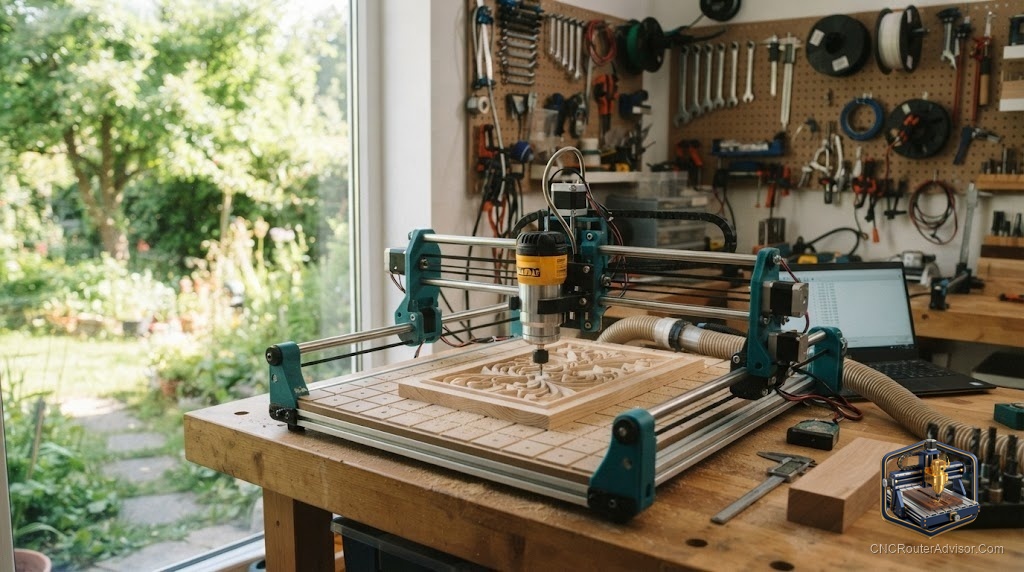
An open source CNC router is a project, not a product. You get complete plans, firmware, community documentation, and the freedom to modify everything, but you also get a machine you build yourself, which means the quality and accuracy depend on your assembly, your part sourcing, and your willingness to calibrate and troubleshoot. The tradeoff is real, and for a significant portion of the CNC community, it is an outstanding one. The resulting machines are capable, deeply understood, and often more upgradeable than anything you can buy in the same tier.
An open source CNC router is a CNC machine whose mechanical designs, electronics, firmware, and documentation are publicly available for free, allowing anyone to build, modify, and share the machine without proprietary restrictions. The major open-source platforms each prioritize different things: capacity, compactness, rigidity, or ease of build.
The short answer on which to build: if you want the accessible entry point, build an MPCNC. If you want full-sheet capacity, go LowRider. If you want maximum rigidity for harder materials, look at PrintNC. If you want large-format cutting without a dedicated table, Maslow is unique. Choose by the work you actually want to do.
The major open source platforms
MPCNC (Mostly Printed CNC)
Built by V1 Engineering, the MPCNC is the classic entry point. It uses 3D-printed parts, conduit or tube rails, and GRBL or Marlin firmware. Accessible to anyone with a 3D printer and basic tools. Optimizes for cost and approachability over rigidity. Excellent for small-format signs, PCBs, foam cutting, and vinyl. Cutting area is somewhat limited by stiffness at larger sizes.
LowRider CNC (V1 Engineering)
The LowRider is V1 Engineering’s large-format companion to the MPCNC. It lays flat and rides on the edges of a spoilboard, letting it handle near-full-sheet material without a large traditional frame. More rigid than the MPCNC because of a shorter, stiffer Z axis. Cuts significantly faster. The natural choice when you need plywood-sheet capacity on an open-source platform. CNC Router Info summarizes it: “MPCNC optimizes for accessibility. LowRider optimizes for capacity.”
PrintNC
The PrintNC is a steel-tube and hardware-store-parts CNC with a strong community emphasis on rigidity and accuracy. Designed to cut aluminum reliably, it is substantially stiffer than extrusion-based builds and well-suited for metal-capable hobbyist routing. The tradeoff is higher build cost and complexity. Compared to LowRider in community discussions: “PrintNC is stiffer and more expensive.”
Maslow CNC (4/4.1)
As detailed elsewhere, Maslow is a vertical cable-driven large-format router. Open source, community-run, and uniquely space-efficient for a full-sheet machine. Not the most rigid of the open-source options, but the most accessible in terms of footprint and startup.
Root CNC, OpenBuilds, and others
Root CNC uses aluminum extrusion and is well-regarded for its clean design. OpenBuilds is both a parts supplier and a community publishing hundreds of open-source CNC builds. There is a wide ecosystem of builds beyond the major platforms, including desktop PCB mills and plasma cutters sharing the same open-source firmware (GRBL, FluidNC, Marlin).
What open source costs versus buying commercial
Building an MPCNC runs in the range of several hundred dollars in parts depending on size and components. A LowRider is comparable or modestly higher. PrintNC runs higher due to steel components and higher-quality rails. All of these undercut commercial machines at comparable rigidity levels significantly.
The real cost is time: design review, sourcing parts, printing components, assembly, calibration, and troubleshooting. For someone who values that process, it is rewarding and educational. For someone who wants to cut parts by next week, a commercial machine is the honest recommendation.
The verdict
Open source CNC routers deliver remarkable value for builders willing to invest time. The MPCNC is the entry point, LowRider is the full-sheet workhorse, PrintNC is the rigidity-first choice for metal and hardwood work, and Maslow is the space-efficient large-format option. All are backed by active communities. Choose by your priority, build carefully, and expect the machine you build to be genuinely understood and owned rather than just operated.
Three takeaways: choose your platform by priority, MPCNC for accessibility, LowRider for sheet capacity, PrintNC for rigidity; the real cost is build time and calibration, not just parts; and open-source machines are deeply understood by their owners in ways commercial machines often are not.
FAQ
What is an open source CNC router? A CNC machine whose mechanical designs, electronics, firmware, and documentation are freely available for anyone to build, modify, and share.
What is the best open source CNC router for beginners? The MPCNC is the most accessible starting point: 3D-printed parts, large community, and extensive documentation. It is designed specifically to minimize specialized tools and skills required.
What open source CNC can cut full sheets? The LowRider CNC (V1 Engineering) handles near-full-sheet material. The Maslow 4.1 also cuts a full 4 by 8 foot sheet. Both are open source and community-supported.
Can an open source CNC router cut aluminum? Yes, with a rigid-enough build. The PrintNC is specifically designed for aluminum and harder materials and is considered one of the most capable open-source routers for metal work.
How much does it cost to build an MPCNC? A few hundred dollars in parts depending on size, electronics choice, and whether you already own a 3D printer for the printed components. Much lower than a commercial machine of comparable size.
What firmware do open source CNC routers use? GRBL and its derivatives (FluidNC, GRBL-HAL), Marlin, and LinuxCNC are the most common. All are open source.
Is building an open source CNC router worth it? For makers who enjoy building and want deep understanding of their machines, absolutely. For shops that want to cut parts quickly without a learning curve, a commercial machine is more practical.
References
- CNC Router Info, MPCNC vs LowRider vs PrintNC (optimization directions): https://cncrouterinfo.com/guides/mpcnc-vs-lowrider-vs-printnc/
- Reddit r/hobbycnc, PrintNC vs LowRider V4 community comparison: https://www.reddit.com/r/hobbycnc/comments/1gbhsjf/printnc_vs_lowrider_v4/
- MIT CSAIL Fab Academy, Comparison of Open-Source Desktop CNC Mill Designs (15 designs compared): https://fab.cba.mit.edu/classes/863.23/EECS/people/Ahmad/CNC-Mill/Comparison%20of%20Open-Source%20Desktop%20CNC%20Mill%20Designs.pdf
- Reddit r/hobbycnc, MPCNC/LowRider/Root3 comparison discussion: https://www.reddit.com/r/hobbycnc/comments/davnin/advice_which_cnc_mpcnclowriderroot3/
- Maslow CNC, About Maslow 4: https://www.maslowcnc.com/about-maslow4