
CNC Router Cheap: What You Actually Get and Where the Line Is Between Value and Regret
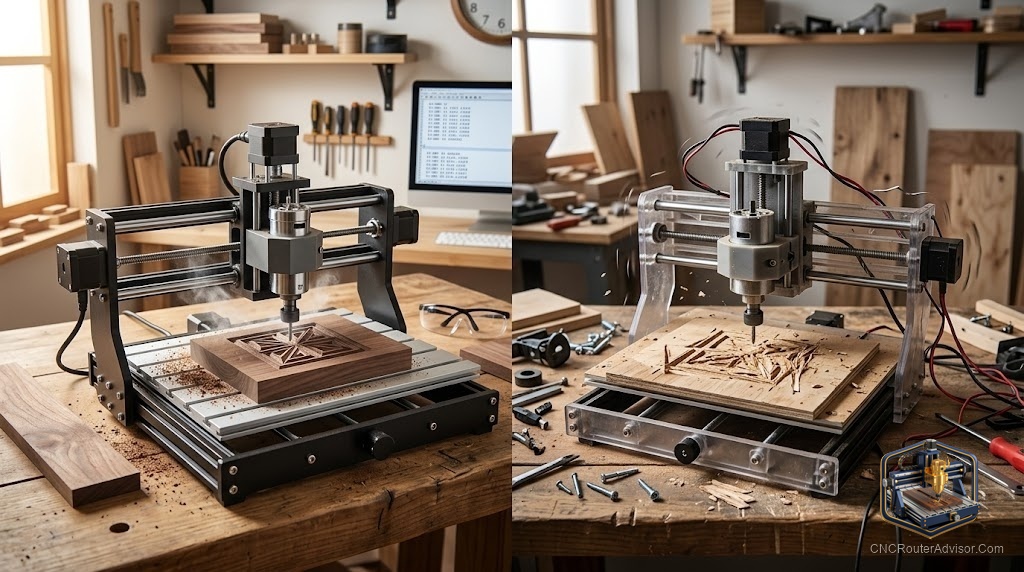
Buying cheap is a strategy, not just a constraint, and it works for CNC routers as long as you are honest about what the low price buys and what it does not. The CNC market has a genuine entry tier where capable machines exist at modest cost, and it has a trap tier where low prices mask poor build quality and no support. The difference between value and regret in the cheap CNC category comes down to which tier you are actually in, and knowing that before you pay is what this guide is for.
A cheap CNC router is a CNC router purchased at the lower end of the price range, which at the entry tier provides a genuine, functional machine for learning, signs, and light wood work, and at the trap tier provides a machine that fails to cut reliably, has no documentation or support, and costs more in frustration and replacement parts than a modest step-up would have.
Here is the direct guidance: the cheap tier that delivers real value is the compact entry machine from an established brand with documentation, community, and support; the cheap tier to avoid is the unbranded or unknown-brand machine at an even lower price with no real support channel or documentation. Two verified entry machines are noted below. The sections cover what the legitimate cheap tier delivers, where the real limits are, and who it suits.
What the legitimate cheap tier delivers
At the entry end of the legitimate market, a cheap CNC router is a compact, light machine suited to learning, signs, engravings, and light wood work. The Genmitsu 3018-PROVer V2 is the reference machine for this tier: a genuine, functional CNC router with included electronics, free-software compatibility, a large user community, and real product documentation. It cuts wood, plastic, and PCBs at light-to-medium duty. Its modest price reflects a compact build and a light frame, not missing components or absent support.
Where the real limits are
A genuinely cheap entry machine has real limits and they are worth naming honestly. The compact frame limits project size. The light build limits material hardness and production rate. The smaller spindle limits depth and sustained run time. None of these are hidden or misrepresented on a legitimate entry machine; they are the definition of the tier. Buy within those limits and the value is genuine. Buy expecting to run dense hardwood or production volumes and the cheap machine is the wrong choice, not because it is bad, but because it is not built for that.
The trap tier and how to spot it
The trap is the machine priced even lower than the established entry tier from an unknown brand with no documentation, no support channel, no community, and no manufacturer presence. These machines often feature impressive spec claims and very low prices. The failure mode is consistent: they arrive in poor calibration, have no setup guidance, and when something is wrong there is nowhere to turn. At that point, the cheap machine costs more in time, frustration, and replacement parts than the entry-tier machine from an established brand. Spot the trap by checking for a real manufacturer website, product documentation, active community forums, and a responsive support channel. If none of those exist, treat the price as a warning.
A step up that still qualifies as accessible
For those who want more than the compact tier but still want to avoid high prices, the FoxAlien Masuter Pro offers a larger work area at a price that is still well within the accessible range, with better build quality and more work area than the compact tier. It is not the cheapest option, but it is the right next step if the compact tier’s limits are too constraining.
For the full tier comparison, see our guide to the best hobby CNC router.
Final verdict
A cheap CNC router delivers real value in the legitimate entry tier from established brands with documentation, community, and support. It delivers regret in the trap tier of unbranded machines with no support at even lower prices. Know the limits of the legitimate cheap tier (compact size, light materials, learning use), stay within them, and the value is genuine. Ignore the brand and support check, buy on price alone from an unknown seller, and the cheap machine costs more than the entry-tier machine it undercut.
FAQ
What is the cheapest CNC router worth buying? The legitimate entry tier from established brands like Genmitsu, with real documentation, a user community, and product support. These are cheaper than mid-size machines but not bottom-barrel unbranded machines.
What are the limits of a cheap CNC router? Compact work area, light frame (not suited to dense hardwood or production), and a modest spindle. These are the honest trade-offs for the low price, not hidden flaws.
How do I spot a low-quality cheap CNC router? No real manufacturer website or documentation, no community forum, no support channel, and spec claims that seem implausible at the price. These signal the trap tier, not the value tier.
Can a cheap CNC router cut hardwood? A legitimate entry machine can cut thin, soft hardwood slowly. Dense hardwood and production rates require a sturdier, more expensive machine. Matching the machine to the material is the core buying decision.
Is a cheap CNC router good for learning? Yes, the legitimate entry tier is an excellent learning machine. The compact size and modest capability are actually appropriate for learning the workflow without the cost of a larger machine.
Should I buy cheap and upgrade later, or buy bigger once? If you already know your work exceeds the cheap tier’s limits, buying the right size once is less expensive overall. If you genuinely want to learn first, the cheap entry machine is a reasonable starting point.
References
- SainSmart Genmitsu, entry machine documentation: https://www.sainsmart.com/blogs/news
- FoxAlien, Masuter Pro documentation: https://www.foxalien.com
- Carbide 3D, CNC buying guidance: https://carbide3d.com