
CNC Mill vs CNC Router: The Real Differences and Which One Your Work Actually Needs
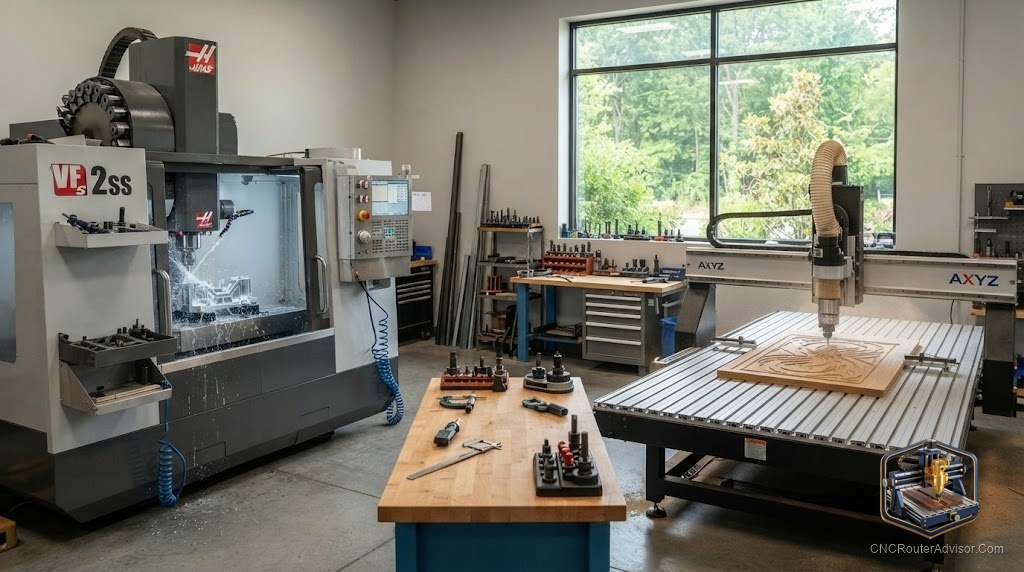
CNC mill versus CNC router is one of the most common comparison questions in machining, and it is one where the honest answer is simpler than the debate around it suggests: these machines are built for different materials and cutting forces, and matching the machine to the material is the decision, not matching it to a prestige level. A router used for wood work is not a mill that falls short; a mill used for metal is not a router that went further. Understanding what makes them physically different is what makes the comparison actually useful.
A CNC mill is a rigid, typically heavy machine designed for precise material removal in metals and hard materials at high cutting force and lower spindle speed, using end mills and drill bits in a large, stable frame. A CNC router is a faster-spinning machine designed for soft-to-medium materials like wood, plastics, foam, and composites in large work areas at high RPM and lower cutting force. The difference is in the build, the spindle, and the materials each handles well, not in one being more advanced than the other.
Here is the direct comparison: a CNC router is the right machine for wood, plastics, foam, signs, and furniture at a large work area and high RPM; a CNC mill is the right machine for steel, hard metals, and tight-tolerance precision parts at high cutting force and lower RPM. Most hobbyists need a router, not a mill. The sections below break down the five key differences.
Rigidity and mass
A CNC mill is far more rigid and massive than a router of similar work area, because metal cutting requires the frame to resist high cutting forces without flexing. A CNC router needs much less mass to resist wood cutting forces, which is why routers can have large work areas without weighing several hundred kilograms. If a router tries to cut hard steel, the flex that was acceptable for wood becomes a serious problem for tool life and accuracy.
Spindle speed and power
Routers run at high RPM, typically 10,000 to 30,000, which is required to achieve the right cutting speed for the small chips wood and plastics produce. Mills run at lower RPM, typically a few hundred to a few thousand, and generate higher torque for removing metal. A router spindle spun into a steel job overheats and breaks bits; a mill spindle run too slowly in wood rubs and burns rather than cuts.
Work area
Routers typically have much larger work areas than mills at similar cost, because wood work (signs, furniture, full sheets) needs large surfaces and the lower cutting force allows a lighter, larger frame. Mills have smaller work areas at similar cost because the mass required for rigidity against metal-cutting forces makes large frames very expensive.
Materials
Router: wood, MDF, plywood, plastics, foam, composites, and aluminum with the right setup. Mill: steel, stainless, titanium, hard metals, and anything requiring precise metal removal and tolerance. Aluminum is a crossover material; a rigid router with the right setup handles it, but a mill handles it with more precision and less fuss.
Cost comparison
At the hobby and prosumer level, routers are generally less expensive for the same work area because the lighter frame and simpler spindle cost less to build. Mills at similar capability for metal work cost more. Buying a mill to cut wood wastes the rigidity you paid for; buying a router to cut steel wastes the bit and possibly the machine.
For what a CNC router specifically does and does not do, see our guide to router machine CNC.
Final verdict
A CNC mill and a CNC router are built for different materials and cutting forces, and the comparison is not about which is better but which fits your work. Choose a router for wood, plastics, foam, composites, and signs; choose a mill for hard metals, tight tolerance metal parts, and precision metalwork. If your work is wood with occasional aluminum, a rigid router handles it. If your work is primarily metal, a mill is the right tool even if a router costs less.
FAQ
What is the difference between a CNC mill and a CNC router? A CNC mill is rigid and heavy, built for precise metal cutting at high force and lower RPM. A CNC router runs at high RPM and is built for wood, plastics, and composites in large work areas at lower cutting force.
Can a CNC router cut metal? Aluminum yes, with the right setup and bit. Hard metals like steel require a mill: the cutting forces and lower RPM needed exceed what most routers can handle without damaging the machine or bits.
Can a CNC mill cut wood? Yes, but it is generally the wrong tool: the low RPM needed for metal work produces burning rather than clean cuts in wood. A router does wood work far better and cheaper.
Which is more expensive, a mill or a router? At similar capability for their intended materials, mills for metal work are generally more expensive than routers for wood work because the mass and rigidity required for metal cutting cost more.
Which should I buy for hobby woodworking? A CNC router. It is the right machine for wood, sized and priced for that work, with a large work area and a high-RPM spindle that woods needs.
Can I use the same machine for both wood and metal? A rigid router handles aluminum with the right setup. For hard metals and steel, you need a mill. If your work is primarily wood with occasional aluminum, a router is the practical choice.
References
- Carbide 3D, router versus mill comparison guidance: https://carbide3d.com
- Autodesk, CNC machining overview and machine types: https://www.autodesk.com
- Onefinity CNC, machine type selection reference: https://www.onefinitycnc.com