
CNC Router Machine Price Guide: Costs, Features, and Buying Factors
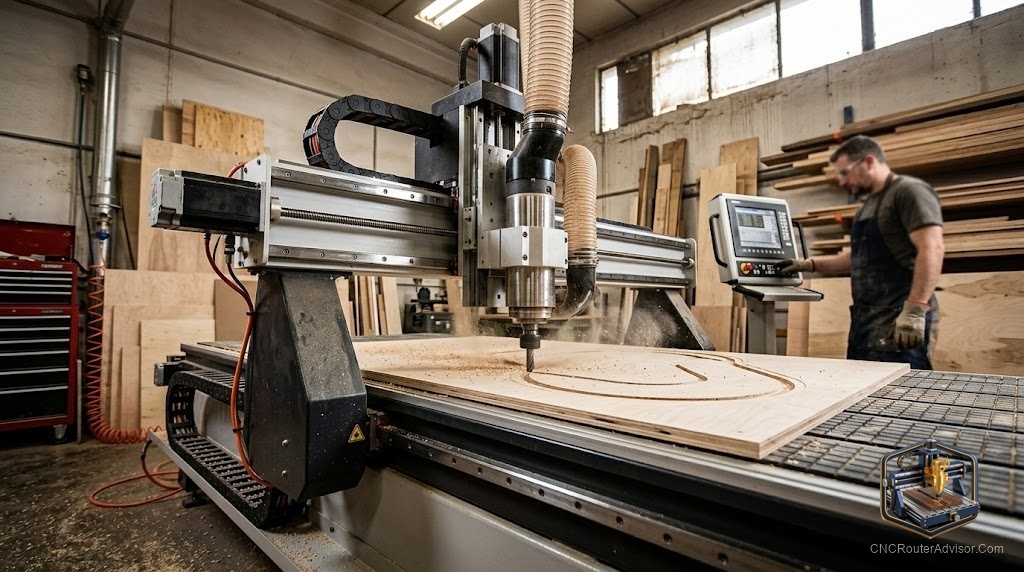
Ask what a CNC router machine costs and you will get answers that span from pocket money to the price of a car, which tells you the question is wrong. The useful question is: what am I actually paying for, and does this machine deliver it? Every dollar in a CNC router buys some mix of size, rigidity, power, precision, and support. Once you can read a machine as that bundle instead of a number, you stop overpaying for capability you will not use and underpaying into a machine you will outgrow.
The price of a CNC router machine is set by what it is built to do, its work area, rigidity, spindle power, motion quality, and support, and it rises in clear tiers from desktop hobby machines to industrial production systems. This guide explains what each level of investment actually buys so you can judge whether any machine is priced fairly for its capability.
What your money buys, capability by capability
Think of price as the sum of a few capabilities, each of which you can dial up or down:
- Work area. Often the biggest cost lever. Bigger beds need longer motion, stronger structure, and more material.
- Rigidity. Extrusion is cheap, cast aluminum costs more, steel most of all, and rigidity is what buys accuracy and metal capability.
- Spindle. A trim-router-style spindle is inexpensive, a VFD water-cooled spindle costs more and holds RPM under load, runs quieter, and lasts.
- Motion quality. V-wheels and lead screws are affordable, ball screws and profile rails cost more and buy precision and low backlash.
- Support and software. Established brands charge partly for documentation, community, and a proven software chain, which saves beginners real time.
- Automation. Tool changers and vacuum tables add cost and pay back only in production.
What each investment level delivers
Machines cluster into levels, and each exists to serve a real need:
- Desktop hobby. Smallest and least costly. Buys the whole workflow, engraving, and small parts. Limited by size and rigidity.
- Larger desktop and benchtop. More work area and stiffness, sometimes a real spindle. Serious hobby capability on a bench.
- Prosumer gantry. Room-scale work area, stiffer frame, strong software and support. The heart of the serious-hobby and side-business market.
- Full-sheet shop machine. Processes 4 by 8 sheets, heavier gantry, upgrade paths to automation. For cabinet and production work.
- Industrial production. Steel frame, servo drives, tool changers, vacuum tables. Built for all-day output and priced accordingly.
The goal is the lowest level that comfortably covers your real projects, then quality within it.
Where buyers misjudge value
The common overpay is spindle power and automation bought before the work needs them. A sign maker does not need a tool changer or the biggest spindle. The common underpay is on rigidity and work area, where buying too small and light leads to hitting limits within months. Spend where the limits actually bite, size and stiffness first, and treat automation as a later luxury.
Buying factors beyond the sticker
The machine is not the whole outlay. Plan for bits, workholding, dust control, a computer, and practice material. Consider resale, since established prosumer machines hold value well, which lowers the real cost of buying quality. And weigh support: a well-supported machine that keeps you cutting is worth more than a marginally cheaper one that leaves you stuck.
The honest verdict
Stop shopping by the sticker and start reading machines as bundles of capability. Decide the lowest tier that covers your projects with a little headroom, prioritize rigidity and work area over spindle power and automation, and buy from a maker whose support and software you trust. A machine chosen that way is rarely the cheapest and almost always the least expensive over its life, because it does the work you bought it for without forcing a costly replacement a year later.
Frequently asked questions
What determines the price of a CNC router machine? Work area, rigidity, spindle power, motion quality, and support. Bigger, stiffer machines with real spindles and ball screws cost more because they do more.
How much machine do I need to start? Often less than expected. Desktop and benchtop machines teach the full workflow and make real parts. Buy up only when your projects clearly demand it.
Where do buyers overspend? On spindle power and automation bought before the work justifies them. Most hobby and sign work never needs a tool changer or the largest spindle.
Where do buyers underspend? On rigidity and work area. Buying too small and too light leads to hitting the machine’s limits within months and replacing it sooner.
Are name-brand machines worth the premium? Often yes for beginners, since you pay partly for documentation, community, and a proven software chain that saves time and frustration.
What else should I budget for? Bits, workholding, dust collection, a computer, and practice material. These are part of a working setup, not optional add-ons.
Do CNC routers hold their value? Established prosumer machines tend to hold value well used, which lowers the real cost of buying quality up front and makes upgrading later easier.