
CNC Router Price Guide: Costs, Features, and Buying Factors
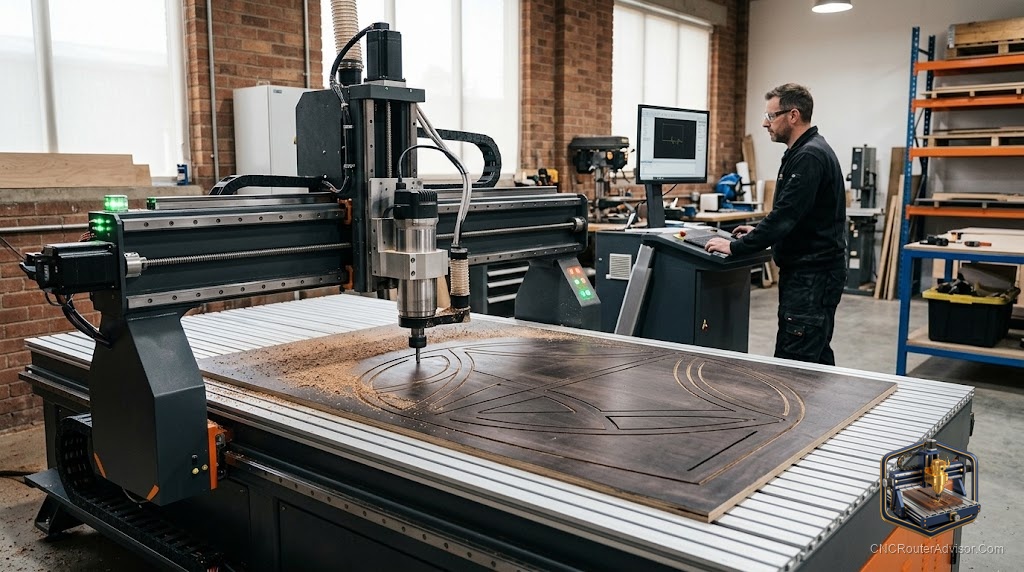
Everyone shopping for a CNC router wants a single number, and the honest answer is that the number is the least useful thing about the decision. Two machines with the same sticker can be wildly different tools, and two machines far apart can do the same job for you. What you are really buying is a bundle of capability: work area, rigidity, spindle power, motion quality, and support. Understand what drives cost, and you stop shopping by price tag and start shopping by fit.
A CNC router’s cost is driven mostly by size, rigidity, spindle power, and motion-system quality, and it climbs in fairly predictable tiers from small desktop kits up to industrial production machines. This guide walks those tiers and the features behind them so you can place any machine you are considering and judge whether it is priced for what it actually delivers.
The tiers, from bench to factory
Machines cluster into recognizable classes, and each class exists because a group of buyers needs that mix of capability:
- Desktop hobby (3018 class). Small work area, light frame, small spindle. The entry point for learning. Cuts wood, plastic, and light aluminum. Genmitsu 3018 machines define this tier.
- Larger desktop (4040 class, benchtop 6040). More work area and rigidity, sometimes a real water cooled spindle. Serious hobby capability on a bench.
- Prosumer gantry (Shapeoko, X-Carve, Onefinity, LongMill). Room-scale work areas up to roughly a few feet square, stiffer frames, strong software and support ecosystems. The heart of the serious-hobby and side-business market.
- Full sheet shop machines (4x8 tables like Avid CNC). Process a full sheet of plywood, heavier gantries, often with upgrade paths to ATC.
- Industrial production (Multicam, ShopSabre, and up). Steel frames, servo drives, automatic tool changers, vacuum tables, built for all-day output.
Your job is to find the lowest tier that comfortably covers your actual projects, then buy quality within it.
The features that push cost up
- Work area. Bigger beds cost more in materials, motion length, and rigidity engineering. This is often the single largest driver.
- Rigidity. Cast aluminum and steel frames cost more than extrusion and plastic, and rigidity is what lets a machine cut metal and hold accuracy.
- Spindle. A VFD-driven water cooled spindle costs more than a trim-router-style spindle, and it holds RPM under load, runs quieter, and lasts longer.
- Motion system. Ball screws and profile linear rails cost more than lead screws and V-wheels, and they buy precision and lower backlash.
- Automation. Automatic tool changers, tool setters, and vacuum tables add real cost and pay back only in production.
- Support and software. Established brands charge more partly for documentation, community, and a proven software chain, which is worth a lot to a beginner.
Where people overspend and underspend
The common overspend is automation and spindle power bought before the work justifies it. A hobbyist rarely needs an ATC or a 2.2kW spindle to carve signs. The common underspend is rigidity and work area. People buy the smallest, lightest machine that seems to fit, then hit its limits within months. Spend where the limits actually bite: size and stiffness first, automation last.
Buying factors beyond the machine itself
The machine is not the whole outlay. Budget mentally for bits, workholding, dust control, a computer, and the material you will turn into practice mistakes. A machine that seems like a stretch becomes reasonable if it saves you from replacing it in a year, and a machine that seems like a bargain gets expensive if you outgrow it fast. Factor resale too, since name-brand prosumer machines hold value well.
The honest verdict
Do not shop by the sticker. Shop by tier, then by quality inside the tier. Find the smallest class that covers your real projects with a little headroom, favor rigidity and work area over spindle power and automation, and buy from a maker whose support and software you trust. A machine bought that way is rarely the cheapest option and almost always the least expensive one over its life, because it does the work you bought it for without a costly replacement a year later.
Frequently asked questions
What drives the cost of a CNC router most? Work area and rigidity, followed by spindle power and motion-system quality. Bigger, stiffer machines with real spindles and ball screws cost more because they do more.
Do I need an expensive machine to start? No. Desktop machines in the 3018 and 4040 classes teach the whole workflow and make real parts. Buy up only when your projects clearly demand it.
What is the biggest overspend for beginners? Automation and spindle power bought before the work justifies it. Most hobby work never needs an automatic tool changer or the largest spindle.
What is the most common underspend? Rigidity and work area. People buy too small and too light, then hit the machine’s limits within months.
Are name-brand machines worth the premium? Often yes for beginners, because you pay partly for documentation, community, and a proven software chain that saves you time and frustration.
What else should I budget for besides the machine? Bits, workholding and clamps, dust collection, a computer, and practice material. These are part of a working setup, not optional extras.
Do CNC routers hold their value? Established prosumer machines tend to hold value well on the used market, which softens the real cost of buying quality up front.