Aluminum CNC Router Table Guide: Tooling, Speeds, Workholding, and Finish Quality
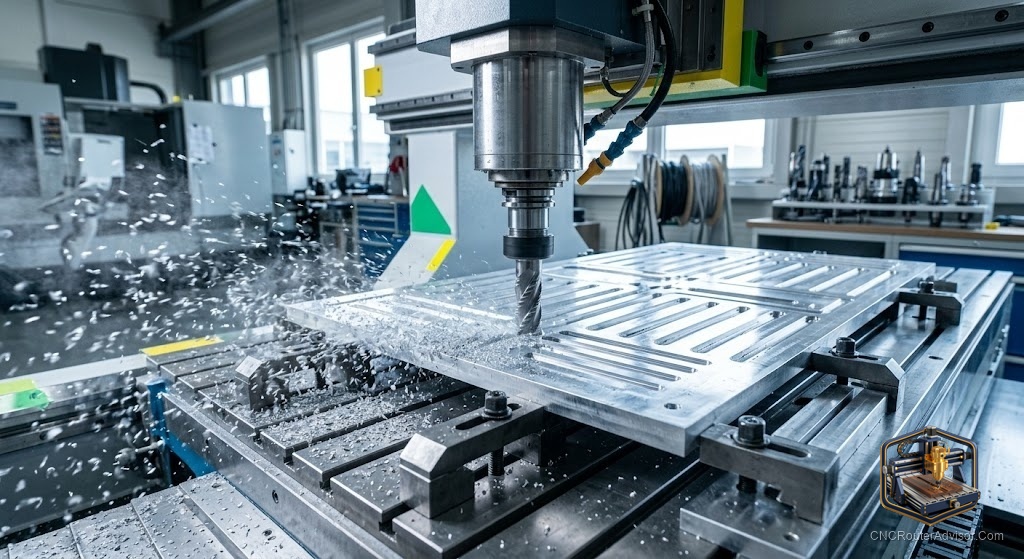
“Aluminum CNC router table” is one of those searches that hides two different questions. Some people mean a router with an aluminum bed - the T-slot extrusion tables that make clamping easy. Others mean cutting aluminum on a router table setup. Both matter, and they’re actually connected: a good aluminum table is one of the reasons you can machine aluminum well. Let’s cover the whole picture.
The aluminum extrusion table itself
Many quality CNC routers use an aluminum extrusion bed - a surface of parallel T-slots. It’s popular for good reason:
- Instant workholding. Slide clamps anywhere along the slots for fast, strong hold-down.
- Flatness. Precision-extruded beds start flat and stay flat.
- Modularity. Add fixtures, fences, and stops wherever you need them.
The trade-off is that a bare T-slot table isn’t ideal for through-cutting - you’ll still want a wasteboard/spoilboard on top for many jobs so you don’t cut into the extrusion. Think of the aluminum table as the rigid, repeatable foundation and the spoilboard as the sacrificial working surface.
When the table is what you’re cutting
If your goal is machining aluminum stock, everything comes back to frame rigidity. Aluminum punishes flex with chatter and tool breakage. You want a machine with a solid steel frame or heavy extrusion chassis, precision linear rails, a ball screw or lead screw drive, and a genuine VFD spindle you can tune. All-metal desktop machines built for this - like the AnoleX 3030-Evo Max or the larger AnoleX 4030-Evo Ultra 2 - pair a rigid aluminum-and-steel structure with the ball-screw motion aluminum demands.
Tooling
Aluminum needs bits that clear chips aggressively:
- A single-flute end mill (O-flute) for roughing and slots - the SpeTool O-flute for aluminum is the essential.
- A long-reach EANOSIC single-flute for depth.
- Small SpeTool aluminum finishers for clean walls.
Speeds and feeds
Keep the bit cutting, never rubbing. Maintain a proper chip load with moderate spindle RPM and a confident feed. Watch for real chips, not powder or a shiny smear. Coming from wood, the instinct to slow down is exactly what causes heat and welding - feed with purpose.
Workholding on an aluminum table
This is where the T-slot bed earns its keep. Aluminum transmits vibration instantly, so workholding must be immovable:
- Solid T-track clamps straight into the extrusion slots
- A milling vise for small billet parts
- Holding tabs in the toolpath so parts don’t break free
Support long or thin stock along its length to kill the drumming that becomes chatter.
Cooling and chip evacuation
Heat management is non-negotiable in aluminum. Use cutting fluid or WD-40 for light work, a cold air gun for mess-free cooling, or a mist coolant system for sustained cuts. Whatever you pick, prioritize chip evacuation - recut chips are the leading cause of ruined finish and snapped bits.
Finish quality checklist
- Rigid machine and dead-flat table
- Sharp single-flute bit, minimal stick-out to limit deflection
- Correct chip load
- Lubricant or mist on the cut
- Immovable workholding
- A light finishing pass
The bottom line
Whether “aluminum CNC router table” means the T-slot bed or the metal you’re machining, the answer rhymes: rigidity and clamping win. A flat aluminum extrusion table gives you the repeatable hold-down aluminum demands, and a rigid machine plus single-flute tooling and good cooling turns that stock into bright, clean parts.
Frequently asked questions
Is an aluminum T-slot bed better than MDF? For clamping and flatness, yes - but add a spoilboard on top for through-cuts so you don’t cut the extrusion.
Can I cut aluminum on a machine with an MDF bed? Absolutely - the bed material matters less than the machine’s overall rigidity and your workholding.
Why does my aluminum edge look torn? Usually too little chip load (rubbing/heat) or a loose setup causing chatter. Feed more, cool the cut, and clamp harder.