
Aluminum CNC Router Kit Guide: Tooling, Speeds, Workholding, and Finish Quality
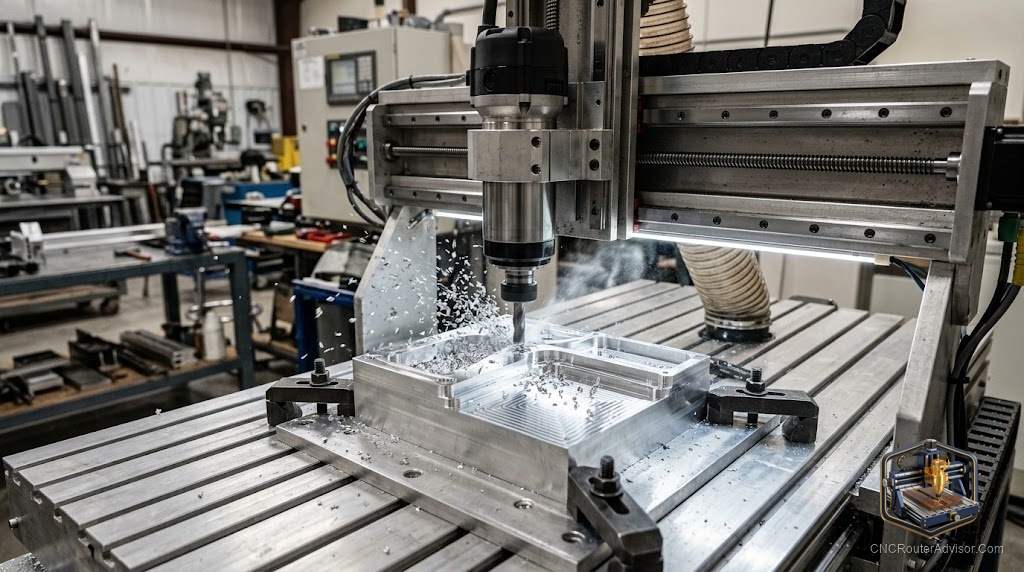
The phrase “aluminum CNC router kit” means different things to different shoppers. Some want a whole machine capable of cutting aluminum out of the box. Others already have a router and want the tooling kit that unlocks metal. This guide covers both, because getting good aluminum results is really about assembling the right combination - machine, bits, cooling, and workholding - rather than any single purchase.
What actually makes a machine “aluminum-capable”
Aluminum doesn’t demand a giant machine, but it’s ruthless about flex. The dividing line between a router that cuts aluminum well and one that fights you is frame rigidity. Look for:
- A stiff steel frame or heavy aluminum-extrusion chassis
- Precision linear rails on all axes
- A ball screw or solid lead screw drive rather than a stretchy belt
- A real VFD spindle (even a modest 700W-class one) with adjustable RPM
Those four things let you hold feeds and speeds steady enough to keep a proper chip load, which is the whole secret to clean metal cuts. All-metal desktop machines built with these features handle aluminum comfortably; the AnoleX 3030-Evo Max all-metal CNC router is a good example of a rigid, ball-screw benchtop unit aimed squarely at cutting aluminum, acrylic, and wood, and the larger AnoleX 4030-Evo Ultra 2 extends that capability to a bigger work area. For makers wanting more spindle muscle in a larger envelope, the OCASAMI 6090 spindle router steps things up.
The tooling kit that unlocks metal
If you already own a rigid machine, the “kit” you need is really about bits and cooling. The core of any aluminum tooling kit:
- A single-flute end mill (O-flute) for roughing and slots - the SpeTool O-flute upcut for aluminum is the essential first bit.
- A long-reach single-flute like the EANOSIC extra-long single-flute for deeper features.
- Small aluminum-specific finishers such as the SpeTool 1/8-inch aluminum end mills for clean walls.
That trio plus lubricant turns almost any rigid router into a metal-capable one.
Speeds and feeds: keep it cutting
Aluminum’s cardinal rule: never let the bit rub. Rubbing builds heat, heat welds aluminum to the flutes, and welded flutes snap bits. The cure is maintaining chip load - moderate spindle RPM, a confident feed, shallow-to-moderate depth. You want to see small chips flying, not fine powder or a smeared, shiny bit. This is the counterintuitive part for anyone coming from wood: feed more, not less.
Cooling and chip evacuation
Heat is the enemy, so a proper aluminum kit includes a way to manage it:
- Cutting fluid or WD-40 brushed on for light jobs
- A cold air gun for mess-free cooling and chip clearing
- A mist coolant system for sustained cuts
Above all, prioritize chip evacuation. Recut chips ruin finish and cause tool breakage faster than anything else. An air blast that keeps the slot clear is worth its weight in bits.
Workholding
Aluminum transmits vibration instantly, so any movement becomes chatter. Clamp hard and clamp flat. Use solid T-track clamps, a vise for small parts, or tabs left in the toolpath so parts don’t break free. The goal of workholding is simple: absolute zero movement.
Finish quality
Stack these habits and the results speak for themselves: rigid machine, sharp single-flute bit, correct chip load, lubricant on the cut, dead-solid workholding, and a light finishing pass. That’s the difference between a torn gray edge and a bright, clean one.
The bottom line
An “aluminum CNC router kit” is really a system: a rigid machine, the right single-flute tooling, a cooling method, and serious workholding. Assemble those pieces - whether you’re buying a capable all-metal machine or upgrading one you own - and aluminum stops being intimidating and starts being routine.
Frequently asked questions
Can a desktop machine really cut aluminum? Yes, if it’s rigid - all-metal frame, ball screws, real spindle. Technique and tooling matter more than size.
What’s the one bit I need? A single-flute (O-flute) end mill sized for your machine. It’s the foundation of every aluminum kit.
Do I need coolant? At minimum, lubricant on the cut and good chip clearing. A cold air gun or mist system helps a lot as you cut more.