
Aluminium Extrusion CNC Router Guide: Tooling, Speeds, Workholding, and Finish Quality
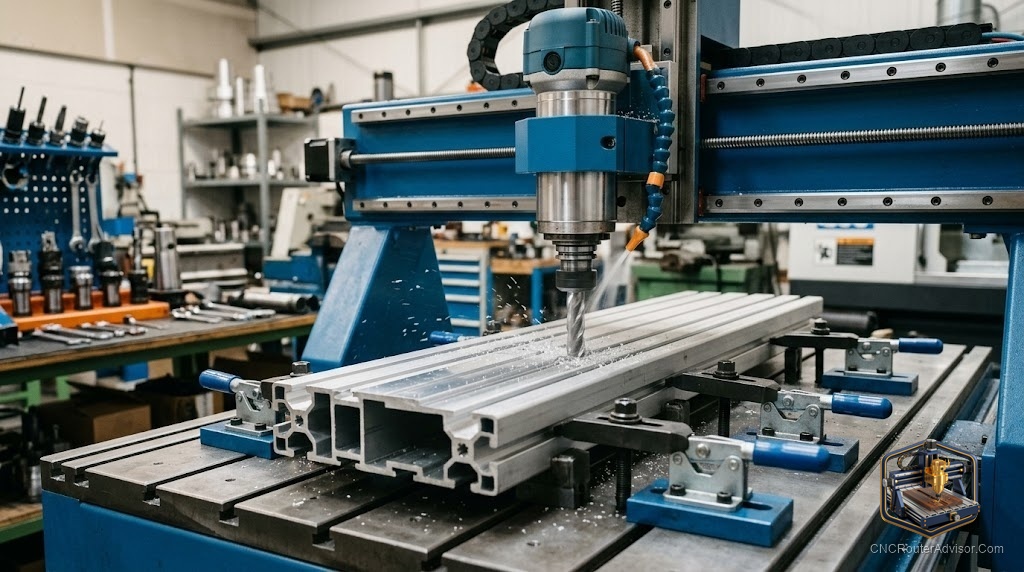
There’s a moment every woodworker-turned-machinist remembers: the first time they try to cut aluminium on a router built for plywood. The bit screams, chips weld to the flutes, and the finish looks like it was chewed rather than cut. It doesn’t have to be that way. Aluminium extrusion is genuinely router-friendly - softer and freer-cutting than solid billet - once you approach it on its own terms. Here’s how.
Why extrusion is the friendly aluminium
Extruded aluminium (the 6000-series profiles used for framing, brackets, and enclosures) is a joy to machine compared to cast or wrought stock. It’s consistent, relatively soft, and clears chips well. That makes it the ideal entry point into metal on a router that might otherwise spend its life in wood. But “friendly” isn’t “forgiving of bad technique” - the two enemies remain chatter and heat, and both come from the same root causes.
Can your machine do it?
Be honest about frame rigidity first. Aluminium doesn’t need a huge machine, but it punishes flex. A wobbly gantry turns into chatter, which turns into a poor finish and tool breakage. Machines with a solid steel frame or heavy extruded frame, quality linear rails, and a ball screw or lead screw drive handle aluminium far better than light belt-driven units. A capable VFD spindle - even a modest 700W-class one - with real RPM control beats a trim router because you can dial speed to the material.
Tooling: single-flute is your friend
The biggest mistake is using a wood bit. Aluminium needs a bit that makes room for its chips:
- A single-flute end mill (O-flute) gives each chip maximum space to escape, which is exactly what aluminium demands. The SpeTool O-flute upcut for aluminium is a reliable, affordable starting point.
- For deeper reach on taller profiles, a long single-flute like the EANOSIC extra-long single-flute end mill keeps the collet clear of the work.
- For fine detail and finishing passes, small multi-flute cutters made for aluminium such as the SpeTool aluminium end mills, 1/8-inch shank leave a cleaner surface at light depths.
Coatings help too - ZrN and TiB2 coatings resist the aluminium sticking that dulls bits fast.
Feeds and speeds: the counterintuitive part
Beginners slow everything down to feel safe. With aluminium that’s exactly backwards. Too slow a feed rate at high spindle RPM means the bit rubs instead of cuts, heat builds, and molten aluminium welds to the flutes. The fix is a proper chip load: keep the bit cutting, not rubbing. Moderate RPM, a confident feed, and shallow-to-moderate depth of cut. Watch the chips - you want small commas of metal flying off, not powder and not a screaming smear.
Cooling and chip evacuation
Heat management makes or breaks aluminium work. You have three good options:
- Lubricant. A shot of cutting fluid or even WD-40 on the cut reduces welding and improves finish dramatically on light jobs.
- Cold air. A cold air gun blows heat and chips away with no mess.
- Mist. A mist coolant system atomizes a little lubricant for sustained cuts.
Whatever you choose, prioritize chip evacuation - recut chips are the number-one cause of ruined finish and snapped bits in aluminium.
Workholding for profiles
Extrusion has an advantage: those T-slots and channels are perfect for clamping. Bolt the profile down through its own slots, or use the machine’s T-track with solid clamps. The goal of workholding is zero movement - aluminium transmits vibration instantly, so anything loose becomes chatter. Support long profiles along their length so they don’t drum.
Finish quality checklist
- Right chip load (chips, not dust)
- Lubricant or mist on the cut
- Rigid, flat workholding
- Sharp, aluminium-specific single-flute bit
- A light finishing pass at full depth, small stepover
Do those five things and extruded aluminium comes off the router with edges you can practically see your reflection in.
The bottom line
Aluminium extrusion is the perfect gateway to metal on a CNC router. Keep the machine rigid, run a single-flute end mill, feed it confidently to maintain chip load, cool the cut, and clamp through the extrusion’s own slots. Respect the material’s rules and it rewards you with clean, professional results.
Frequently asked questions
Do I need a metal-specific machine? No, but you need rigidity. A stiff frame, good rails, and a real spindle matter more than size.
Why does my bit keep clogging? Almost always too slow a feed for the RPM - the bit rubs and aluminium welds on. Increase feed or lower RPM to restore chip load, and add lubricant.
Is WD-40 really okay as a coolant? For light aluminium routing, yes - it’s a common, effective lubricant. For sustained work, step up to a proper cutting fluid or mist system.