
2mm CNC Router Bit Guide: Types, Uses, and What Makes Them Snap
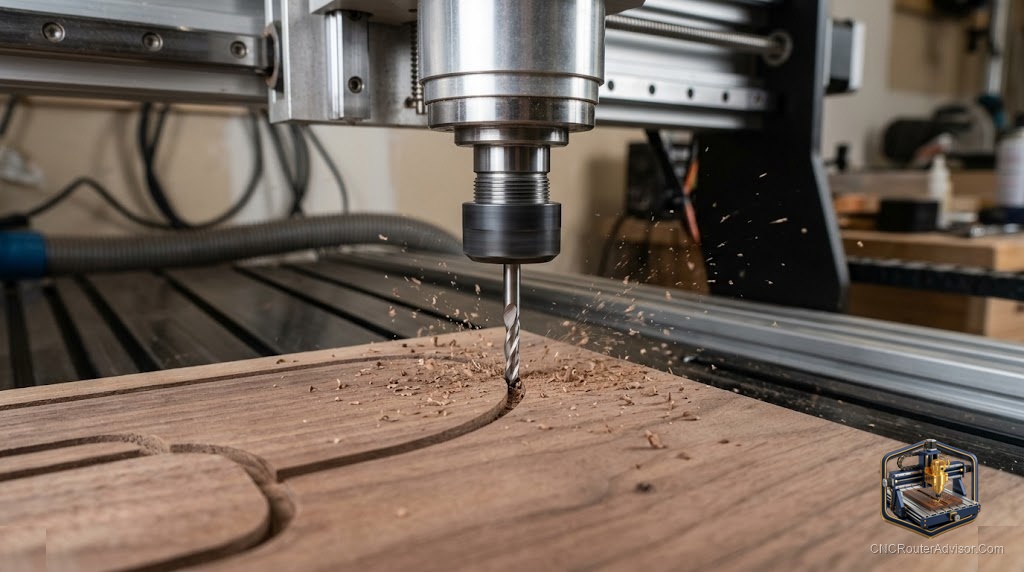
The 2mm CNC router bit is a micro-diameter tool that sits at the productive lower limit of what most hobby and prosumer CNC machines can run reliably without requiring the extreme spindle runout control that 1mm bits demand. At 2mm cutting diameter, you are in the range for fine detail engraving, small lettering, narrow slot cutting, PCB routing, and the detail passes on 3D relief carvings that 3mm and larger bits cannot reach. A 2mm bit is fragile relative to the 3mm and 6mm bits that make up most of a typical CNC woodworking kit, but it is significantly more forgiving than a 1mm bit, and the operating margins - while tighter than larger bits - are manageable with correct settings on a reasonably well-maintained machine.
A 2mm CNC router bit is a cutting tool with a 2mm (approximately 0.079 inch) cutting diameter, used for fine detail work including narrow engraving, small text, PCB trace isolation, narrow slot cutting, and precision profile work where larger bits cannot reach the required geometry. It requires maximum or near-maximum spindle speed, conservative feed rates, and rigid workholding to run reliably. The 2mm bit is one of the smallest sizes where single-bit purchase makes economic sense; below 2mm, buying in packs is more economical due to higher breakage rates.
The short guide: run a 2mm bit at maximum spindle speed (24,000 RPM on most hobby machines), feed conservatively (200 - 500 mm per minute depending on material), use shallow passes (0.2 - 0.5mm in wood), hold the workpiece rigidly, and accept that some breakage is part of using micro-diameter tooling. On a machine with good spindle runout (under 0.03mm), a 2mm carbide end mill is reliable for engraving and fine profile work with correct settings.
What a 2mm bit is for: the applications that need it
Fine engraving and text. Text at 5 to 10mm letter height has internal features (enclosed letter counters, narrow serifs) that a 3mm flat end mill fills in. A 2mm bit reaches these features correctly, and the result is legible fine text at small scale.
Narrow slot cutting. Inlay channels for thin inlay strips (boxwood, ebony), narrow decorative grooves, and PCB routing channels require a diameter at or below the slot width. A 2mm bit cuts 2mm wide slots in one pass.
PCB routing. Standard PCB trace isolation at 10 to 15 mil (0.25 to 0.38mm) spacing is beyond 2mm capability - that requires 0.8mm to 1mm bits. But PCB profile routing (cutting the board outline) and wider isolation passes are well within 2mm territory.
Detail pass on 3D relief carvings. After a 6mm or 3mm ball-nose roughing pass, a 2mm ball-nose detail pass reaches features in the design that the larger bit bridges. The 2mm ball-nose detail pass is a standard finishing step in high-detail CNC relief carving.
Jewelry and small object work. Fine detail channels, filigree patterns, and engraved personalizations on rings, pendants, and small wooden boxes require sub-3mm geometry that a 2mm bit provides.
Shank sizes and machine compatibility
Most 2mm CNC router bits have 3.175mm (1/8 inch) shanks for compatibility with standard ER11 hobby machine collets. Some have 6mm (1/4 inch) shanks for use on prosumer machines with 1/4 inch collets. Verify the shank size before ordering.
For 3018-class machines with native 3.175mm (1/8 inch) ER11 collets, the 3.175mm shank version of any 2mm bit seats directly. For prosumer machines with 1/4 inch collets, the 6mm shank version fits directly.
Starting settings for a 2mm bit in wood
For a two-flute carbide 2mm end mill in hardwood:
- Spindle: 24,000 RPM
- Feed rate: 300 - 600 mm per minute
- Depth per pass: 0.3 - 0.5mm
- Plunge: ramp or helical; avoid direct plunge
In acrylic: reduce spindle to 16,000 - 18,000 RPM, reduce feed to 200 - 400 mm per minute, maintain same depth per pass.
In MDF: 24,000 RPM, 500 - 800 mm per minute, 0.5mm depth per pass. MDF machines faster than hardwood at this diameter because its consistent fiber structure reduces the variable load that causes breakage.
For the best quality detail work at this scale, the SpeTool downcut spiral is available in small-diameter configurations, and carbide 2mm bit packs are available through multiple Amazon sellers for hobby machine use.
Our guide on how to choose a CNC router covers machine spindle requirements for micro-diameter tooling.
The takeaway: a 2mm CNC router bit is a productive detail tool for fine engraving, narrow slots, and precision relief carving detail passes. At this diameter, maximum spindle speed, conservative feed rates, and rigid workholding are the three settings that keep it alive. On a well-maintained machine with good runout, a 2mm carbide bit runs reliably with correct settings.
Frequently asked questions
What is a 2mm CNC router bit used for? Fine text engraving, narrow slot cutting, 3D relief detail passes, PCB board outline routing, and jewelry and small-object detail work.
What spindle speed should I run a 2mm bit at? Maximum available on your machine, typically 24,000 RPM on hobby desktop machines.
What feed rate is correct for a 2mm bit in wood? 300 - 600 mm per minute as a starting point. Monitor for burning or labored sound and adjust.
What depth per pass is safe with a 2mm bit? 0.3 - 0.5mm per pass in wood. Conservative is correct at this diameter.
What shank size does a 2mm bit use? Commonly 3.175mm (1/8 inch) for hobby machine compatibility. Some are available with 6mm (1/4 inch) shanks for prosumer machines.
Why do 2mm bits break? Excessive chip load (too fast feed or too deep pass), material vibration, poor workholding, high spindle runout, or incorrect collet seating are the most common causes.
References
- CNCCookbook, feeds and speeds for small diameter bits — https://www.cnccookbook.com/cnc-speeds-feeds/
- Carbide Depot, carbide end mill selection — https://www.carbidedepot.com/
- CNC Router Info, micro-diameter tooling guide — https://cncrouterinfo.com/guides/how-to-choose-a-cnc-router/