
1/8 Shank CNC Router Bits Guide: Compatibility, Collets, and What Fits Your Machine
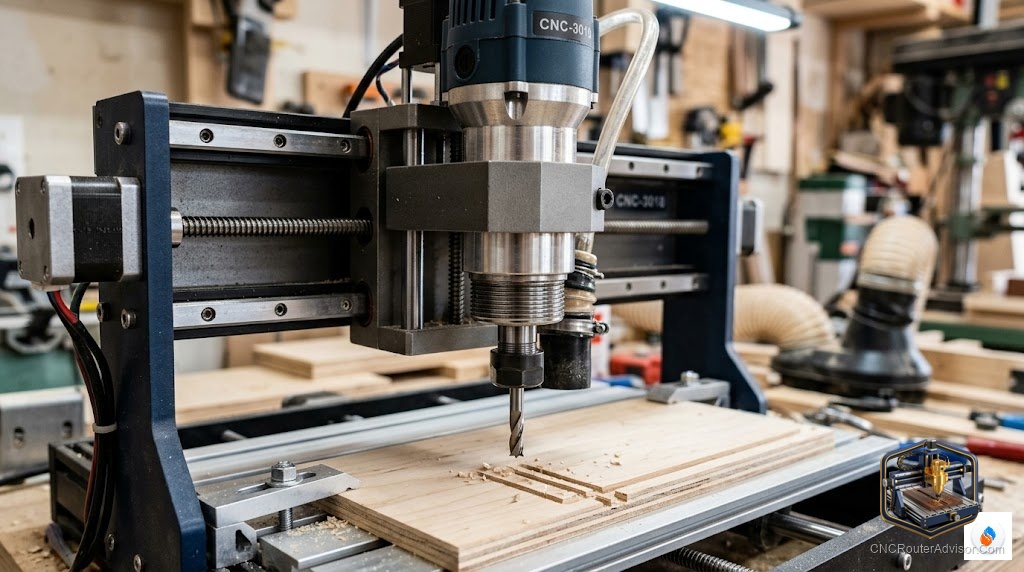
The 1/8 inch shank is the second most common shank size in hobby CNC routing, and it creates a compatibility question that catches many beginners: not every machine with a small spindle accepts 1/8 inch shank bits directly. Some have only a 1/4 inch collet, meaning a 1/8 inch shank bit will either not seat at all or will wobble catastrophically in an oversized collet. Understanding which machines accept 1/8 inch shanks natively, which need a collet change, and which need a shank adapter is the practical knowledge that prevents ordering the wrong bits.
A 1/8 inch shank CNC router bit has a 3.175 mm diameter steel shank that must seat in a 1/8 inch or 3.175 mm collet for proper clamping. The cutting diameter is independent of the shank size: a 1/8 inch shank bit may have a 1/8 inch cutting diameter, a 1/16 inch cutting diameter, or various other cutting diameters above or below the shank size. The shank must match the collet; the cutting diameter is what determines the feature the bit produces.
The short guide: check your machine’s collet size before buying any 1/8 inch shank bits. If your machine has only a 1/4 inch collet, you need either a collet upgrade, a 1/4 inch shank version of the same bit, or a precision collet reducer (not recommended for production work). If your machine accepts 1/8 inch collets or has an ER collet system with a 1/8 inch insert, 1/8 inch shank bits seat and run correctly.
Which machines accept 1/8 inch shank bits natively
Most 3018-class hobby CNC routers (Genmitsu 3018, RATTMMOTOR, FoxAlien, and similar) ship with a spindle that has a 3.175 mm (1/8 inch) ER11 collet as standard, with a 1/4 inch adapter collet included for larger shank bits. On these machines, 1/8 inch shank bits are the native standard, and 1/4 inch shank bits require the adapter collet.
Trim routers used as CNC spindles (Makita RT0701C, DeWalt DWP611) come with 1/4 inch collets and do not natively accept 1/8 inch shank bits without an aftermarket 1/8 inch collet or adapter. Check the trim router’s collet change options before buying 1/8 inch shank bits for a machine using a trim router spindle.
Prosumer machines with ER20 collet systems accept a range of shank sizes through collet inserts, including 1/8 inch, 3 mm, 1/4 inch, 6 mm, and larger. On an ER20 machine, adding a 1/8 inch (or 3.175 mm) ER20 collet insert provides proper 1/8 inch shank clamping.
1/8 inch shank versus 1/4 inch shank for the same cutting geometry
Many bits are available in both 1/8 inch and 1/4 inch shank versions with the same cutting diameter. The 1/4 inch shank version of a 1/8 inch cutting diameter bit provides:
- Better shank support for longer bits (less deflection under cutting load)
- Direct compatibility with 1/4 inch collets without adapters
- Slightly increased collet grip area for better runout
The 1/8 inch shank version provides:
- Native compatibility with 1/8 inch ER11 collet machines
- Slightly less shank material (appropriate for shorter, stiffer bits)
- Often a lower per-bit price in entry-quality packs
For a machine with a 1/4 inch collet only, buying 1/4 inch shank versions of bits is almost always the right choice. For a machine with a native 1/8 inch collet (most 3018-class), buying the 1/8 inch shank version is the natural fit.
Collet reducers: use them cautiously
Collet reducers (also called collet sleeves or shank adapters) are metal bushings that reduce a larger collet down to accept a smaller shank. They are available for reducing 1/4 inch collets to 1/8 inch shanks and are tempting because they are cheap. The problem is runout: a reducer adds concentricity error between the outer (collet) diameter and the inner (shank) diameter, resulting in more tool tip wobble than a properly matched collet and shank produce. For light engraving where precision is less critical, reducers are acceptable. For profiling and precision pocket work, they are not recommended.
The better solution for a machine with only a 1/4 inch collet is to buy bits in 1/4 inch shank configuration. The geometry is the same; only the shank changes.
For a solid starter set of 1/8 inch compatible bits, the FoxAlien CNC router bit essential kit covers the common geometries at an entry price appropriate for hobby machines.
Our guide on how to choose a CNC router covers spindle and collet systems across machine classes.
The takeaway: 1/8 inch shank bits are the native standard for most 3018-class hobby machines and fit ER collet prosumer machines with the right insert. For trim-router-spindle machines with only 1/4 inch collets, buy 1/4 inch shank versions of the geometry you need. Collet reducers work for light engraving but are not the right solution for precision work.
Frequently asked questions
Do all hobby CNC routers accept 1/8 inch shank bits? No. 3018-class machines with ER11 spindles do natively. Trim-router-based machines (Makita, DeWalt) have 1/4 inch collets and need a collet change or 1/4 inch shank bits.
Can I use a collet reducer to use 1/8 inch shank bits in a 1/4 inch collet? Yes, but with reduced accuracy due to added runout from the reducer. For precision work, use the correct collet or buy bits in 1/4 inch shank.
What is the standard collet on a Genmitsu 3018? ER11 with a 3.175 mm (1/8 inch) collet as standard, plus a 1/4 inch adapter insert included.
What ER insert do I need for 1/8 inch shank bits on a prosumer machine? An ER20 (or ER16) collet insert for 1/8 inch or 3.175 mm shank size.
Are 1/8 inch shank bits the same diameter as 3.175 mm? Yes, 1/8 inch = 3.175 mm. Both designations refer to the same shank diameter and use the same collets.
Why do some 1/8 inch cutting diameter bits have 1/4 inch shanks? A 1/4 inch shank provides more support for the bit body, reduces deflection on longer bits, and fits 1/4 inch collets directly without adapters.
References
- Carbide 3D, CNC spindle collet documentation — https://docs.carbide3d.com/
- SainSmart, Genmitsu 3018 spindle and collet specifications — https://www.sainsmart.com/
- CNCCookbook, Tool Holding and Collet Guide — https://www.cnccookbook.com/cnc-router/