
1/8 CNC Router Bit Guide: Types, Uses, and When to Reach for the Smaller Diameter
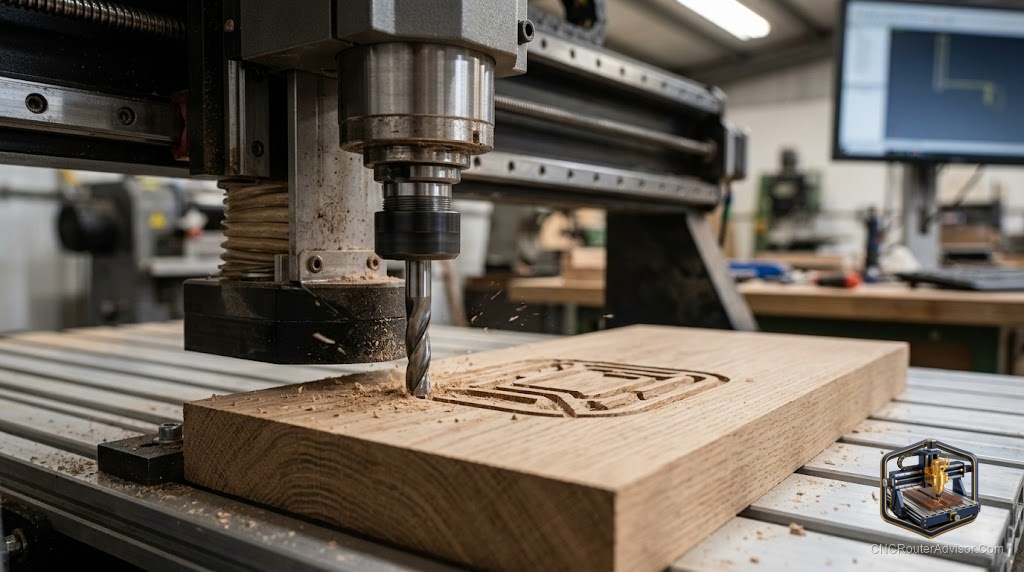
The 1/8 inch router bit lives in an interesting zone: it is small enough to reach detail that a 1/4 inch bit cannot, but large enough to handle real chip loads in wood and plastic without the fragility that comes with going smaller still. It is the diameter that most desktop CNC routers run as their standard cutting bit alongside the 1/4 inch workhorse, and for machines with work areas in the 300 by 180 mm to 600 by 500 mm class, it is often the bit that sees the most use because it matches the scale of the work and the projects that those machines produce.
A 1/8 inch CNC router bit is a cutting tool with a 3.175 mm cutting diameter (or close to it, since nominal 1/8 inch and 3.175 mm are interchangeable in practice), used for profiling, pocketing, engraving, and detail carving in wood, MDF, acrylic, and soft materials. At this diameter, the bit can reach narrower features than a 1/4 inch bit while still tolerating reasonable feed rates without the fragility that 1/16 inch and smaller sizes impose. It is the standard diameter for most hobby CNC machine work.
The short guide: choose the bit geometry based on the cut type (upcut for pockets and through-cuts, downcut for clean top faces, compression for plywood, ball-nose for curved surfaces, V-bit for lettering) and match the feed rate to the chip load, which at 1/8 inch requires more conservative settings than a 1/4 inch bit because the reduced cross-section means less structural reserve when chip loads are high.
What 1/8 inch enables that 1/4 inch cannot
The primary reason to use 1/8 inch over 1/4 inch is feature resolution: the inside corners of any pocket or profile made with a 1/8 inch bit have a minimum internal radius of 1/16 inch (1.59 mm) rather than the 1/8 inch (3.175 mm) radius that a 1/4 inch bit leaves. On detailed designs with narrow internal features - small text pockets, interlocked geometric patterns, intricate decorative carving - this smaller corner radius either allows the feature to be accurately cut or makes it possible to attempt it at all.
For small-scale projects (jewelry box, small decorative sign, miniature work), a 1/8 inch bit is often the right diameter for all the structural cuts because the work area is small and the features are fine enough to justify the smaller bit throughout the program.
Bit geometry at 1/8 inch
Upcut spiral end mills are the default for pocketing and through-cutting. At 1/8 inch, the upcut clears chips efficiently from deeper cuts and produces clean bottom faces. The chip evacuation benefit of upcut geometry matters more at 1/8 inch than at 1/4 inch because the narrower slot accumulates chips faster in proportion to the passage width.
Downcut spiral end mills push chips down and produce a clean top surface. Use downcut for shallow profiling in thin sheet materials where top face quality is the priority. At 1/8 inch depth limitations apply: do not use downcut for deep pockets where chip packing becomes a problem.
Compression spiral bits at 1/8 inch cutting diameter with 1/4 inch shank are available and useful for thin plywood and veneered panel profiling where both faces need to be clean at fine features.
V-bits at 1/8 inch effective width are used for fine-scale V-carving and lettering. At small scales, a V-bit produces crisper text than an end mill at the same feature size.
Ball-nose bits at 1/8 inch diameter are the standard for fine 3D carving detail passes, reaching features that a 1/4 inch ball-nose would bridge over.
Feeds and speeds at 1/8 inch
At 1/8 inch diameter, chip load must be lower than at 1/4 inch to avoid overloading the bit’s reduced cross-section. Starting points for a two-flute upcut spiral in wood at 18,000 RPM:
- Feed rate: 800 to 1,200 mm/minute (start conservatively)
- Depth of cut: 1 to 2 mm per pass in wood (maximum flute length depth gradually)
- Plunge rate: half the feed rate
For acrylic: reduce spindle speed to 12,000 to 16,000 RPM to prevent heat buildup and increase feed rate relative to the lower RPM to maintain chip load.
Burning in wood at 1/8 inch means the chip load is too low (rubbing rather than cutting). Increase feed rate or reduce spindle speed. Rough surface finish means too high a chip load; reduce feed rate or take shallower passes.
Shank size: matching 1/8 inch bits to your machine
Most 1/8 inch CNC bits for hobby and prosumer use come with a 1/8 inch shank that fits 1/8 inch collets, or with a 1/4 inch shank that fits standard 1/4 inch collets with the 1/8 inch bit’s cutting diameter. The 1/4 inch shank version gives better shank support for longer reach applications. Verify which configuration your machine accepts before ordering.
For hobby machines with 1/4 inch collets only, look for 1/8 inch cutting diameter bits with 1/4 inch shanks. For machines with ER20 or ER16 collet systems, bits with dedicated 1/8 inch shanks fit properly with the correct collet insert.
A solid starting pack for 1/8 inch work is the FoxAlien CNC router bit essential kit, which includes common 1/8 inch geometries alongside other sizes.
Our guide on how to choose a CNC router addresses machine and collet selection for the small to medium work where 1/8 inch bits shine.
The takeaway: the 1/8 inch CNC router bit is the fine-detail workhorse of hobby and small-format CNC routing. Reach for it when features are too narrow for a 1/4 inch bit, when the project scale suits the smaller diameter, and when you need the finer corner radius for interlocked or detailed designs. Run it at appropriate chip loads and it is as dependable as its larger sibling.
Frequently asked questions
When should I use 1/8 inch instead of 1/4 inch? When features require a smaller corner radius (under 3 mm internal corners), when the project scale suits finer tooling, or when detail carving requires the smaller reach.
What chip load should I use for 1/8 inch bits in wood? Approximately 0.005 to 0.010 inches per tooth for a two-flute bit at 18,000 RPM. Translate this to feed rate using CNCCookbook’s calculator for your specific RPM.
Can I use 1/8 inch bits on a 3018-class hobby machine? Yes. 1/8 inch is the standard detail-work bit for 3018 machines. Use conservative settings and verify the collet accepts the shank size.
What is the deepest single pass I can take with a 1/8 inch bit in wood? Typically no more than the bit’s cutting diameter (1/8 inch) per pass as a starting rule, increasing toward the full flute length as settings are proven. Deep slots in one pass risk deflection and breakage.
Do 1/8 inch bits come with 1/4 inch shanks? Yes, many do. This configuration (1/8 inch cutting diameter, 1/4 inch shank) allows fine cutting geometry while fitting standard 1/4 inch collets directly.
What is the best 1/8 inch bit for acrylic? A single-flute or two-flute upcut spiral, with spindle speed reduced to 12,000 - 16,000 RPM to prevent heat-induced gumming. Single-flute bits clear chips most aggressively, which helps in acrylic.
References
- CNCCookbook, Feeds and Speeds for 1/8 inch Bits — https://www.cnccookbook.com/cnc-speeds-feeds/
- Inventables, “Working with 1/8 inch Bits” — https://www.inventables.com/
- FoxAlien, bit kit specifications — https://www.foxalien.com/