
1/4 Shank CNC Router Bits Guide: Collet Compatibility, What Fits, and Why Shank Size Matters
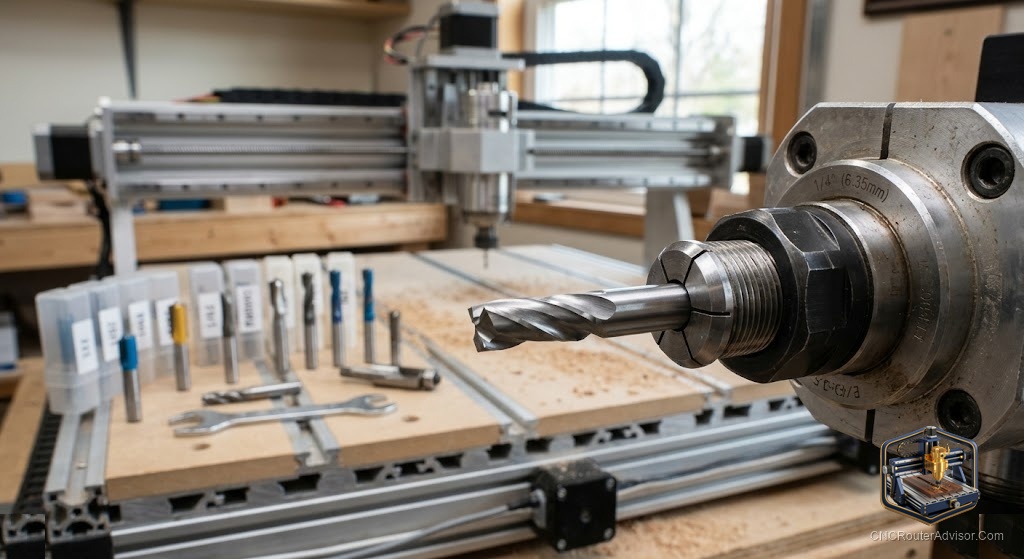
Shank size and cutting diameter are two different things, and confusing them is one of the most common sourcing mistakes CNC router beginners make. A 1/4 inch shank bit has a 1/4 inch diameter steel rod above the cutting flutes - the part that seats in the collet - but its cutting diameter can be 1/8 inch, 1/4 inch, 1/2 inch, or anything in between, depending on the bit’s geometry. Understanding the distinction between shank and cutting diameter, and why it matters for your machine’s collet, is the step that prevents you from ordering the right bit in the wrong fit.
A 1/4 inch shank CNC router bit is any CNC router bit with a 1/4 inch diameter cylindrical shank that seats in the machine’s collet, regardless of the bit’s cutting diameter. The shank is the blank steel portion above the flutes; the collet is the clamping mechanism that grips the shank. Your machine’s spindle must have a collet that matches the shank diameter for the bit to seat properly and run accurately. Mismatched shank and collet sizes (even with a reducer) produce runout that degrades cut quality and shortens bit life.
The short version: 1/4 inch shank bits fit machines with 1/4 inch collets or ER collet systems with a 1/4 inch (6.35 mm) insert. They are the most widely compatible bit type in hobbyist and prosumer CNC routing because the 1/4 inch shank is standard on most desktop and prosumer machines. Verify your collet size before ordering bits; this is the step that prevents most fitment errors.
Why shank size is its own topic
The reason to understand shank size separately from cutting diameter is that they constrain the problem from different directions. Cutting diameter determines what geometry the bit can produce (minimum feature width, pocket dimensions, pass width). Shank diameter determines whether the bit physically fits your machine and runs with acceptable runout.
A 1/4 inch shank bit with a 1/8 inch cutting diameter is a real, useful bit type: the 1/8 inch flutes allow fine detail and narrow features, while the 1/4 inch shank provides adequate support length and fits 1/4 inch collets directly. This configuration is common for engraving, fine V-carving, and detail profiling on machines that have only 1/4 inch collets - it gives you the narrow cutting geometry of a smaller bit without needing a different collet.
Conversely, many production bits come with 1/2 inch shanks: larger shank diameter reduces flex in longer bits and allows the collet to grip a larger contact area, reducing runout. These require a 1/2 inch collet, which smaller hobby machines with 1/4 inch only collets do not have.
What machines accept 1/4 inch shank bits
Most hobby desktop CNC routers (Genmitsu 3018, RATTMMOTOR, FoxAlien, and similar) have 1/4 inch collets as standard and accept 1/4 inch shank bits directly. Trim routers (Makita RT0701C, DeWalt DWP611) used as CNC spindles also come with 1/4 inch collets standard.
Prosumer machines with purpose-built spindles using ER20 collet systems accept a range of shank sizes through collet inserts: an ER20 collet system will have inserts for 1/4 inch (6.35 mm), 6 mm, 1/2 inch (12.7 mm), and other diameters. With the correct insert, an ER20 spindle accepts 1/4 inch shank bits as well as larger shank sizes.
Verify your machine’s collet size before buying any bits. The spindle or trim router documentation states the collet size explicitly. If your spindle has a 1/4 inch collet only, 1/4 inch shank bits are your standard and 1/2 inch shank bits require an upgrade to an ER system or a different spindle.
The most useful 1/4 inch shank bit configurations
1/4 inch shank, 1/4 inch cutting diameter: The standard configuration for most pocketing and profiling. This is what most people mean when they say “1/4 inch bit.”
1/4 inch shank, 1/8 inch cutting diameter: Narrower feature resolution with the standard shank fit. Good for detail work, narrow slots, and engraving features that exceed a 1/8 inch bit’s strength requirement at shorter lengths.
1/4 inch shank, V-bit (various tip angles): V-carving bits commonly come in 1/4 inch shank, making them compatible with most hobby and prosumer machines directly.
1/4 inch shank, ball-nose: Fine-detail 3D carving with 1/4 inch shank for direct fit into standard collets.
1/4 inch shank, compression spiral: The production standard for plywood and MDF through-cutting. The Amana Tool 46170-K compression spiral uses a 1/4 inch shank and fits standard hobby and prosumer collets directly.
Runout: why proper collet fit matters even with correct shank size
Even with the correct shank size, runout (bit tip wobble during rotation) depends on the collet condition and cleanliness. A 1/4 inch shank bit in a worn or dirty collet runs with more runout than the same bit in a clean, properly tightened collet. Clean the collet taper and the bit shank before seating, verify the bit is seated at the correct depth (not too shallow), and tighten to the appropriate torque. Excessive runout even at the correct shank size indicates a worn collet that needs replacement.
For the machine context around collet compatibility, our guide on how to choose a CNC router covers spindle and collet systems.
The takeaway: 1/4 inch shank bits are the most universally compatible CNC router bits for hobbyist and prosumer machines. Verify the shank size matches your collet before ordering, keep the collet clean, and seat the bit correctly - those three steps ensure the bit runs at its designed accuracy regardless of which geometry you choose.
Frequently asked questions
Is 1/4 inch shank the same as 1/4 inch cutting diameter? No. Shank diameter is the part that fits in the collet; cutting diameter is the width of the cutting flutes. A bit can have a 1/4 inch shank and a smaller or larger cutting diameter.
What machines accept 1/4 inch shank bits? Most hobby desktop CNC routers and trim-router-based spindles. Prosumer machines with ER20 collets accept 1/4 inch shank bits with the appropriate collet insert.
Can I use a 1/4 inch shank bit in a 1/2 inch collet with an adapter? Not recommended. Adapter-based shank reductions increase runout significantly and are not appropriate for precise cutting work.
What is the most versatile 1/4 inch shank bit? A 1/4 inch shank, 1/4 inch cutting diameter two-flute upcut spiral end mill covers the widest range of pocketing and profiling applications.
Do Amana Tool bits come in 1/4 inch shank? Yes. Most of Amana Tool’s woodworking CNC bits are available in 1/4 inch shank configurations, making them directly compatible with most hobbyist and prosumer machines.
What causes a 1/4 inch shank bit to slip in the collet? Insufficient tightening torque, a worn or dirty collet, or a bit seated too shallow. Always clean the collet and bit shank before seating and tighten to the appropriate torque.
References
- ToolsToday, 1/4 inch shank CNC bit selection — https://www.toolstoday.com/
- CNCCookbook, Collet and Tool Holding Guide — https://www.cnccookbook.com/cnc-router/
- Carbide 3D, CNC tooling and collet documentation — https://docs.carbide3d.com/