
Freud CNC Router Bits Guide: Types, Uses, Sizes, and Selection Tips
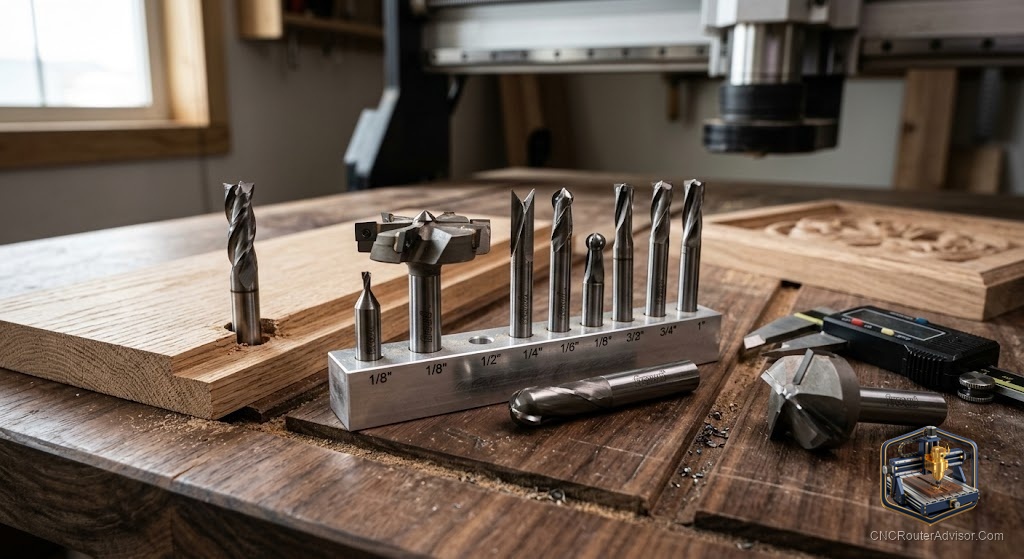
When woodworkers talk about quality router bits, Freud is a name that comes up again and again, known for well-made cutters with a strong reputation among craftspeople. If you are looking at Freud bits for CNC work, it helps to understand the types of bits used in CNC routing, what each does, how to size them, and how to choose well. This guide covers CNC router bit selection with Freud’s category of quality tooling in mind, so you can buy the right cutter for the job.
Why bit quality matters
The bit is where the machine meets the material, so its quality directly shapes your results. A well-made cutter stays sharp longer, cuts cleaner, resists deflection, and leaves a better finish, while a poor bit dulls fast, tears the material, and fights you the whole way. This is why makers pay attention to trusted names. A quality bit is not an indulgence, it is what lets a good machine do its best work, and it often costs less over time because it lasts.
The main types of CNC router bits
Most CNC work is done with a handful of bit types, each suited to a job:
- Upcut spiral bits, which pull chips up and out of the cut for efficient clearing.
- Downcut spiral bits, which press chips down for a clean top surface.
- Compression bits, which combine both to leave clean edges on the top and bottom, ideal for plywood and laminates.
- Straight bits, simple and versatile for many cuts.
- V-bits, essential for lettering, engraving, and V-carving.
- Ball-nose bits, for smooth three-dimensional and relief carving.
- Surfacing bits, wide cutters for flattening spoilboards and slabs.
Knowing these types is the foundation of choosing the right cutter for any project.
Matching bit to material and job
Selection is really about matching the cutter to the work. Use an upcut for efficient chip clearing in slots and pockets, a downcut when the top surface must stay clean, and a compression bit when both faces of plywood or laminate need clean edges. Reach for a V-bit for crisp lettering and a ball-nose for smooth contours. For flattening, a wide surfacing bit is the tool. Choosing by the job rather than by habit is what produces clean results.
Sizing bits correctly
Bit size covers a few dimensions that all matter. Shank size must match your collet, commonly 1/4 inch or 1/8 inch on hobby machines, so confirm fit before buying. Cutting diameter affects detail and strength, since smaller bits reach finer detail but are more fragile and slower. Cutting length should suit your material thickness without being longer than needed, because extra length adds deflection. Matching these to your machine and material keeps cuts accurate and tools intact.
Proven quality options
Whatever brand you settle on, buying quality pays off, and a couple of widely trusted cutters show what to look for. For flattening spoilboards and slabs, the Whiteside 6210 surfacing bit cuts cleanly and leaves a smooth reference surface. For clean edges on plywood projects, a quality compression bit keeps both faces splinter-free. Cutters like these illustrate the sharpness, finish, and durability worth paying for, whichever trusted brand you choose.
Getting the most from your bits
Even the best bit needs good technique. Run appropriate feeds and speeds so the bit cuts rather than rubs, since heat is what kills a cutter. Keep chips clearing so they do not pack and burn. Seat bits in a true collet to minimize runout and deflection. And retire bits before they dull to the point of tearing the material. Treated well, quality bits reward you with clean cuts for a long time.
Choosing bits with confidence
Selecting CNC router bits, whether Freud or another trusted name, comes down to matching the right type and size to your material and job, and favoring quality that stays sharp and cuts clean. Learn the bit types, size them to your machine and material, buy quality for the cutters you use most, and run them with good technique. Do that, and your bits become a dependable part of every clean, accurate project.