CNC Router Stone Guide: Tooling, Speeds, Workholding, and Finish Quality
Cutting stone on a CNC router feels like a different world from cutting wood, and in many ways it is. Marble, granite, slate, and engineered stone are hard, abrasive, and unforgiving, and they demand a machine and a mindset built for the task. Done right, a CNC router can engrave, profile, and carve stone into signage, inlays, memorials, and architectural details with precision that would be brutally slow by hand. Done wrong, it wears out tools and disappoints. This guide covers what stone cutting really requires.
Stone is not wood, and the machine must know it
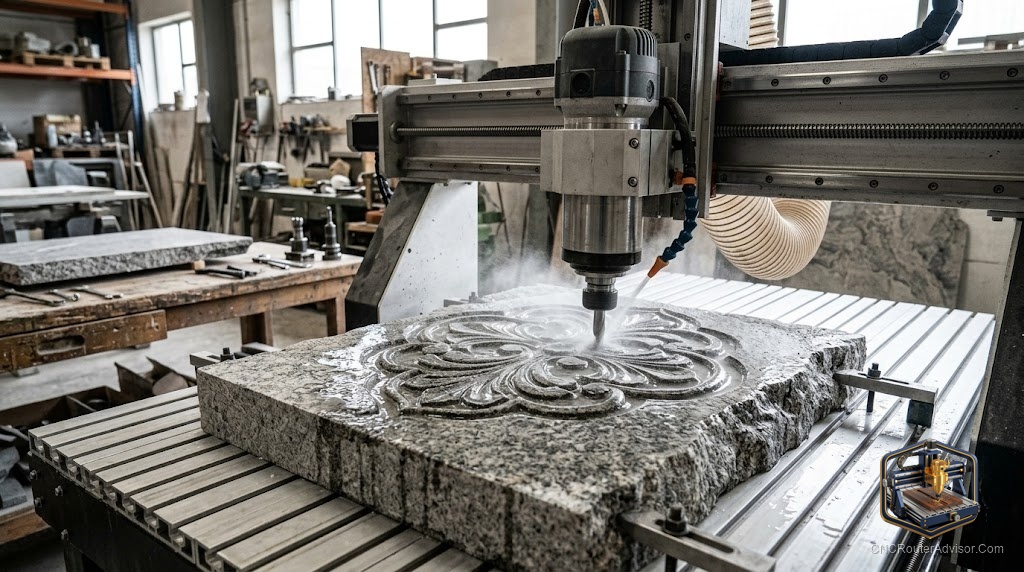
The first thing to understand is that stone cutting is abrasive rather than a clean chip-forming process. Instead of slicing chips the way a cutter does in wood, stone tooling grinds material away. That changes everything about the setup. The forces are different, the tooling is different, and above all, the process usually needs water. Water cools the tool, controls the fine dust that would otherwise be a serious health hazard, and clears the cut.
This is why casual hobby machines struggle with stone. The work rewards a rigid frame, a capable spindle, and a way to manage water and slurry that a typical wood-oriented setup does not have.
Tooling for stone
Stone tooling is diamond tooling. Diamond-coated or diamond-segmented bits, burrs, and profiling tools grind through hard material where a standard end mill would simply dull and fail. The specific tool depends on the job, with engraving bits for detail and lettering, profiling tools for edges, and larger tools for material removal. Because these tools work by abrasion, they last longest when kept cool and fed at sensible rates rather than forced.
Speeds and the role of water
Stone cutting rewards patience. Aggressive feeds crack material and destroy tooling, so light passes and controlled feed rates are the rule. Water is central to the process, cooling the diamond tooling and flushing the fine abrasive slurry from the cut. Without it, the tool overheats, the dust becomes hazardous, and the finish suffers. Any serious stone setup plans for water delivery and for managing the slurry it produces.
Workholding
Stone is heavy and cannot shift under the tool. Secure workholding is essential, both for accuracy and for safety, since a moving stone workpiece is dangerous. Fixtures, clamps, and a stable bed that can tolerate water and slurry are all part of a proper stone setup. The workholding also has to keep the piece flat and referenced so carve depths stay consistent across the surface.
Finish quality
Good finish in stone comes from the same discipline as good cutting: a rigid setup, appropriate diamond tooling, light passes, and steady cooling. Polished finishes usually require progressive steps, moving through finer tooling or dedicated polishing stages to bring up the surface. Rushing any stage shows in the result, so stone work rewards those who let the process take the time it needs.
Setting expectations
Stone is one of the more demanding materials a CNC router can tackle, and it is not something most hobby machines are built for. Success comes from a machine with real rigidity, diamond tooling, water cooling and dust control, secure workholding, and the patience to run light passes. Meet those requirements and a CNC router opens up beautiful, durable work in a material that has attracted craftspeople for millennia. Underestimate them and stone will teach a hard lesson quickly. Respect the material, prepare the setup, and the results can be extraordinary.