CNC Router Pinewood Derby Guide: Tooling, Speeds, Workholding, and Finish Quality
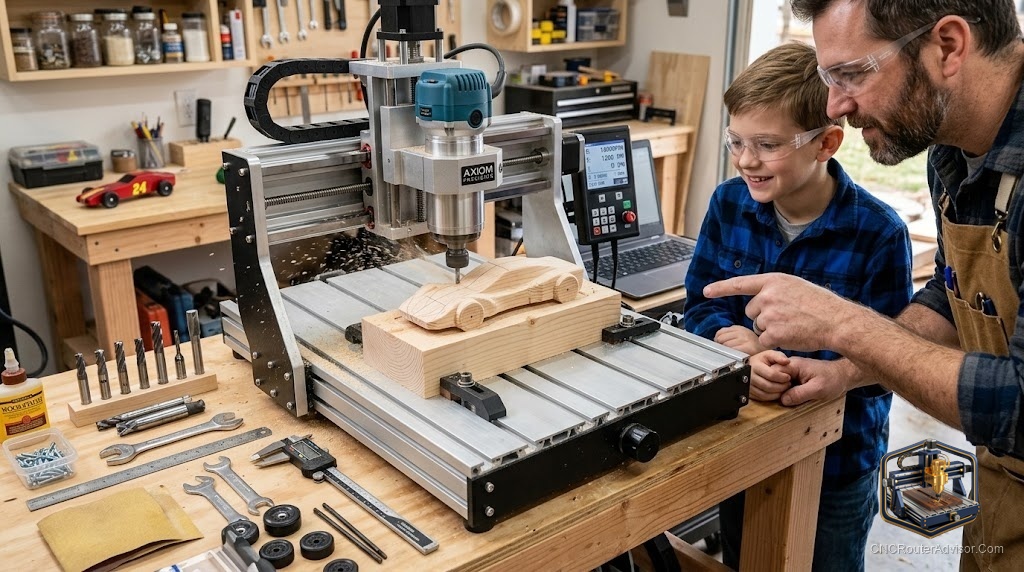
There is a particular kind of pressure that comes with a pinewood derby car. A block of pine, a deadline, and a kid who wants to win. A CNC router changes that whole experience. Instead of wrestling a coping saw through a pine block on the kitchen table, you can design a fast, clean shape on screen and let the machine carve it precisely. The result looks professional, races well, and, best of all, becomes a project you and your child design together.
Why pine is easy and tricky at the same time
The official blocks are soft pine, and soft pine cuts fast. That is the easy part. The tricky part is that soft pine tears and fuzzes if your tool is dull or your feed is wrong. A clean derby car comes from sharp tooling, sensible speeds, and light finishing passes rather than brute force. Pine also has soft grain and hard grain in the same block, so the cutter can dive or skip if you rush it.
Choosing a machine for the job
A derby car is small, so you do not need a huge machine. You need precision and a rigid setup in a compact footprint. A desktop router is ideal here. The Genmitsu 3018-PRO has enough travel for a standard block and is an approachable machine for a parent learning alongside a child. If you want more rigidity and a bit more room for jigs and multiple cars, the Genmitsu 3020-PRO MAX V2 steps up the frame while staying desktop friendly.
Tooling for a clean car
Keep the tooling simple. A single-flute or two-flute end mill clears chips well in soft pine and leaves a smooth surface. Single-flute bits shine here because pine produces a lot of soft chips that need somewhere to go. Add a small ball-nose bit if you want rounded, aerodynamic contours on the top of the car. Sharp tools matter more than fancy ones, since a dull bit is what causes most of the fuzzing people blame on the wood.
Speeds and depth of cut
Pine cuts happily at moderate speeds. The mistake most people make is trying to hog out the whole shape in one deep pass, which tears grain and can lift the block. Take lighter passes, let the cutter clear chips, and finish with a shallow pass that skims the surface clean. Good chip evacuation, helped by a bit of dust collection, keeps the cut clear and the finish crisp.
Workholding on a small block
Holding a small pine block securely is the single most important safety and quality step. The block must not move. Double-sided tape on a flat surface works for light cuts, but a small clamp arrangement or a simple jig that cradles the block is more dependable, especially once the cutter starts removing material and the block gets lighter. Never rely on a loose hold, because a block that breaks free ruins the car and the tool.
Finishing for speed and looks
After the machine does its work, a light hand sanding removes any remaining fuzz and prepares the surface for paint. Because the CNC has already established a smooth, accurate shape, finishing is quick. Keep weight in mind as you design, since the rules usually cap the car weight, and plan pockets where you can add weight low and toward the rear for better performance.
A project worth sharing
The real win with a CNC router and a pinewood derby car is not just a faster car. It is sitting down with your child, sketching a shape, watching the machine bring it to life, and handing them something they helped create. The trophy is nice. The afternoon spent making it is better.