
CNC Router for Plastic: Machine Features, Tooling, and Buying Advice
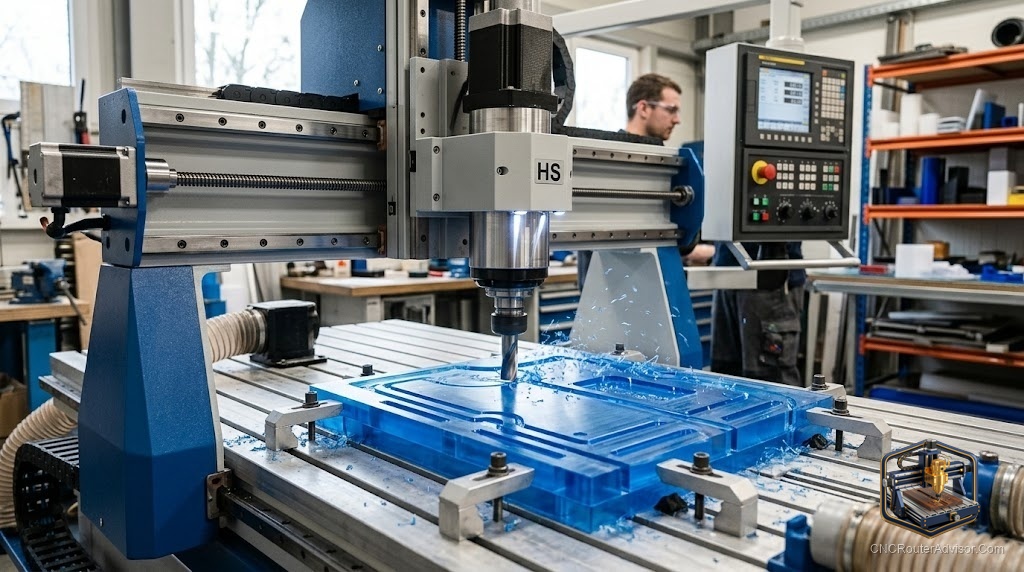
Plastic is one of the most satisfying materials to cut on a CNC router because it rewards good technique with clean, polished-looking edges and precise parts. It is also the material that most often surprises beginners, because plastics vary wildly. Acrylic melts onto a hot bit. Polycarbonate gums. HDPE cuts beautifully but clamps awkwardly. What works perfectly for one plastic fails on another. Understanding that each plastic needs its own approach is the foundation of good CNC plastic work.
A CNC router for plastic is a computer-controlled gantry machine used to cut, engrave, and profile plastic sheet and block, including acrylic, polycarbonate, HDPE, PVC, nylon, ABS, PETG, and foam plastics.
Short answer for plastic work: the material dictates the strategy. For acrylic, managing heat is everything. For HDPE, chip clearing and workholding are the main challenges. For foam, a fast feed with a single-flute tool keeps the foam from compressing before it cuts. Know your specific plastic before you program anything.
Why plastics are different from each other
Most plastics share one critical challenge: low thermal tolerance. Unlike wood and metal, most plastics start deforming well before they are hot enough to look burnt. A bit that dwells, rubs, or spins too fast for its feed rate builds heat and re-welds chips to the cut edge or the tool. Clean plastic work is almost entirely about managing heat through the right tool, the right speed, and chip clearing.
Acrylic is the most common. It melts onto hot tools and leaves a frosted, chipped edge when bit geometry is wrong. Single-flute or polished O-flute carbide cuts it cleanly with managed heat.
Polycarbonate is tougher and more flexible than acrylic. It gums at slow speeds, so a higher feed rate and good chip clearing matter even more.
HDPE is the softest common engineering plastic, easy to cut but difficult to hold because of its slippery surface.
Foam plastics (tooling foam, EVA) want a fast feed rate and a sharp single-flute tool; they compress before an underpowered or slow setup can cut them.
Machine features for plastic work
Plastic cutting does not demand the rigidity that aluminum does, making it accessible on a wider range of machines. The key feature is spindle variable speed, because different plastics want different RPM ranges. Frame rigidity still matters for finish quality and precision.
Tooling
Single-flute or two-flute carbide end mills are the standard for most plastics. Single-flute maximises chip clearance; two-flute provides a slightly better finish. Avoid multi-flute bits that pack chips. For acrylic specifically, a polished O-flute style bit minimises the friction that causes melting.
Feeds and speeds: material by material
Acrylic: lower spindle speed, moderate feed, constant air clearing. Polycarbonate: higher feed rate than acrylic, good chip clearing. HDPE: generous feed rate, modest RPM, sharp tool. Foam: high feed rate, low RPM, single-flute tool. Start conservative, listen for a smooth cutting sound, and adjust.
Workholding
Plastic sheet is light and prone to sliding. Double-sided tape is effective for smaller sheets; mechanical clamps work for larger stock. Remove protective masking from the cut zone before routing acrylic or it can stick and interfere with the cut.
The verdict
A CNC router handles plastic well when you match the approach to the specific material. Use single-flute or two-flute carbide, manage heat through speed, feed, and chip clearing, and secure the workpiece thoroughly.
Three things to remember:
- Each plastic behaves differently; know the specific material before setting up.
- Heat is the enemy of all plastic work; manage it through tool geometry, speed, feed rate, and air clearing.
- Single-flute or two-flute carbide for most plastics; polished O-flute for acrylic where finish matters.
FAQ
Can any CNC router cut plastic? Yes, most rigid hobby and prosumer machines cut common plastics with the right tooling and settings.
What is the best bit for cutting acrylic? A single-flute or two-flute carbide end mill with polished flutes (O-flute style).
Why does my acrylic melt when I cut it? Too much heat: spindle speed too high relative to feed rate, too many flutes, or chips not clearing. Lower RPM, increase feed, add air clearing.
Can a CNC router cut polycarbonate? Yes. Polycarbonate needs a higher feed rate than acrylic and good chip clearing to prevent gumming.
How do I hold plastic sheet? Double-sided tape for smaller sheets, mechanical clamps for larger stock.
Does plastic need coolant? Not usually. Compressed air clearing is effective for most plastics on router-class machines.
What plastics can a CNC router cut? Acrylic, polycarbonate, HDPE, PVC, nylon, PETG, foam plastics, and most engineering plastics.
References
- Amana Tool, Plastic Cutting CNC Router Bits: https://www.amanatool.com/products/cnc-router-bits/acrylic-plastic-cutting-cnc-router-bits.html
- CNC Router Info, Best CNC Router Bits: https://cncrouterinfo.com/guides/best-cnc-router-bits/
- PrecisionBits.com, CNC Router Bits for Plastic: https://www.precisionbits.com/plastic-bits/