
CNC Router for Aluminum Cutting: Machine Features, Tooling, and Buying Advice
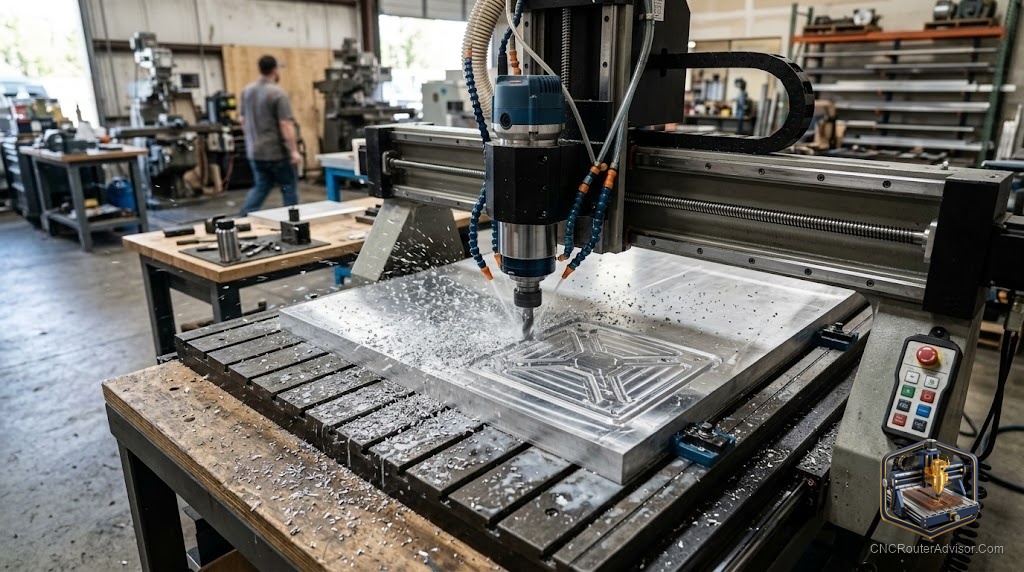
Aluminum is the metal most hobby and small-shop CNC owners actually want to cut. It is soft, relatively forgiving, and shows up in everything from brackets and panels to signs and fixtures. The machine question is not whether a CNC router can do it, most rigid ones can, but which features actually determine whether the cuts come out clean and the bits stay intact. The answer is almost entirely about three things: a stiff frame, a motion system that does not flex under light metalworking forces, and tooling engineered for soft metal rather than wood.
A CNC router for aluminum cutting is a computer-controlled gantry machine used to profile, slot, pocket, and drill aluminum stock, most commonly sheet and flat bar. Aluminum is soft and non-ferrous, which makes it accessible to router-class machines while its tendency to gum on the cutting edge makes technique important.
Short answer: frame rigidity is the most important machine variable for aluminum, more than table size or raw spindle wattage. Pair a rigid machine with single-flute or two-flute carbide end mills made for non-ferrous metal, run the spindle slower than for wood, push the feed rate, and clear chips constantly.
The frame question: rigid over large
The force needed to cut aluminum is modest compared to steel, but higher and more sustained than wood. A frame that flexes produces chatter, inconsistent depth, and poor surface finish in aluminum. A compact, very rigid machine outperforms a larger but flexy one every time. Push the gantry sideways with your hand before buying: obvious flex is real flex that shows in the aluminum.
All-metal extrusion frames with real fastening hardware, lead screws or ball screws on each axis, and a spindle rated for continuous-duty use are the markers of a machine that handles aluminum without drama.
Motion system: screws over belts
Belts are common on small hobby machines because they are cheap and forgiving. In wood, the slight positional error from belt stretch is rarely visible. In aluminum, where cuts are shallower and finish matters more, that same stretch shows up as dimensional error and surface irregularity. For any aluminum work beyond occasional light engraving, lead screws or ball screws are the practical minimum.
Tooling: the short list
For aluminum, single-flute carbide end mills (O-flute) are the starting point because they have the most room for chip evacuation. Two-flute non-ferrous carbide adds better finish once the cut is running clean. Multi-flute wood bits pack chips in aluminum immediately and should not be used. Solid carbide only.
Feeds, speeds, and chip clearing
The spindle runs slower than for wood, not faster. The feed rate is the lever that prevents rubbing. Start at a conservative depth with a real feed rate, listen for a steady cutting sound, and watch the chips: small, bright, and clearing freely means cutting. Fine powder and heat means rubbing.
Air clearing at the cut, a simple air blast or cold air gun, is enough for most aluminum work and dramatically extends tool life.
Workholding: zero tolerance for movement
Aluminum does not forgive a part that shifts. Clamp thoroughly, use more hold-down points than seems necessary, and add tabs to smaller parts so they cannot move on the last pass.
The verdict
For aluminum cutting on a CNC router, buy rigidity before size, screws before belts, and single-flute carbide before anything else. Set the RPM lower than for wood, push the feed rate so the bit cuts rather than rubs, and keep chips cleared with air.
Three things to remember:
- Rigidity and motion system quality (screws, not belts) matter more for aluminum than table size.
- Single-flute carbide end mills for non-ferrous metal are the correct starting tool; wood bits gum and snap.
- Lower RPM, real feed rate, and an air blast for chip clearing are the three technique basics that prevent broken bits.
FAQ
Can a standard CNC router cut aluminum? Yes, provided the machine is rigid and you use correct tooling and settings. Frame rigidity and screw-drive motion matter far more than a metal-specific label.
What end mills for aluminum? Single-flute (O-flute) solid carbide for non-ferrous metals. Two-flute non-ferrous carbide for finishing passes.
Why does my CNC router gum up in aluminum? Spindle speed too high for the feed rate, causing rubbing rather than cutting. Lower RPM, increase feed, clear chips with air.
Do I need special cooling? Not necessarily. A compressed air blast clears chips and manages temperature for most light aluminum work.
Belt-drive or screw-drive? Screw-drive. Belt flex introduces positional error that is negligible in wood but visible in aluminum.
How deep per pass? Shallow, especially on lighter machines. Multiple passes with small depth of cut keep forces low and protect the bit.
Is a more powerful spindle better for aluminum? Rigidity and technique matter more than raw power for the light cuts typical of router-class aluminum work.
References
- Amana Tool, Solid Carbide Aluminum Spiral O-Flute CNC Router Bits: https://www.amanatool.com/products/cnc-router-bits/aluminum-non-ferrous-metal-cutting-router-bits/solid-carbide-aluminum-spiral-o-flute-cnc-router-bits.html
- CNC Cookbook, Feeds and Speeds for Aluminum: https://www.cnccookbook.com/cnc-router-aluminum-cutting/
- DATRON, Single Flute End Mills for Aluminum: https://shop.datron.com/product/single-flute-end-mills/