
CNC Router Bits for Wood in the UK: Types, Uses, Sizes, and Where to Buy
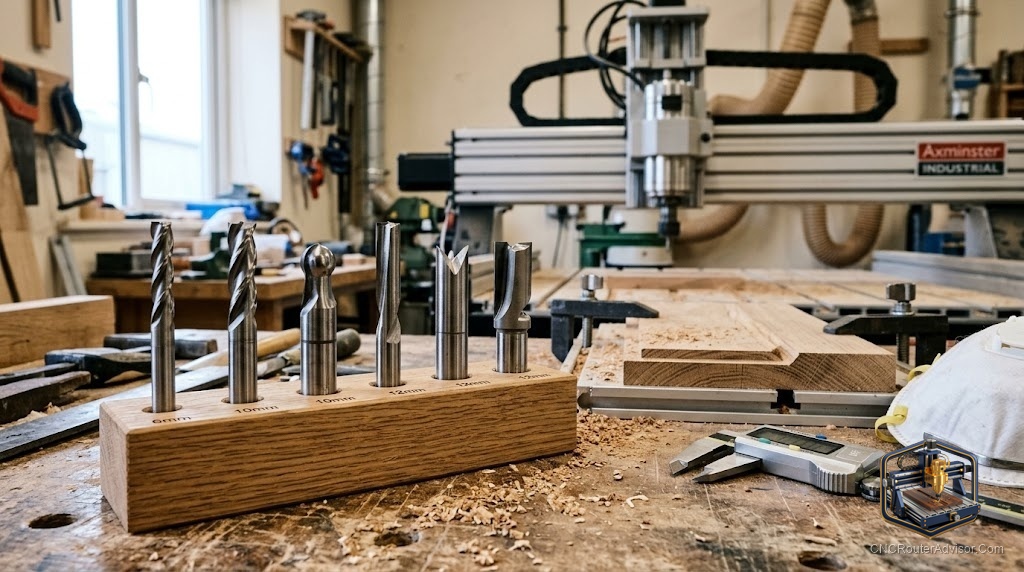
A CNC router is only as good as the bit spinning in its collet, and for woodworkers in the UK there is an extra wrinkle: shank sizes, suppliers, and stock differ from the US-centric advice that fills most forums. A bit set optimised for an American hobby machine may arrive with the wrong shank for your spindle, or from a supplier that ships slowly across the Atlantic. Knowing which bits do which jobs, and which UK suppliers stock them, gets you cutting clean wood sooner and with fewer expensive mistakes.
CNC router bits for wood are the cutting tools that carve, profile, and cut your material, and UK woodworkers should match the bit type to the job and the shank size to their collet, then buy from established UK suppliers to get the right stock quickly. This guide covers the essential bit types, the sizing details that matter in the UK, and where to source quality tooling.
The essential bit types for wood
A handful of bit types covers most woodworking:
- Upcut spiral, which pulls chips up and out of the cut, clearing efficiently and preventing burning in deep cuts, at the cost of some fraying on the top face.
- Downcut spiral, which presses chips down for a clean top surface, ideal where the top face shows, though it packs chips and needs care to avoid burning.
- Compression bit, which combines both to keep the top and bottom faces clean, the go-to for plywood and veneered board.
- V-bit, for V-carved lettering and decorative work, in angles like 60 and 90 degrees.
- Ball nose, for smooth 3D carving and relief.
- Surfacing or spoilboard bit, a wide flat cutter for flattening boards and truing the spoilboard.
- Straight bit, a simple general-purpose cutter for slots and profiles.
Sizes and the UK collet question
This is where UK buyers must be careful. Bits come in different shank diameters, and the shank must match your collet exactly:
- 1/4 inch (6.35mm) and 1/8 inch (3.175mm) shanks dominate imported hobby machines and much of the tooling sold to them.
- 6mm and 8mm metric shanks are widely sold in the UK for European-style spindles and routers.
- A 1/4 inch shank will not seat in a 6mm collet, despite being close, so confirm whether your machine uses imperial or metric collets before ordering.
UK spindles, especially those on European machines, frequently use ER collets in metric sizes, so check your collet size and buy the matching shank. This single check prevents the most common ordering mistake.
What to look for in quality
- Solid carbide for spirals and detail bits, which holds an edge far longer than high-speed steel in wood.
- Coatings that reduce heat and improve chip flow on bits used hard.
- Sharpness and finish, since a quality ground edge cuts cleaner and lasts.
- Reputable brands, with names like Amana and Whiteside at the premium end and solid mid-range options widely available, avoiding the cheapest unbranded bits that dull fast.
Where to buy in the UK
UK woodworkers have good domestic options that stock the right shank sizes and ship quickly:
- Specialist tooling and CNC suppliers in the UK carry solid-carbide spirals, compression bits, V-bits, and surfacing cutters in both imperial and metric shanks.
- Established woodworking retailers stock router and CNC bits alongside general tooling.
- Brand distributors for names like Amana and Whiteside have UK stockists, so you can buy premium bits without importing.
- Machine manufacturers often sell matched tooling for their spindles, which removes the shank-size guesswork.
Buying from a UK supplier avoids import delays and customs charges, and lets you confirm the shank size against your collet before ordering.
The honest verdict
The bits themselves are the same physics everywhere, but UK buyers win by getting two things right: matching the shank to their collet, which is often metric on UK and European machines, and buying from established UK suppliers who stock the correct sizes and ship quickly. Start with a compression bit for sheet goods, an upcut and downcut spiral, a V-bit, and a surfacing bit, buy solid carbide from reputable brands, and confirm your collet size before every order. Do that and you sidestep the two most common and costly UK tooling mistakes: the wrong shank and the slow import.
Frequently asked questions
What CNC router bits do I need for wood? Start with a compression bit for sheet goods, an upcut and a downcut spiral, a V-bit for lettering, a ball nose for 3D, and a surfacing bit for flattening.
What shank size are UK CNC router bits? Both imperial (1/4 inch and 1/8 inch) and metric (6mm and 8mm) are sold in the UK. UK and European spindles often use metric ER collets, so check yours.
Will a 1/4 inch bit fit a 6mm collet? No. A 1/4 inch shank is 6.35mm and will not seat in a 6mm collet despite being close. Match the shank to your collet exactly to avoid this common mistake.
What is the best bit for cutting plywood? A compression bit, because its upcut and downcut sections keep both the top and bottom veneers clean, which is exactly what plywood needs.
Should I buy solid carbide bits? Yes for spirals and detail work. Solid carbide holds an edge far longer than high-speed steel in wood, especially against abrasive plywood glue lines.
Where can I buy CNC router bits in the UK? UK specialist tooling and CNC suppliers, established woodworking retailers, and UK distributors for brands like Amana and Whiteside, which avoids import delays and customs.
Why buy from a UK supplier instead of importing? To avoid import delays and customs charges and to confirm the shank size against your collet before ordering, which prevents the most common sizing mistake.