
CNC Ball Nose Router Bits: Types, Uses, Sizes, and Selection Tips
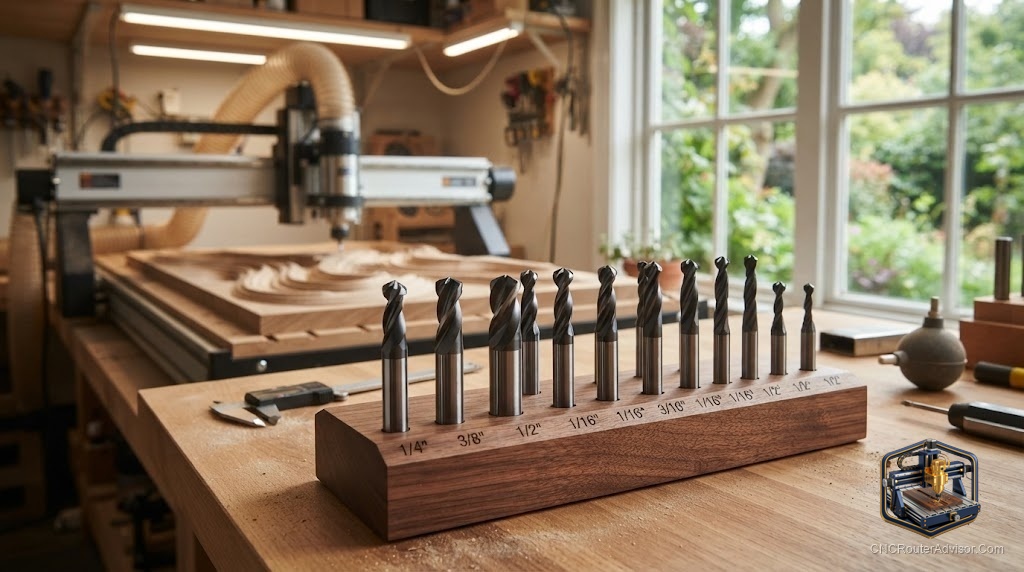
If you have ever admired a smooth, sculpted 3D carving, a curved relief, or a flowing contoured surface cut on a CNC router, you were looking at the work of a ball nose bit. Where a flat end mill leaves flat bottoms and sharp internal corners, a ball nose bit has a rounded, hemispherical tip that produces smooth, curved surfaces, which makes it the essential tool for 3D carving and contour work. Choosing and using ball nose bits well is what separates a rough, faceted carving from a smooth one. This guide explains the types, uses, sizes, and how to select the right ball nose bit.
Ball nose bits are the defining tool of 3D and contour work, so understanding their shapes, sizes, and how stepover controls finish is key to smooth carvings.
A CNC ball nose router bit has a rounded, hemispherical tip instead of a flat end, so it cuts smooth curved and contoured surfaces, making it the essential bit for 3D carving, reliefs, and contour toolpaths. Types include straight ball nose bits and tapered ball nose bits (a tapered body with a small ball tip, which adds strength for fine detail and deep carving). Sizes are described by the tip diameter (or the ball radius): larger balls remove material fast for roughing and smooth broad curves, while small-diameter and tapered ball bits capture fine detail in finishing. The key to a smooth finish is stepover, the small distance the bit moves between parallel passes; a smaller stepover leaves a smoother surface but takes longer. Select ball nose bits by matching tip size to your detail level, using tapered bits for strength on fine or deep work, choosing the right material coating for your stock, and pairing a roughing pass with a fine-stepover finishing pass. Popular multi-size sets, such as Genmitsu tapered ball nose bits, cover a range of detail levels affordably.
Ball nose bits cut smooth curves; control finish with stepover, use tapered bits for fine or deep detail, and rough then finish for speed and quality.
What a ball nose bit is and does
Unlike a flat end mill, a ball nose bit ends in a rounded, hemispherical tip:
- It cuts curved surfaces smoothly, blending adjacent passes into a continuous contour rather than leaving flat facets and sharp corners.
- It is the essential 3D bit, used for reliefs, sculpted parts, curved surfaces, and any toolpath that follows a 3D form.
- It leaves scallops between passes; how small those scallops are depends on stepover, which controls the finish.
Ball nose bits are what make smooth 3D carving possible on a CNC router.
Types of ball nose bits
Straight ball nose bits. A cylindrical shank and body ending in a ball tip. The standard choice for general 3D and contour work where the body diameter suits the detail.
Tapered ball nose bits. A tapered (cone-shaped) body ending in a small ball tip. The taper makes the bit much stronger and stiffer than a thin straight bit of the same tip size, so it resists breakage and deflection. Ideal for fine detail, deep carving, and small tip diameters where a straight bit would be fragile. Popular for detailed 3D work and V-carve style relief.
Coatings and materials. Solid carbide is standard for durability; coatings (such as those for aluminum or abrasive materials) extend life in demanding stock. Match the bit material and coating to what you cut.
Understanding sizes
Ball nose bits are described by their tip diameter (or ball radius):
- Larger tip diameters (for example, larger balls) remove material quickly and smooth broad, gentle curves, ideal for roughing and large forms.
- Small tip diameters capture fine detail, tight curves, and crisp features, ideal for finishing detailed work.
- Tapered bits with small tips combine fine detail with the strength of a tapered body, letting you cut small detail deeper without breakage.
Many carvers keep a range of sizes, or a set, so they can rough with a larger bit and finish with a smaller one.
Stepover: the key to finish
The single biggest factor in surface quality is stepover, the distance the bit moves sideways between parallel passes:
- A smaller stepover leaves smaller scallops and a smoother surface, but takes more passes and more time.
- A larger stepover cuts faster but leaves a coarser, more faceted surface needing more sanding.
For finishing, a small stepover (often a small percentage of the tip diameter) gives a smooth result. Balancing stepover against time is central to good ball nose work.
Selection tips
- Match tip size to detail: larger for broad forms and roughing, smaller for fine detail and finishing.
- Use tapered bits for fine or deep detail, where their strength prevents breakage and deflection.
- Rough then finish: clear bulk material with a larger bit or a roughing pass, then finish with a small-stepover ball nose pass for smoothness.
- Match material and coating to your stock for tool life.
- Keep a range of sizes, since 3D work benefits from roughing and finishing bits; multi-size sets are an economical way to cover detail levels.
The verdict
CNC ball nose router bits have a rounded, hemispherical tip that cuts smooth curved and contoured surfaces, making them the essential tool for 3D carving, reliefs, and contour work. Choose between straight ball nose bits for general work and tapered ball nose bits for the strength that fine detail and deep carving demand, and select tip sizes by matching larger bits to roughing and broad forms and smaller ones to fine finishing detail. Above all, control your finish with stepover: a smaller stepover leaves a smoother surface at the cost of time. Rough with a larger bit, finish with a small-stepover ball nose pass, match the coating to your material, and keep a range of sizes, and your 3D carvings will come off the machine smooth.
Three things to take with you:
- A ball nose bit’s rounded tip cuts smooth curves, making it the essential bit for 3D carving, reliefs, and contour toolpaths.
- Use tapered ball nose bits for fine detail and deep carving, since the tapered body adds strength that a thin straight bit lacks; match tip size to your detail level.
- Stepover controls finish: a smaller stepover leaves a smoother surface but takes longer, so rough with a larger bit and finish with a fine-stepover ball nose pass.
FAQ
What is a CNC ball nose router bit used for? A ball nose bit has a rounded, hemispherical tip that cuts smooth curved and contoured surfaces, making it the essential tool for 3D carving, reliefs, sculpted parts, and any contour toolpath that follows a 3D form. A flat end mill, by contrast, leaves flat bottoms and sharp internal corners.
What is the difference between a straight and a tapered ball nose bit? A straight ball nose bit has a cylindrical body ending in a ball tip, good for general 3D work. A tapered ball nose bit has a cone-shaped body ending in a small ball tip; the taper adds strength and stiffness, so it resists breakage and deflection, making it ideal for fine detail and deep carving with small tips.
How do I get a smoother 3D carving? Reduce the stepover, the distance the bit moves sideways between parallel passes. A smaller stepover leaves smaller scallops and a smoother surface, at the cost of more passes and time. Combine a small finishing stepover with a small-enough tip diameter for your detail, and rough first to save time.
What size ball nose bit should I use? Match tip size to your work: larger tip diameters remove material fast and smooth broad curves for roughing, while small tip diameters capture fine detail for finishing. Many carvers keep a range so they can rough with a larger bit and finish with a smaller one, which balances speed and detail.
Why do tapered ball nose bits break less? Because the tapered, cone-shaped body is much thicker and stiffer than a straight bit of the same small tip diameter. That extra strength resists breakage and deflection, letting you cut fine detail and carve deeper with a small tip where a thin straight bit would flex or snap. This is why tapered bits are popular for detailed 3D work.
Do I need more than one ball nose bit? For good 3D work, usually yes. A larger bit or a roughing pass clears bulk material quickly, and a smaller bit with a fine stepover finishes the detail smoothly. Multi-size sets are an economical way to cover a range of detail levels, so you always have the right tip for roughing and finishing.
References
- Wikipedia, ball nose end mill and cutting tools: https://en.wikipedia.org/wiki/End_mill
- Genmitsu tapered ball nose bit set (verified Amazon listing): Check on Amazon