Amana Tool CNC Router Bits Guide: Types, Uses, Sizes, and Selection Tips
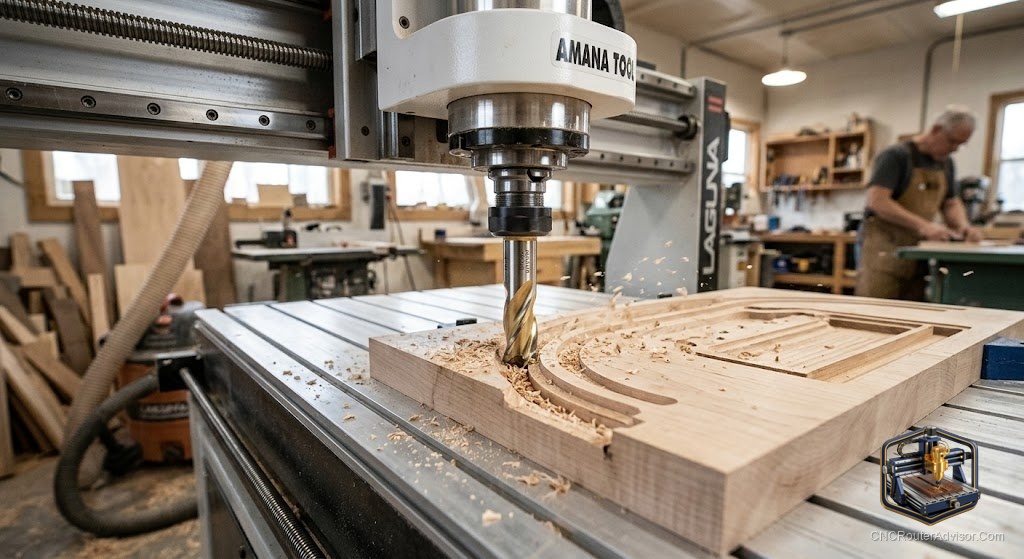
Ask experienced CNC users which bits they trust, and Amana Tool comes up again and again. The reason is not the brand name but what the brand name has come to stand for: tightly ground shanks that grip in the collet, sharp carbide that holds an edge, and consistent geometry that cuts clean. Good bits are the difference between a crisp cut and a fuzzy, burned one, and they last longer, so the cost per cut is often lower than cheap bits that dull fast. This guide explains the main Amana Tool CNC router bit types, what each is for, how to choose sizes, and the selection tips that get clean results.
The bit matters as much as the machine for finish quality, so understanding the types and how to pick them is one of the highest-value skills in CNC routing.
Amana Tool CNC router bits are industrial-grade solid carbide and carbide-tipped cutters made for CNC machines, known for precise grinding, sharp durable edges, and consistent geometry that produce clean cuts and long tool life. The main types are upcut spiral end mills (clear chips up, great for pockets), downcut spirals (clean top edges), compression spirals (clean both faces, ideal for plywood and laminate), straight bits, V-groove bits (lettering and V-carving), ball-nose bits (3D contours), and surfacing bits (flattening). Choose by matching the bit type to the operation and material, the diameter to the detail and strength needed, and the shank to your collet, then set feeds and speeds to the bit and material. Quality bits cut cleaner and last longer, lowering cost per cut.
Match bit type to operation, diameter to detail, and shank to collet, then dial in feeds and speeds; that sequence gets clean results.
The main bit types and their uses
- Upcut spiral end mills pull chips up and out of the cut, excellent for clearing deep pockets and preventing chip packing, with some fuzz on the top edge.
- Downcut spiral end mills push chips down, leaving a clean top edge, ideal when the top surface is the finished face.
- Compression spirals cut up at the bottom and down at the top, leaving clean edges on both faces, the go-to for plywood, laminate, and veneered panels. Amana’s compression bits (such as the 46170 series) are a workshop staple.
- Straight bits make simple grooves and cuts.
- V-groove (V-bit) bits cut lettering and decorative V-carving, the heart of sign making.
- Ball-nose bits produce smooth 3D contours for relief carving.
- Surfacing (spoilboard) bits flatten spoilboards and slabs with a wide, flat cut.
Match the type to the operation first; that single choice drives most of your finish quality.
Choosing sizes
Two dimensions matter:
- Cutting diameter sets detail and strength. Small diameters (such as 1/8 inch or 3 mm) cut fine detail but are fragile and must run shallow; larger diameters (1/4 inch and up) remove material faster and resist breaking but cannot reach small detail. Keep a range for roughing and detail.
- Shank diameter must match your collet. Common shanks are 1/8 inch, 1/4 inch, 3/8 inch, and 1/2 inch. Larger shanks are stiffer and reduce deflection; confirm your spindle or router accepts the shank and that you have the matching collet.
A practical starter kit is a 1/4 inch upcut or compression for cutting, a 1/8 inch bit for detail, a V-bit for lettering, a ball-nose for 3D, and a surfacing bit for the spoilboard.
Selection and use tips
Match the bit to the material. Compression bits for plywood and laminate, downcut for clean-topped hardwood cuts, single-flute or upcut for efficient chip clearance in solid wood, and specific geometries for aluminum or plastics. Amana offers coated (Spektra) options that resist heat and last longer in abrasive materials.
Use the largest bit the detail allows. A larger, stiffer bit deflects less, cuts cleaner, and lasts longer than a small one pushed too hard. Only drop to a small bit when detail demands it.
Set feeds and speeds to the bit and material. Chip load (material per tooth) is the key. Too slow a feed or too high an RPM burns; too fast tears or breaks the bit. Start from the manufacturer’s chart and adjust by result.
Watch runout and collet condition. A worn collet or debris causes runout that dulls bits and ruins finish. Keep collets clean and seat bits properly, which is exactly why Amana’s precisely ground shanks matter.
Keep bits sharp. A dull bit burns, tears, and fuzzes. Quality carbide holds an edge longer, so replace or resharpen before performance drops.
The verdict
Amana Tool CNC router bits earn their reputation through precise grinding, sharp durable carbide, and consistent geometry that cut clean and last, lowering cost per cut. Choose by matching the bit type to the operation, upcut for pockets, downcut for clean tops, compression for plywood and laminate, V-bits for lettering, ball-nose for 3D, surfacing for flattening, then match diameter to the detail and strength you need and shank to your collet. Set feeds and speeds to the bit and material, keep collets clean and bits sharp, and use the largest bit the detail allows. Do that and your cuts come out crisp and your bits last.
Three things to take with you:
- Match bit type to operation first: upcut for pockets, downcut for clean tops, compression for plywood and laminate, V-bits for lettering, ball-nose for 3D, surfacing for flattening.
- Choose diameter for detail versus strength and shank to match your collet, keeping a range of sizes for roughing and detail work.
- Quality bits cut cleaner and last longer; set feeds and speeds to the bit and material, keep collets clean, and use the largest bit the detail allows.
FAQ
Are Amana Tool CNC router bits worth the cost? For most users, yes. Precisely ground shanks, sharp durable carbide, and consistent geometry produce cleaner cuts and longer tool life, so the cost per cut is often lower than cheap bits that dull quickly. They are a common choice among experienced CNC users.
What Amana bit should I use for plywood? A compression spiral, which cuts up at the bottom and down at the top to leave clean edges on both faces, ideal for plywood, laminate, and veneered panels. Amana’s 46170 series compression bits are a popular workshop staple for this.
What is the difference between upcut and downcut bits? Upcut spirals pull chips up and out, clearing deep pockets well but leaving some top-edge fuzz. Downcut spirals push chips down, leaving a clean top edge, ideal when the top surface is the finished face. Compression bits combine both for clean edges on both faces.
What shank size should I choose? Match the shank to your collet. Common sizes are 1/8, 1/4, 3/8, and 1/2 inch. Larger shanks are stiffer and reduce deflection for cleaner cuts, but your spindle or router and collet must accept the size. Many hobby machines use 1/4 inch and 1/8 inch shanks.
How do I stop CNC bits from burning the wood? Burning means the bit is rubbing rather than cutting, usually from too slow a feed or too high an RPM, or a dull bit. Set feeds and speeds to the bit and material, feed faster or slow the spindle if burning, keep the collet clean, and replace dull bits.
What bits should a beginner buy first? A practical starter set is a 1/4 inch upcut or compression bit for cutting, a 1/8 inch bit for detail, a V-bit for lettering, a ball-nose for 3D carving, and a surfacing bit for the spoilboard. Add specialized geometries as your projects require.
References
- Amana Tool, CNC router bits and technical information: https://www.amanatool.com/products/cnc-router-bits.html
- Amana Tool 46170-K Spektra compression spiral (verified Amazon listing): Check on Amazon