
Vertical CNC Wood Router Guide: Tooling, Speeds, Workholding, and Finish Quality
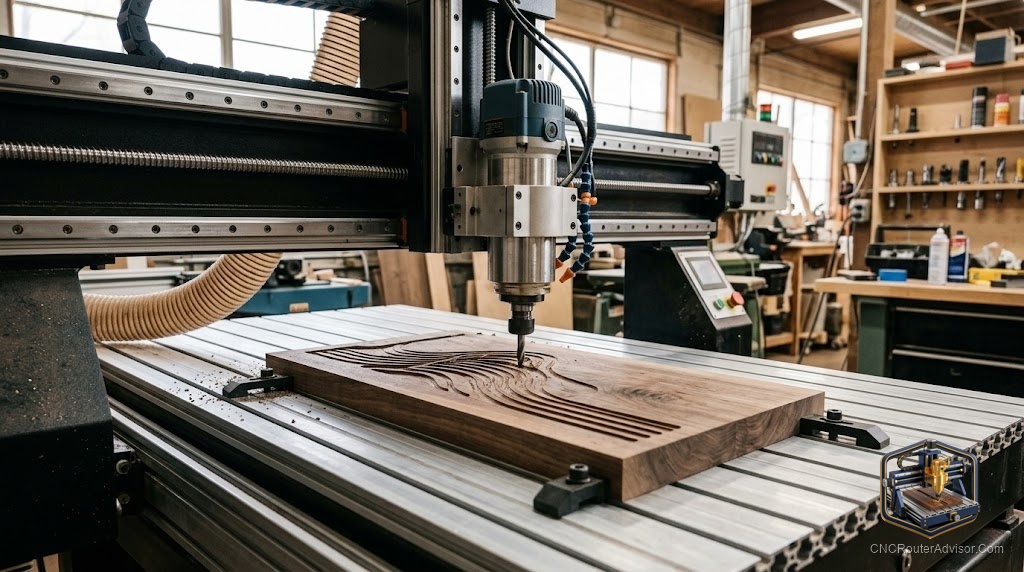
Routing wood on a vertically oriented machine adds one big variable to everything you already know about CNC woodworking: gravity now works against you instead of with you. The wood wants to slide down, the chips fall in unhelpful directions, and the cutting forces load the frame differently. Get those factors under control and a vertical wood router does beautiful work, especially on long boards and edge joinery that would sprawl across a big horizontal bed. This guide covers the technique that makes wood cut clean on a vertical setup: the right tooling, speeds and feeds, the workholding that actually holds against gravity, and the details that separate rough results from smooth ones.
Wood is a rewarding CNC material and a particular one, varying by species, grain, and moisture and prone to tear-out, burning, and fuzz when handled wrong. Add a vertical orientation and workholding becomes the make-or-break factor, so this guide gives it special attention alongside the usual woodworking fundamentals.
A vertical CNC wood router cuts wood with the work held vertically rather than flat, and getting good results depends on the same four fundamentals as any wood router, adapted for gravity: tooling (the right bit for the operation and species), speeds and feeds (matched to bit and wood to avoid burning and tear-out), workholding (securing the wood against gravity so it cannot slip), and understanding wood behavior (grain, species, and moisture). The vertical twist is that workholding and chip handling need extra care because gravity no longer helps seat the part and chips fall differently. Master these and a vertical setup produces clean edges, joinery, and profiles, especially on long stock.
The machine sets the ceiling; technique, and especially workholding, determines whether you reach it.
Tooling for wood
The bit is the biggest single lever on wood finish quality, vertical or not:
- Downcut end mills push chips one way and leave a clean edge on the face they exit cleanly, good where a visible face must stay crisp.
- Upcut end mills clear chips out of the cut, excellent for deep grooves and pockets and for preventing chip packing, at the cost of some fuzz on one edge.
- Compression bits combine both, leaving clean edges on both faces, prized for plywood and veneered panels.
- Single-flute bits clear chips aggressively and run cooler in wood, allowing higher feeds, especially in softwoods.
- V-bits cut lettering and decorative grooves; ball-nose bits produce smooth 3D contours.
On a vertical setup, chip evacuation deserves extra thought because chips fall differently, so bits that clear chips well (single-flute, upcut) can help keep the cut clean. Keep every bit sharp: a dull bit burns and tears where a sharp one cuts.
Speeds and feeds
Speeds and feeds decide whether the bit cuts or rubs. Two variables interact:
- Spindle speed (RPM): how fast the bit turns.
- Feed rate: how fast the machine moves the bit through the wood.
Their ratio sets chip load, the wood each edge takes per revolution. Too slow a feed or too high an RPM and the bit rubs and burns, scorching wood and dulling the tool. Too fast a feed or too low an RPM and you get tear-out, poor finish, or a broken bit. Practical guidance:
- If wood burns, feed faster or slow the spindle. Burning means the bit is rubbing, not cutting.
- Use shallow depths of cut, especially where the vertical setup or long overhangs reduce rigidity; multiple light passes cut cleaner and reduce load and chatter.
- Match chip load to bit size: small bits want higher RPM and slower feed, larger bits the reverse. Start from manufacturer charts and adjust by result.
- Let single-flute bits run faster feeds in wood for better chip clearance and cooler cutting.
Workholding: the vertical make-or-break
On a horizontal bed gravity helps hold the part down; on a vertical setup it pulls the part down and away, so workholding is the defining challenge. The goal is zero movement and no slipping:
- Mechanical clamps and grippers designed for vertical holding grip the stock firmly; ensure they resist both the cutting force and gravity’s downward pull.
- End stops and ledges that the workpiece rests on prevent it sliding down, taking gravity out of the equation for support while clamps handle the rest.
- Vacuum designed for vertical work can hold porous, flat stock, but sizing and sealing matter more when gravity works against the hold.
- Reference and repeatability: for long stock, positive stops and fixtures locate parts consistently, which matters when you cannot simply lay a board flat and clamp anywhere.
Whatever the method, verify the hold before cutting; a part that slips on a vertical setup ruins the cut and can break the bit. This is where vertical wood routing succeeds or fails.
Understanding wood behavior
Wood is not uniform, and respecting its nature lifts results:
- Grain direction affects tear-out; cutting against the grain tears more. Orient the toolpath to cut with or across the grain where possible.
- Species matters: softwoods (pine, cedar, poplar) cut easily but can fuzz and compress; hardwoods (oak, maple, walnut) cut cleaner but need more power and sharper bits; figured grain tears more easily.
- Sheet goods (plywood, MDF) cut predictably and suit compression bits for clean edges; MDF is abrasive and dulls bits faster.
- Moisture matters: use properly dried stock, as wet wood cuts poorly and moves as it dries.
- A light finish pass cleans up the surface and edges left by roughing and is often the difference between acceptable and beautiful.
The verdict
A vertical CNC wood router does clean, accurate work when you adapt sound woodworking technique to gravity. Choose the right bit for the operation and species, balance speeds and feeds so the bit cuts rather than burns, and above all hold the work securely against gravity with clamps, stops, or vacuum built for vertical use. Respect grain, species, and moisture, add a light finish pass, and a vertical setup produces clean edges, joinery, and profiles, particularly on the long stock it handles so well.
Three things to take with you:
- Workholding is the vertical make-or-break: gravity pulls the part down and away, so use clamps, end stops, or vacuum designed for vertical holding and verify the hold before every cut.
- Tooling and speeds and feeds still rule finish quality: match the bit to the operation, keep bits sharp, and if wood burns, feed faster or slow the spindle; use shallow passes for rigidity.
- Respect the wood, grain direction, species, sheet goods, and moisture, and add a light finish pass to turn acceptable cuts into smooth ones.
FAQ
What is a vertical CNC wood router? A CNC router that cuts wood with the workpiece held vertically rather than flat on a horizontal bed. It suits long-stock processing and certain edge joinery, and demands more careful workholding because gravity no longer helps seat the part.
How do I hold wood on a vertical CNC router? Use clamps or grippers designed for vertical holding, combined with end stops or ledges the stock rests on so it cannot slide down. Vacuum built for vertical work can hold porous, flat stock. Always verify the hold before cutting, since a slip ruins the cut and can break the bit.
Why is my vertical CNC router burning the wood? Burning means the bit is rubbing rather than cutting, usually from too slow a feed or too high an RPM (too low a chip load), or a dull bit. Feed faster or slow the spindle, and make sure the bit is sharp.
What bits give the cleanest edge on wood? A downcut bit leaves a clean edge on the face it exits, and a compression bit leaves clean edges on both faces of plywood and veneers. Match the bit to the operation, and favor good chip-clearing bits (single-flute, upcut) where chip evacuation is harder.
Does the vertical orientation change speeds and feeds? The cutting principles are the same, but reduced rigidity from the orientation or long overhangs means you should favor shallower depths of cut and multiple light passes to avoid chatter and deflection. Otherwise, match RPM and feed to the bit and wood as usual.
Can a vertical CNC wood router cut plywood and MDF? Yes. Sheet goods cut predictably; use a compression bit for clean edges on plywood and veneers. Note that MDF is abrasive and dulls bits faster, and ensure workholding secures the sheet firmly against gravity.
References
- Vectric, CNC wood machining and toolpath guidance: https://www.vectric.com
- CNC Cookbook, feeds and speeds for wood: https://www.cnccookbook.com