Small CNC Router for Woodworking: Machine Features, Tooling, and Buying Advice
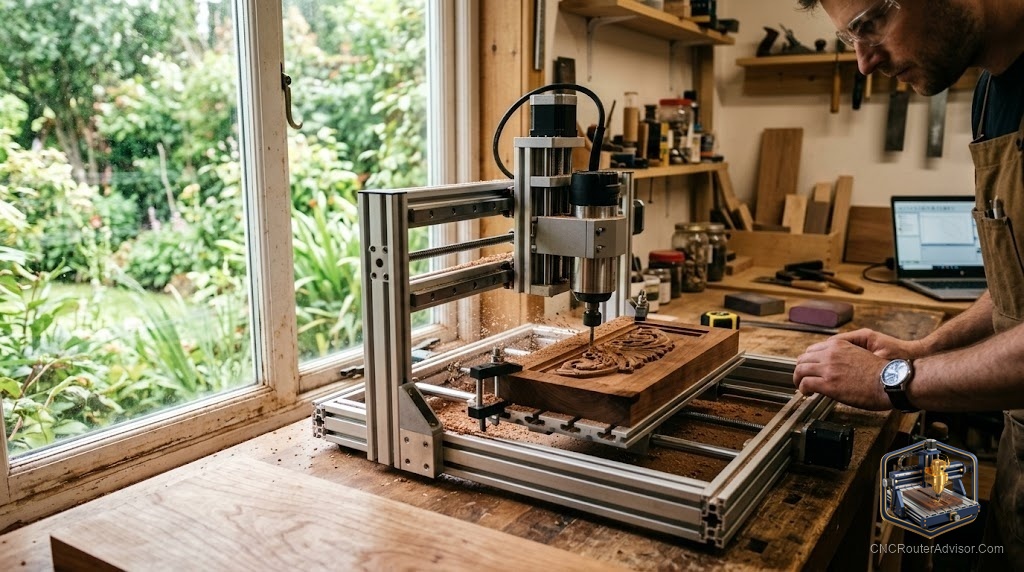
There is a particular kind of woodworker who does not want a machine that takes over the garage. Maybe the shop is a corner of the basement, maybe it is a shared space, maybe the work is small by nature: boxes, inlays, signs, jewelry, detailed decorative pieces. For that woodworker, a small CNC router is not a compromise but the right tool, and the good news is that the small end of the market has matured to the point where a compact machine can do genuinely beautiful woodworking. The key is choosing one built for wood specifically, and pairing it with the right tooling and technique.
This guide is about small CNC routers through a woodworking lens: what features matter when your material is wood, what tooling gets clean results, and how to buy the machine that will actually serve woodworking rather than just fit on the bench.
A small CNC router for woodworking is a compact desktop or benchtop machine, typically with a work area from around 300 by 180 mm up to roughly 400 by 400 mm, chosen and equipped specifically to cut wood well. For woodworking, the features that matter most are frame rigidity (to resist cutting forces and prevent chatter), adequate spindle power for the wood you cut, good chip evacuation and dust collection, and precise motion for clean edges and detail. Paired with the right bits (single-flute and downcut end mills, V-bits for lettering, ball-nose for 3D), a small machine produces clean signs, boxes, inlays, and decorative work.
The best small woodworking router matches its rigidity and spindle to your hardest material, cuts your typical project size with margin, and evacuates chips well.
What matters for woodworking specifically
Rigidity, because wood pushes back
Wood, especially hardwood, resists the cutter, and that force has to go somewhere. On a flexible machine it goes into deflection, which shows up as chatter marks, inconsistent depth, and tapered edges. For woodworking, prioritize a rigid machine: a stiff frame (all-aluminum extrusion or better), linear rails over V-wheels where the budget allows, and lead screws or ball screws rather than long belts. Rigidity is what separates a machine that engraves softwood from one that cuts clean hardwood.
Spindle power matched to your wood
Softwoods (pine, cedar, poplar) cut easily and forgive a modest spindle. Hardwoods (oak, maple, walnut) demand more power to cut cleanly at reasonable rates. If your woodworking leans hardwood, favor a machine with a more powerful spindle (a 300W-plus spindle or a machine that accepts a VFD spindle upgrade) over a base 60W-class motor. Underpowered cutting in hardwood means slow going, poor finish, and more tool wear.
Chip evacuation and dust collection
Wood produces a lot of chips and fine dust. Good chip evacuation keeps the cutter clear (recut chips ruin finish and shorten tool life), and dust collection keeps your air and shop clean. Look for a machine that accommodates a dust boot, and pair it with adequate suction. Single-flute and downcut bits (below) help chip management too.
Precision for clean edges and detail
Woodworking often lives or dies on the finish: crisp lettering, smooth curves, tight inlay fits. Precise, backlash-free motion (ball screws, quality rails, well-tuned firmware) delivers the clean edges and accurate detail that woodworking rewards.
Tooling that gets clean wood results
The machine is only half the equation; the right bits transform results:
- Single-flute end mills clear chips aggressively, which suits wood and prevents recutting and heat buildup, especially in softer woods and at higher feeds.
- Downcut end mills push chips down, leaving a clean top edge, ideal for finished surfaces and preventing tear-out on the top face.
- Upcut end mills pull chips up and out of the cut, excellent for chip evacuation in deeper cuts and pockets, at the cost of some top-edge fuzz.
- Compression bits combine up and down cutting to leave clean edges on both faces, prized for plywood and veneered panels.
- V-bits cut V-grooves for lettering and decorative work, the workhorse of sign making.
- Ball-nose bits produce smooth contours for 3D carving and relief work.
Matching the bit to the operation (downcut for clean top edges, upcut for deep pockets, V-bit for lettering, ball-nose for 3D) is one of the biggest levers on finish quality with a small machine.
Buying advice
Size the work area to your projects with margin. Measure your typical and largest projects. A 300 by 180 mm machine suits small boxes, signs, and inlays; step up to around 400 by 400 mm for larger signs and panels. Buy a little larger than your current need so you are not immediately constrained.
Prioritize rigidity if you cut hardwood. For hardwood woodworking, an all-aluminum frame with linear rails and lead or ball screws is worth more than extra work area on a flexible machine. Rigidity determines finish quality.
Confirm the spindle suits your wood and can be upgraded. Match the spindle to your hardest material, and favor machines with a spindle upgrade path so you can add power later without replacing the machine.
Plan for dust collection from the start. Wood is dusty. A machine that takes a dust boot, plus a shop vacuum or dust collector, keeps the work and your lungs clean. Do not treat this as an afterthought.
Value the software and community. A machine on the GRBL platform with a large community (the Genmitsu and similar lineups) means easy support, available parts, and no software lock-in, which matters more for a beginner than a spec sheet edge.
The verdict
A small CNC router can do beautiful woodworking when you choose it for wood: prioritize rigidity (especially for hardwood), match the spindle to your material with an upgrade path, plan for dust collection, and size the work area to your projects with margin. Pair it with the right bits (downcut for clean edges, upcut for deep pockets, V-bits for lettering, ball-nose for 3D) and a compact machine produces clean signs, boxes, inlays, and decorative work that belie its size.
Three things to take with you:
- For woodworking, rigidity matters most, especially in hardwood; favor an all-aluminum frame with linear rails and lead or ball screws over extra work area on a flexible machine.
- Match the spindle to your hardest wood and favor a machine with a spindle upgrade path; softwoods forgive a modest spindle, hardwoods do not.
- Tooling transforms results: downcut bits for clean top edges, upcut for deep pockets, compression for plywood, V-bits for lettering, and ball-nose for 3D, plus real dust collection from day one.
FAQ
What size work area do I need for a small woodworking CNC router? Match it to your projects with margin. Around 300 by 180 mm suits small boxes, signs, and inlays; roughly 400 by 400 mm suits larger signs and panels. Buy a little larger than your current need to avoid being immediately constrained.
Can a small CNC router cut hardwood? Yes, if it is rigid enough and has adequate spindle power. Prioritize an all-aluminum frame with linear rails and lead or ball screws, and a spindle matched to hardwood (300W-plus or a VFD spindle upgrade). A flexible, underpowered machine struggles with hardwood finish.
What bits are best for woodworking on a CNC router? Single-flute and upcut end mills for chip clearance and deep pockets, downcut end mills for clean top edges, compression bits for plywood and veneers, V-bits for lettering, and ball-nose bits for 3D carving. Match the bit to the operation.
How important is dust collection for a woodworking CNC? Very. Wood produces heavy chips and fine dust, and good chip evacuation keeps the cutter clear (protecting finish and tool life) while dust collection keeps your air clean. Choose a machine that takes a dust boot and pair it with adequate suction.
What spindle power do I need for woodworking? Softwoods cut fine with a modest spindle; hardwoods need more power to cut cleanly at reasonable rates. If you cut hardwood, favor a 300W-plus spindle or a machine that accepts a VFD spindle upgrade over a base 60W-class motor.
Is a small CNC router good enough for a woodworking business? For small products (signs, boxes, inlays, engraved gifts) a rigid, well-tooled small machine can absolutely support a business. For full-sheet furniture parts or high-volume production, you will eventually want a larger machine, but many woodworking businesses start and thrive on small routers.
References
- SainSmart Genmitsu, small woodworking CNC routers and specifications: https://www.sainsmart.com
- Vectric, CNC woodworking tooling and toolpath guidance: https://www.vectric.com