
CNC Router for Foam: Machine Features, Tooling, and Buying Advice
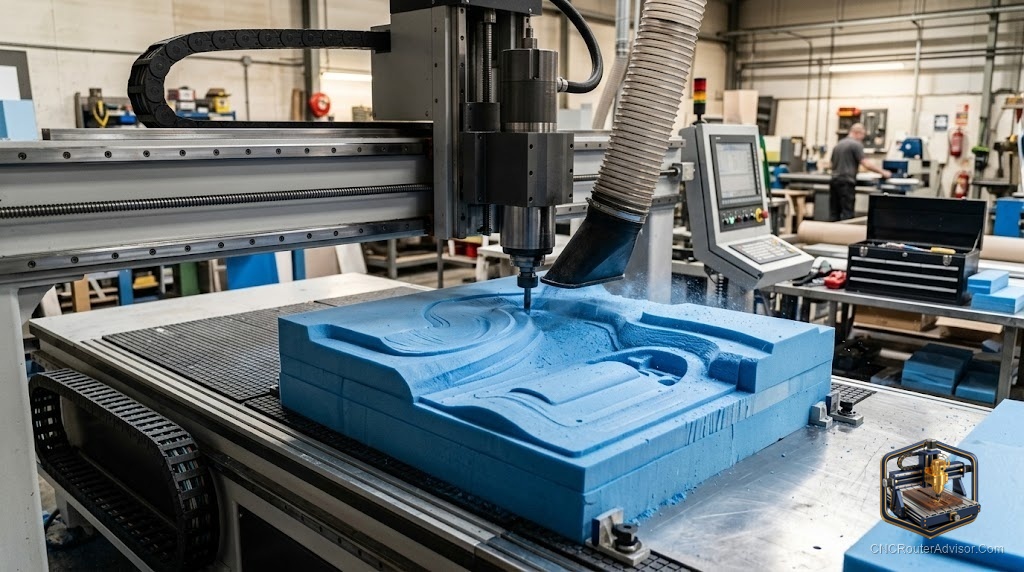
Cutting foam on a CNC router is one of those applications that looks deceptively simple, foam is soft, so surely any machine can cut it? In practice, foam has its own quirks that reward the right setup: it cuts fast and clean with the correct tooling, but it can tear, melt, or fuzz with the wrong bits or speeds, and it demands serious thought about dust and holding lightweight material down. Whether you are making packaging inserts, signage, architectural shapes, movie props, or 3D sculptures, understanding what a foam-focused CNC setup needs will save you frustration and produce far better results.
A CNC router for foam is a machine set up to cut and carve foam materials, EPS and XPS (polystyrene), polyurethane and high-density tooling foam, EVA, and similar, using appropriate tooling and settings to achieve clean cuts and detailed 3D shapes. Foam cutting favors large work areas, high travel speeds, effective dust management, and foam-specific bits, and often benefits from a 4th axis or swing head for full 3D work.
The short answer on foam: almost any rigid CNC router can cut foam, but the results depend on foam-specific tooling (single-flute or specialized foam bits and long ball-nose bits for 3D), high feed rates, strong dust extraction (foam makes a lot of light debris), and good hold-down for lightweight stock. For large 3D sculpting, look at machines with big work areas and 3D/4-axis capability.
What makes foam different to cut
Foam’s softness changes the priorities compared to wood or metal:
- Rigidity is less critical. Foam exerts almost no cutting force, so even light machines cut it easily. This is why foam is forgiving of the machine but demanding of tooling and settings.
- Chip clearance and melting matter. The wrong bit or too-slow a feed can rub and melt some foams (especially at high RPM). Single-flute and foam-specific bits clear material and reduce heat.
- Debris is voluminous and static-prone. Foam produces large amounts of light, clingy debris that demands strong dust extraction, not the fine dust of wood but a real cleanup and airflow challenge.
- Hold-down is tricky. Lightweight foam can shift or lift. Vacuum, low-tack adhesive, foam-friendly clamping, or pinning is needed.
Machine features that help with foam
- Large work area: foam projects (signage, props, architectural shapes) are often big. Large-format machines (up to 6.5 x 13 feet on dedicated foam routers) are common.
- High travel speeds: foam cuts fast, so faster rapids and feeds boost throughput.
- Z travel / thick material clearance: 3D foam work needs generous Z travel and gantry clearance for thick blocks.
- 3-axis, 4-axis, or swing head: flat cutting and relief need 3 axes; full 3D sculpture and molds benefit from a 4th (rotary) axis or a swing/tilting head.
- Strong dust extraction: essential for the light debris foam produces.
- Hot-wire alternative: for straight-line EPS/XPS cutting, dedicated hot-wire CNC foam cutters are an option, though they cannot do the 3D contouring a router can.
Tooling for foam
- Single-flute end mills: clear chips well and reduce melting; a common all-rounder for foam.
- Foam-specific bits: solid carbide spiral foam bits (available in larger shank sizes) designed for clean foam cuts.
- Long tapered ball-nose bits: for large EPS/polyurethane 3D milling and sculpture finishing; the tapered form adds rigidity for long reaches.
- Larger diameter bits: for fast roughing of big foam blocks.
- Sharp carbide: keeps edges clean and reduces tearing in soft foam.
Settings and technique
- High feed rate, moderate RPM: foam cuts fast; avoid excessive RPM that heats and melts some foams.
- Climb vs. conventional milling: affects finish on foam; test for the cleanest result (long tools plus soft foam can chatter subtly).
- Roughing then finishing: rough with a larger bit, finish 3D contours with a ball-nose.
- Dust and static control: run extraction throughout; foam debris clings via static.
Materials you can cut
EPS and XPS (polystyrene/Styrofoam), polyurethane and high-density tooling foam (RenShape and similar), EVA (toolbox/shadow-board foam), polyethylene foam, and related soft materials. Many foam routers also handle MDF, plastics, and light woods.
The verdict
A CNC router for foam is less about machine muscle and more about the right supporting choices: foam-specific tooling, high feed rates, strong dust extraction, and reliable hold-down for lightweight stock. Nearly any rigid router cuts foam, but for large 3D sculpting, packaging, or props, prioritize a big work area, generous Z travel, and 3D or 4-axis capability. Use single-flute or foam bits and long tapered ball-nose bits, manage the voluminous debris with good extraction, and dial in speeds to avoid melting, and foam becomes one of the fastest, most satisfying materials a router can cut.
Three takeaways: foam is forgiving of the machine but demanding of tooling and settings, use single-flute or foam-specific bits and long tapered ball-nose bits for 3D; manage foam’s voluminous, static-prone debris with strong dust extraction and secure lightweight hold-down; and for big 3D work, prioritize a large work area, generous Z travel, and 3D or 4-axis capability.
FAQ
Can any CNC router cut foam? Yes, foam exerts almost no cutting force, so nearly any rigid router cuts it. The results depend far more on tooling, feed rates, dust extraction, and hold-down than on the machine’s power or rigidity.
What bits should I use to cut foam? Single-flute end mills or foam-specific carbide spiral bits for clean cuts and chip clearance, and long tapered ball-nose bits for large 3D milling and finishing. Sharp carbide reduces tearing in soft foam.
Why is my foam melting or tearing when I cut it? Usually too-high RPM (heat melts some foams) or the wrong bit that rubs instead of cutting. Use a single-flute or foam bit, increase feed rate, and moderate RPM. Dull bits also tear soft foam.
What foam can a CNC router cut? EPS and XPS (Styrofoam/polystyrene), polyurethane and high-density tooling foam (RenShape), EVA (toolbox/shadow-board foam), and polyethylene foam, among others. Many foam routers also cut MDF, plastics, and light wood.
Do I need a 4th axis to cut foam? Only for full 3D sculpture and molds. Flat cutting and relief carving need only 3 axes. A 4th (rotary) axis or a swing/tilting head enables full 3D shapes like statues and automotive molds.
Does cutting foam make a lot of mess? Yes, foam produces large amounts of light, static-clingy debris. Strong dust extraction and chip collection are essential to keep the workspace clean and the cut clear.
Should I use a router or a hot-wire cutter for foam? A hot-wire CNC cutter is efficient for straight-line EPS/XPS shapes but cannot do 3D contouring. A CNC router handles 3D sculpting, relief, and detailed shapes and cuts more foam types, at the cost of more debris.
References
- Frog3D, Guide to Cutting Foam With a CNC Router (tooling and technique): https://www.frog3d.com/guide-to-cutting-foam-with-a-cnc-router/
- ToolsToday (Amana), Foam Cutting Router Bits and End Mills: https://toolstoday.com/router-bits/foam-cutting-router-bits.html
- StyleCNC, 3-Axis Foam CNC Router for Styrofoam, EPS, and XPS: https://www.stylecnc.com/3d-cnc-router/STYLECNC-3-axis-eps-foam-cnc-router-cutter-machine.html
- ShopSabre, CNC Machines for Plastics and Foam (toolbox foam, dense foams): https://www.shopsabre.com/application/plastics-foam/
- Foamlinx, CNC Routers and Hot-Wire Foam Cutting Systems: https://www.foamlinx.com/