
CNC Router for Wood: Machine Features, Tooling, and Buying Advice
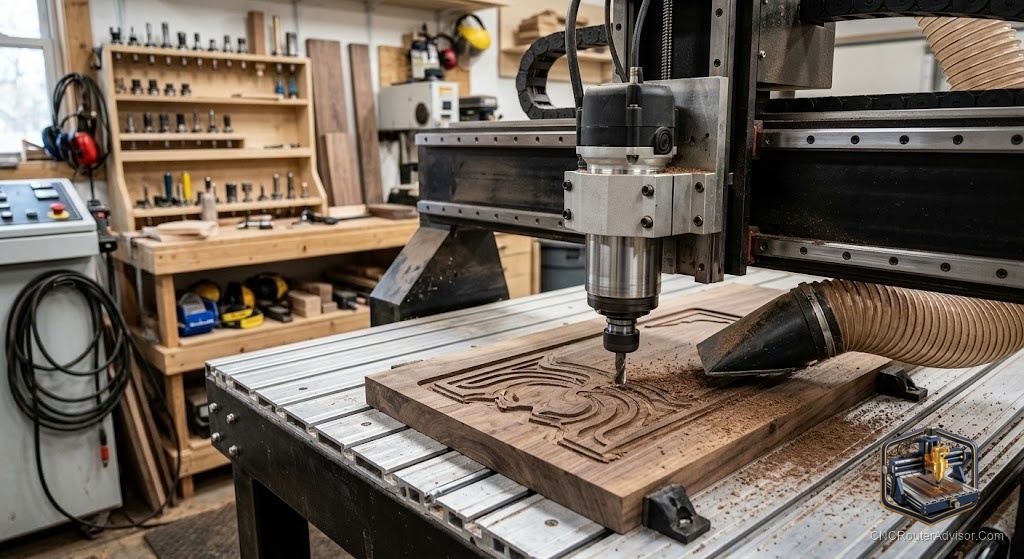
There is a moment every wood CNC owner remembers: the first carve that comes off the machine so clean it looks bought. There is also the moment nobody posts about, the one where the gantry shudders halfway through a walnut sign and leaves a ridge you cannot sand out. The difference between those two moments is almost never the operator’s talent. It is the machine’s features and the tooling, chosen (or not) before the first cut.
A CNC router for wood is a computer-controlled machine that moves a spinning bit across three axes to cut, carve, and engrave lumber, plywood, and MDF. Choosing one well means weighing three things: the features that control cut quality (rigidity, drive system, cutting head), the tooling that does the actual cutting, and honest advice about what you will really make. This piece works through all three.
The short recommendation: for wood, spend on rigidity and a spindle before work area, keep a small set of quality spiral and V-bits rather than a bargain assortment, and buy the smallest machine that fits your real projects. A rigid, well-tooled small machine beats a big flexible one at everything except bragging.
The features that decide cut quality
Frame rigidity. Wood fights back less than metal, but hardwood still loads the gantry enough to flex a weak frame. Heavy aluminum extrusion or steel resists that flex, which is what keeps a line straight and a pocket flat. This is the feature to prioritize, and the one spec sheets bury.
Drive system. Timing belts are quiet, cheap, and perfectly good for pine, MDF, and foam, though they stretch a little under heavy load. Lead screws are a stiffer middle ground. Ball screws on hardened linear rails are the precise, rigid top tier. For wood specifically, lead screws or belts serve most hobbyists well; move to ball screws when finish and repeatability matter for paid work.
Spindle versus router. A compact trim router keeps the entry outlay down and handles wood fine. A VFD spindle is quieter over long carves and holds torque across its speed range, giving more consistent finish and longer life. Choose by how many hours you will run the machine, not by what sounds impressive.
Z travel and clearance. Thick slabs, tall clamps, and 3D carving all eat Z height. It is easy to ignore until a clamp meets the gantry in the middle of a job.
Tooling for wood, without the drawer of regret
The common mistake is buying a huge cheap bit set and reaching for the same three bits forever. Buy fewer, understand more.
An upcut spiral clears chips upward, ideal for deep pockets and slots but liable to fuzz the top face. A downcut spiral presses chips down for a clean top edge, at the cost of chip clearing. A compression bit combines both and is the answer to splintered plywood veneer. A V-bit handles lettering and sign carving. A surfacing bit flattens your spoilboard and levels slabs.
On brands, woodworkers tend to rank Amana at the premium end, Whiteside as the trusted middle, and Freud as the affordable, widely stocked option, with SpeTool covering value spirals. A compression bit, one upcut, one downcut, and a V-bit will handle most wood projects you can dream up.
Buying advice most sellers skip
Size to your parts, not your fantasies. A bed you never fill is wasted money and floor space, and a heavier machine to keep square. Buy a machine with strong community support and open, well-documented software, because the day something breaks, a busy forum is worth more than a glossy brochure. And plan for dust collection from day one; wood dust is both a mess and a health hazard, not an afterthought.
If you are cutting production runs off full sheets, a 4 by 8 foot machine stops being a luxury and starts paying for itself in material yield. If you carve signs and gifts, resist the big bed; a rigid mid-size machine will serve you better and store easier.
Who should skip a dedicated wood router
If your real interest is machining aluminum or steel, a wood-focused belt machine will disappoint you, and you should look at a stiffer machine or a mill. If you want instant results with no software learning, temper that expectation: the machine is easy, the toolpaths and workholding take practice.
The bottom line
A CNC router for wood lives or dies on rigidity, the right cutting head, and a small kit of quality bits, in that order. Buy the smallest machine that fits your real work, spend the savings on a spindle and good tooling, commit to one CAM program, and set up dust collection before your first cut. Do that and the clean, bought-looking carve becomes your normal, not your lucky day.
Frequently asked questions
What features matter most in a CNC router for wood? Rigidity first, then the drive system, then the cutting head. A stiff frame keeps cuts accurate; ball screws add precision; a spindle improves finish and longevity. Work area matters only up to the size of parts you actually make.
Is a trim router good enough for wood? Yes, for occasional and hobby wood work a trim router is genuinely fine. A VFD spindle is quieter and holds torque better for long or frequent carves, which is why heavy users upgrade.
How many bits do I really need to start? Four cover most wood work: a compression bit, an upcut spiral, a downcut spiral, and a V-bit. Add specialty bits only when a project demands one.
What machine size should I buy for wood? Buy the smallest bed that fits the parts you make often, plus clamping margin. Full-sheet machines make sense for production off 4 by 8 sheets; smaller rigid machines suit signs and gifts.
Why do my plywood edges splinter? Standard spiral bits lift or push the veneer. A compression bit cuts both faces cleanly at once, which is the standard fix for splintered plywood edges.
Do I need dust collection for a wood CNC? Yes. Wood and MDF produce fine dust that is a health hazard and a mess. A dust shoe with a vacuum or dust collector should be part of your setup from the start.
References
- Wood Magazine, “A Buyer’s Guide to Benchtop CNC Machines” (woodmagazine.com)
- Onefinity CNC Forum, “CNC Bits Amana VS Whiteside Vs Freud” (forum.onefinitycnc.com)
- The Maker’s Chest, “CNC Router Buying Guide: By Material, Size & Volume” (themakerschest.com)