
Aluminum CNC Routing: How to Cut It Clean Without Destroying Your Bits
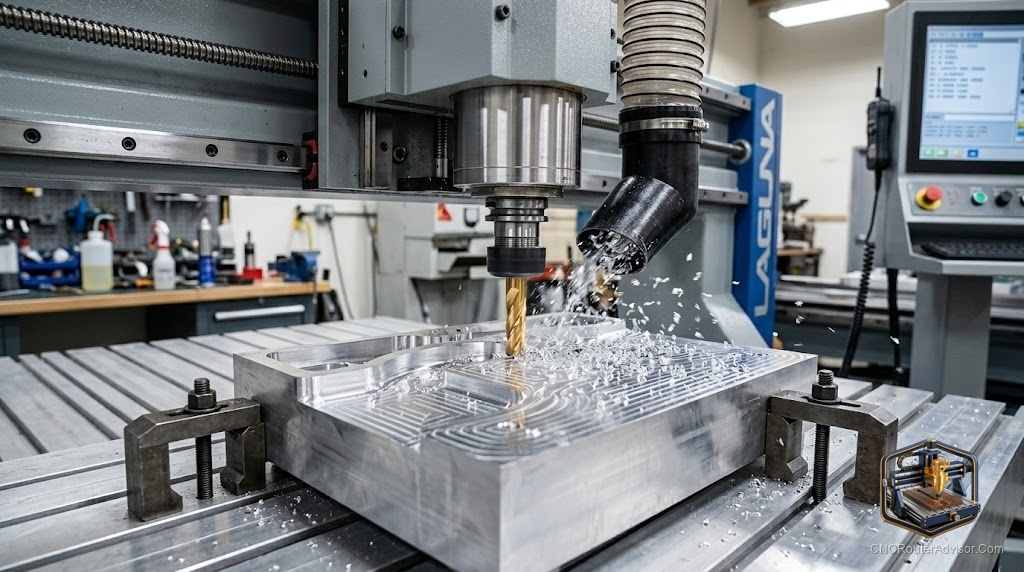
Aluminum is the gateway metal for most CNC router users, and it is both more accessible and more demanding than people expect. It is accessible because it machines far more easily than steel and at speeds a capable router can reach. It is demanding because the wrong approach, wrong tooling, wrong chip clearance, or wrong cooling turns aluminum into a chip-welding, bit-breaking, surface-ruining experience fast. The people who cut aluminum well on CNC routers follow a specific set of rules. The people who ruin bits learned the same rules from experience.
Aluminum CNC routing is the process of cutting, profiling, pocketing, and drilling aluminum alloys on a CNC router using carbide end mills, carefully controlled feeds and speeds, adequate chip clearance, and lubrication or air blast to prevent chip re-cutting and built-up edge (BUE). Most common alloys routed are 6061 and 7075.
The short answer on setup: use a 2-flute or 3-flute carbide end mill, run high RPM (16,000 to 24,000 on a typical router spindle), use a higher feed rate than you might expect, keep chips clearing actively with air blast or misting, and never let chips pack back into the cut. Getting these variables right produces clean, shiny aluminum cuts. Getting them wrong produces chips welded to the bit and a ruined tool.
Why aluminum routing requires different rules from wood
Aluminum behaves differently from wood in ways that directly affect CNC strategy:
- Chip welding (built-up edge). Aluminum is soft and ductile. At the wrong speed and feed combination, aluminum chips weld to the cutting edge of the bit rather than clearing, destroying tool geometry within seconds. The solution is maintaining proper chip load and clearing chips aggressively.
- Heat buildup. Aluminum conducts heat but also retains it in the chip. Dry cutting at too-slow feed rates lets heat build in the material rather than leaving with the chip. Use lubrication or misting when possible.
- Different flute count. Wood routing uses 2-flute and up. Aluminum routing favors 2-flute end mills for maximum chip clearance and open flute geometry; 3-flute can work at aggressive feeds. More flutes pack the chip cavity, which causes re-cutting and welding.
The correct tooling for aluminum CNC routing
- 2-flute carbide end mills. Maximum chip clearance. Most common choice for general aluminum routing on CNC routers. Open flute geometry ensures chips exit cleanly.
- 3-flute carbide end mills. Better for higher-feed applications where the larger chip load per flute is manageable. Good compromise between chip clearance and tool strength.
- High-helix end mills. Helix angles above 40 degrees pull chips upward out of the cut aggressively, reducing re-cutting.
- ZrN-coated (gold) bits. Zirconium nitride coating reduces aluminum’s tendency to stick to the tool edge. Recommended for aluminum over standard TiN-coated bits.
- Single-flute end mills are used in some hobby and small machine setups at very high RPM where two-flute chip clearance is still insufficient.
Avoid: uncoated bits without air blast, bits with more than 3 flutes for general aluminum work, and any worn bit (worn edges build heat and weld faster).
Feeds, speeds, and depth of cut for aluminum routing
This is where the community confusion is significant. The governing principle is chip load: each flute must remove a chip of the correct thickness per revolution. Too thin a chip (feed too slow for the RPM) causes rubbing, heat, and BUE. Too thick a chip (feed too fast) breaks the tool.
For a 1/4 inch (6.35mm) 2-flute carbide end mill in 6061 aluminum on a hobby to prosumer CNC router:
- RPM: 16,000 to 20,000 RPM is typical. Chinese spindles at lower RPM drop power; keep RPM high.
- Feed rate: 600 to 1,500 mm/min as a starting range. Faster than most beginners expect.
- Depth of cut: Start at 0.5mm to 1mm per pass. Increase when you confirm chip clearance is clean.
- Width of cut: Full-width slot cuts are harder on the tool; prefer a narrower engagement with more passes.
The JLCCNC guide is direct: aluminum loves sharp tools and open space for chips to escape. Use 2-flute end mills for maximum chip clearance and smooth cuts.
Lubrication and chip clearing
- Air blast (preferred on hobby machines): Directional air clears chips from the cut continuously. Even a small air nozzle pointed at the cut dramatically reduces re-cutting.
- Mist coolant: Water-based mist or cutting fluid applied at the cut. Reduces heat and extends tool life significantly.
- WD-40 or isopropyl alcohol: Used by many hobbyists for small aluminum routing jobs. Applied with a spray bottle. Not as effective as flood or mist but better than dry.
- Dry cutting: Possible with proper feeds, speeds, and air blast. Not preferred for extended cuts.
Workholding for aluminum CNC routing
Aluminum does not hold down via vacuum as reliably as wood. Mechanical clamping to a T-slot table is the standard approach: step clamps, toe clamps, or double-sided tape (for very light cuts on thin sheet). Ensure there are no clamps in the toolpath and that the workpiece cannot shift during cutting.
The verdict
Aluminum CNC routing is achievable on a capable mid-range router with carbide end mills, high RPM, feeds that produce proper chip load, and active chip clearing. Get those variables right and the cuts are clean and tool life is good. Use 2-flute ZrN-coated carbide end mills, run high RPM with a feed rate that produces real chips (not dust), blast air at the cut, and clamp mechanically. Start with shallow passes and increase depth as you confirm the setup is working.
Three takeaways: use 2-flute carbide end mills for aluminum to maximize chip clearance; maintain high RPM and a feed rate that produces real chips to prevent built-up edge; and always use air blast or misting to clear chips from the cut.
FAQ
Can a CNC router cut aluminum? Yes, with proper tooling (2-flute carbide end mills), high RPM, correct feed rates, active chip clearing, and workholding. Capable mid-range routers cut aluminum routinely.
What end mill should I use for aluminum on a CNC router? 2-flute carbide end mills are the standard for general aluminum routing. ZrN-coated (gold) bits reduce chip welding. High-helix angles improve chip clearance.
Why does aluminum weld to my CNC bit? Built-up edge from too-slow feed rate, too-slow RPM, or inadequate chip clearing. Aluminum chips stick to the cutting edge and destroy the geometry. Increase feed rate, maintain high RPM, and use active chip clearing (air blast or mist).
What RPM should I use for aluminum CNC routing? 16,000 to 20,000 RPM is typical on a hobby to prosumer spindle with a 1/4 inch end mill. Keep RPM high; Chinese spindles drop power at lower RPM.
Do I need coolant for aluminum CNC routing? Air blast is the minimum. Mist coolant extends tool life and handles heat better. WD-40 or isopropyl alcohol as a spray-on works for light hobby use. Flood cooling is ideal for extended production cutting.
What aluminum alloy is easiest to CNC route? 6061-T6 is the most common and easiest to machine. 7075 is harder and stronger but more demanding to cut. Cast aluminum (softer) cuts easily but with more burr.
What workholding is best for aluminum CNC routing? Mechanical clamping (step clamps, toe clamps) on a T-slot table. Double-sided tape for very light cuts on thin sheet. Vacuum hold-down alone is unreliable for the cutting forces involved in aluminum.
References
- JLCCNC, Aluminum CNC Machining: Process, Tools, and CNC Milling Aluminum Explained (2-flute vs 3-flute, chip clearance): https://jlccnc.com/blog/aluminum-cnc-machining
- DATRON, Optimal Milling Speed for Aluminum: Expert Tips and Rates (feed rate and chip formation): https://www.datron.com/resources/blog/milling-speed-for-aluminum-optimal-rates/
- Industrial Monitor Direct, Feeds and Speeds for Aluminum Milling Optimization: https://industrialmonitordirect.com/blogs/knowledgebase/feeds-and-speeds-for-aluminum-milling-optimization
- Mekanika, Aluminium CNC Milling Guide (material library): https://www.mekanika.io/en/blog/material-guides/aluminium-cnc-milling-guide
- Harvey Tool, General Machining Guidelines (chip load calculation reference): https://www.harveytool.com/resources/general-machining-guidelines