
8mm Carbide CNC Router Bit: Types, Uses, and How to Choose the Right One
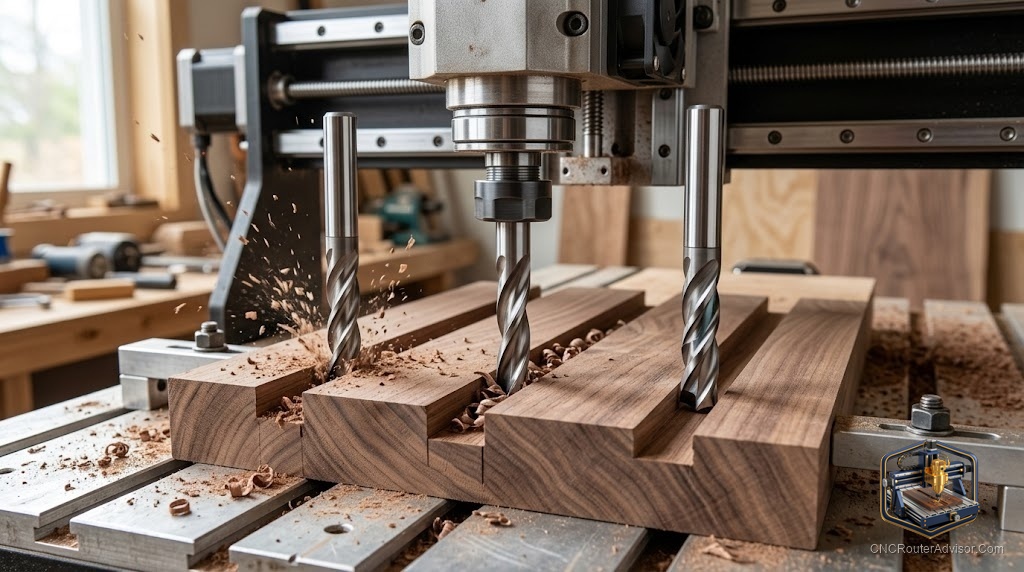
An 8mm carbide CNC router bit sounds like a simple purchase until you realize there are upcut, downcut, compression, straight, ball-nose, and V-groove versions of it, each optimized for a different cut and material. Buying the wrong spiral direction for your material wastes the bit and ruins the surface finish. Getting it right means understanding one relatively simple set of rules that applies across every 8mm CNC bit you will ever buy.
An 8mm carbide CNC router bit is a solid carbide or carbide-tipped cutting tool with an 8mm shank and an 8mm cutting diameter, used in CNC routers and spindles that accept 8mm collets or ER collets sized for 8mm shanks. The 8mm size is common in metric-centric machine markets and for European spindles using ER20 or ER25 collets, while US machines typically use 1/4 inch (6.35mm) or 1/2 inch (12.7mm) shanks. The 8mm shank is stiffer than a 1/4 inch shank, which improves performance on mid-range machines.
The short answer on which 8mm carbide spiral to buy: for plywood, MDF, and double-sided laminate, use a compression spiral (upcut on the bottom, downcut on the top) for clean edges on both faces. For solid wood profiling and pocketing, an upcut spiral is the general workhorse. For thin veneers and materials where top surface tearout is the main concern, use a downcut.
The 8mm spiral types and what each one does
Upcut spiral The cutting flutes spiral upward. Effect: chips eject upward out of the cut (good chip clearance), top surface may have some tearout, bottom surface is clean. Best for: general profiling in solid wood, deep pockets where chip clearance matters, cutting thicker materials.
Downcut spiral The flutes spiral downward. Effect: chips pushed down into the cut (requires slower feeds or shallower passes for chip clearing), top surface is very clean with no tearout, bottom surface may have slight tearout. Best for: thin materials where top surface quality is critical, veneered surfaces, shallow operations.
Compression spiral Combines an upcut section at the tip with a downcut section above it. Effect: upcut clears chips from the bottom; downcut shears the top surface cleanly. Both faces of the material are cut cleanly in a single pass. Best for: plywood, double-sided melamine or laminate, cabinet-grade sheet goods where both faces show. Important: on the first pass, the cut depth must be below the upcut section of the bit or you will not get the clean top edge.
The Amana Tool 48306-K is a specific example of an 8mm compression spiral: 8mm diameter, 25mm cutting height, 8mm shank, nACo ceramic (Spektra) coating for longer life in abrasive materials like MDF and laminate. It is designed specifically for CNC applications requiring high feed rates and a clean finish on double-sided material.
Straight (non-spiral) bits in 8mm Staight bits cut without a helical flute, producing no upward or downward chip force. They work for light-duty routing and general-purpose cuts but are less efficient than spirals for CNC work. For most CNC applications, a spiral outperforms a straight bit.
Coatings and their relevance for 8mm CNC bits
Solid carbide bits are standard for CNC. Coatings extend tool life:
- Uncoated carbide: Good general-purpose performance for wood, MDF, and plastics.
- TiAlN and nACo (Spektra): High-hardness coatings that reduce heat and wear in abrasive materials (MDF, particleboard, laminate). Amana’s Spektra nACo coating is a recognized example.
- ZrN (gold) coatings: Common on bits optimized for non-ferrous metals and plastics.
For regular wood and MDF CNC work, uncoated carbide is fine. In high-volume production with abrasive materials, a coated bit lasts significantly longer.
8mm shank in practice: which machines use it
The 8mm shank is most common in:
- European spindles with ER20 or ER25 collets (common on many 800W and 1.5kW water-cooled spindles).
- Metric-spec CNC machines from European and Asian manufacturers.
- Hobby machines with ER11 collets that offer an 8mm option.
US-market machines typically use 1/4 inch or 1/2 inch collets. If your machine uses inch-size collets, confirm that your spindle or router accepts 8mm metric shanks before ordering.
The verdict
An 8mm carbide CNC router bit is a practical, stiff, and versatile tool size for CNC work. For plywood and laminate: compression spiral. For solid wood pocketing: upcut spiral. For clean top surfaces on thin material: downcut. Amana Tool and similar precision-carbide brands make the most consistent and durable 8mm spirals. Confirm your machine’s collet size before ordering.
Three takeaways: compression spirals are the right 8mm bit for plywood and double-sided laminate; upcut spirals are the general workhorse for solid wood and deep pockets; and confirm your machine accepts 8mm metric shanks before buying, since US routers typically use 1/4 inch or 1/2 inch collets.
FAQ
What is an 8mm carbide CNC router bit? A solid carbide or carbide-tipped CNC cutting tool with an 8mm shank and 8mm cutting diameter, used in spindles with ER20/ER25 or metric collets that accept the 8mm size.
What is the difference between upcut and downcut in 8mm spiral bits? Upcut spirals eject chips upward for good clearance but can tearout the top surface. Downcut spirals push chips down for a clean top surface but require slower feeds. Compression combines both for clean cuts on both faces.
What is an 8mm compression spiral bit for? Cutting plywood, double-sided melamine, and laminated sheet goods where both top and bottom surfaces must be clean. The Amana Tool 48306-K is a well-regarded example.
What machines use 8mm shank CNC bits? European-spec spindles (ER20 and ER25 collets) common on 800W to 2.2kW water-cooled spindles. US machines typically use 1/4 inch or 1/2 inch inch collets; confirm compatibility before ordering 8mm metric bits.
What coating should an 8mm CNC router bit have? For general wood work, uncoated carbide is fine. For high-volume work in MDF, laminate, or other abrasive materials, a coated bit (TiAlN, nACo Spektra) lasts significantly longer.
What brands make quality 8mm CNC router bits? Amana Tool (including the Spektra-coated 48306-K compression spiral), Whiteside, Freud, and various solid carbide specialist brands produce quality 8mm CNC bits.
What cutting height do 8mm compression bits typically have? The Amana 48306-K has a 25mm cutting height (B1: 11mm). Other bits vary; check the spec sheet for the upcut section length to ensure your full-depth passes engage the compression geometry correctly.
References
- Amana Tool, 48306-K CNC Solid Carbide Spektra Compression Spiral 8mm x 25mm x 8mm Shank: https://www.amanatool.com/48306-k-cnc-solid-carbide-spektratm-extreme-tool-life-coated-compression-spiral-8mm-dia-x-25mm-x-8mm-shank.html
- ToolsToday, Downcut, Upcut and Compression Bits (spiral direction guide): https://toolstoday.com/learn/downcut-upcut-and-compression-bits
- Tungsten and Tool, CNC Router Bits Explained: Upcut vs Downcut vs Compression vs Straight: https://tungstenandtool.com/blogs/news/router-bits-explained-upcut-vs-downcut-vs-compression-vs-straight
- FindBuyTool, Upcut vs Downcut vs Compression (what each does): https://www.findbuytool.com/blogs/university/choosing-the-ultimate-spiral-router-bit-up-cut-vs-down-cut-vs-compression
- Infinity Cutting Tools, How to Choose Solid Carbide Spiral Router Bits: https://infinitytools.com/blogs/learn/how-to-choose-solid-carbide-spiral-router-bits