
Plywood CNC Router Guide: Tooling, Speeds, Workholding, and Finish Quality
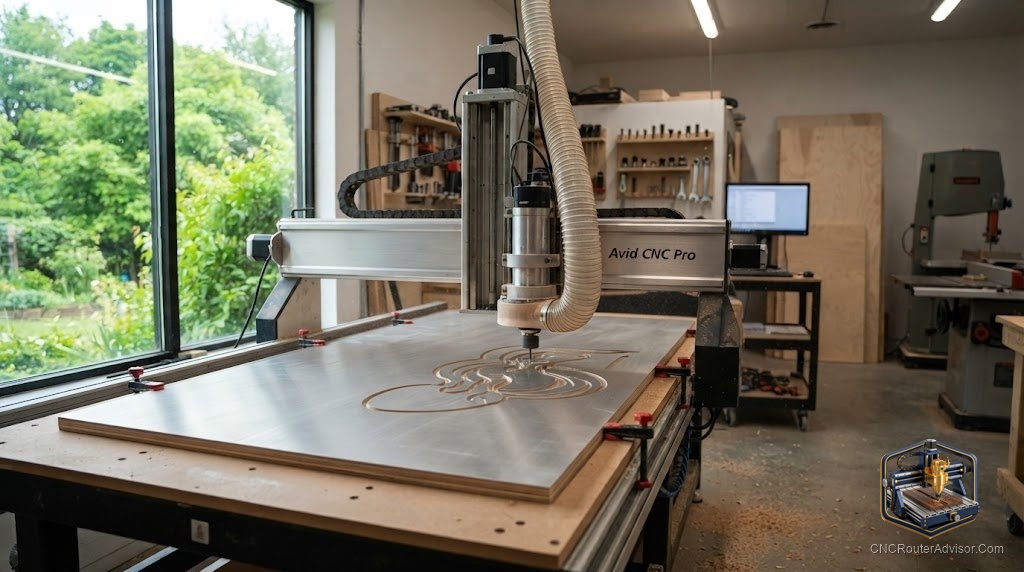
Plywood is the material that pays for a lot of CNC routers. Cabinet parts, flat-pack furniture, store fixtures, toys, and layered art all lean on it because it is stable, strong, and affordable. But a machine set up casually turns good plywood into fuzzy, splintered parts, while a machine set up for plywood turns out clean, assembly-ready pieces all day. The difference is not the sheet. It is how the router is configured for it.
A plywood CNC router is a machine set up to cut sheet goods well, which means enough work area for your panels, a compression bit to protect both faces, sensible feeds, and workholding that keeps big sheets flat and captured. This guide covers how to choose and configure a router for plywood work and how to get edges clean enough to assemble without sanding.
Sizing the machine to your sheets
Start with the work area, because plywood comes in big sheets. If you cut cabinet and furniture parts, a 4 by 8 foot table lets you process a full sheet without seaming, which is a large productivity and accuracy advantage. If your parts are smaller, a prosumer gantry handles them fine by cutting sheets down first. The mistake is buying a machine that forces you to slice every sheet into awkward sections before it even fits the bed, which wastes material and time.
Tooling: compression bits earn their keep
Plywood has two show faces, so the compression bit is the hero. Its upcut tip pulls the bottom veneer down and its downcut section presses the top veneer down, leaving both faces clean. For full-depth cuts in 1/2 inch and 3/4 inch ply, nothing else matches it. Keep a downcut on hand for shallow work where only the top shows, and expect faster bit wear than solid wood because plywood’s glue lines are abrasive. Quality bits pay off for anyone cutting plywood regularly.
Speeds, feeds, and pass depth
Plywood wants a feed rate high enough to shear the veneers cleanly rather than rub and burn. Keep the chip load in a normal hardwood range, around 0.009 to 0.011 inch for a 1/4 inch bit, and adjust by result. The key detail with a compression bit is the first pass: it must go deep enough to bring the upcut-to-downcut transition below the top surface, or the top veneer still frays. After that, step down in sensible increments rather than hogging full thickness on a light machine.
Workholding for full sheets
Big sheets bow, and a bowed sheet ruins cut depth and finish. Hold it flat everywhere:
- A surfaced spoilboard is the true, flat foundation. Surface it to the machine.
- Screws into the spoilboard through waste areas are the most reliable hold for full sheets.
- A vacuum table is the production standard, holding whole sheets instantly, and pays off at volume.
- Perimeter clamps work for smaller pieces cut from a sheet.
Then keep parts from moving as they cut free with tabs or an onion skin, so a released part cannot shift into the bit.
Finish quality
- Use a compression bit so both faces come off clean.
- A light finishing pass on visible edges gives the crispest result.
- Sacrificial backing under thin ply stops bottom blowout.
- Sharp tooling matters more in plywood than solid wood, since glue lines dull bits fast.
- If one edge fuzzes and the opposite is clean, your cut direction relative to the layers is the reason.
The honest verdict
A plywood CNC router is really just a router configured with plywood in mind: sized to your sheets, fitted with a sharp compression bit, fed fast enough to shear rather than burn, and holding the sheet dead flat with parts tabbed in place. Get those right and plywood becomes the dependable, low-cost material that makes cabinets, fixtures, and flat-pack designs profitable. The recurring failures are a machine too small for the sheets, a worn bit, and a bowed panel, and all three are avoidable.
Frequently asked questions
What size CNC router do I need for plywood? A 4 by 8 foot table lets you process full sheets for cabinet and furniture work. A prosumer gantry handles smaller parts if you cut sheets down first.
What is the best bit for cutting plywood? A compression bit. Its upcut tip and downcut section keep both the top and bottom veneers clean, which is exactly what plywood’s two show faces need.
Why does my plywood fray on the top face? Often a compression bit whose transition point sits above the surface, or an upcut lifting the veneer. Set the first pass deeper, or use a downcut where only the top shows.
What feed and speed should I use for plywood? A feed high enough to shear the veneers cleanly, with the chip load in a normal hardwood range, around 0.009 to 0.011 inch for a 1/4 inch bit. Adjust by result.
How do I hold a full sheet flat? Screw it to a surfaced spoilboard through waste areas, or use a vacuum table for production. A flat, surfaced spoilboard is the foundation under either.
Why do my plywood cuts dull bits so quickly? The glue lines between veneers are abrasive and wear bits faster than solid wood. Keep tools sharp and use quality bits for regular plywood work.
How do I stop parts shifting as they cut free? Leave tabs or an onion skin so parts stay captured until the cut finishes, then release them by hand, preventing a freed part from moving into the bit.