
Metal CNC Router Guide: Tooling, Speeds, Workholding, and Finish Quality
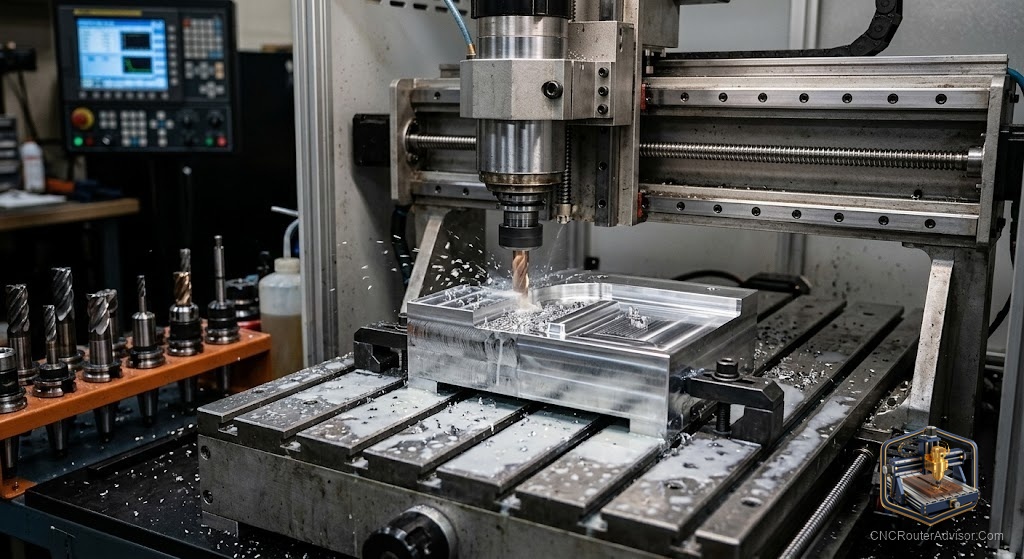
Walk into a conversation about cutting metal on a router and you will hear two extremes: people insisting it cannot be done, and people casually milling aluminum brackets in their garage. Both are describing the same truth from different angles. A router will not machine steel like an industrial mill, but for aluminum and other soft metals, a machine built and set up for the job cuts clean, accurate parts. The gap between the two camps is entirely about the machine and the technique, and that is what this guide is about.
A metal CNC router is a machine capable of cutting soft metals like aluminum, brass, and copper, built rigid enough and set up with the right tooling, feeds and speeds, cooling, and workholding to handle metal’s heat and force. Metal is far more demanding than wood, and the classic failure, chips welding to a hot tool, comes from heat and poor chip clearing. A metal-capable router is a system where rigidity, tooling, and technique all support making and clearing real chips.
Short answer: a metal CNC router cuts soft metals (aluminum, brass, copper), not steel, when it has a rigid frame, single-flute carbide tooling, correct feeds and speeds, cooling, aggressive chip clearing, and solid workholding. Run a feed high enough to make chips, never let the bit rub, and build depth over shallow passes. The machine’s rigidity is the foundation; without it, no amount of technique gives clean metal cuts.
What makes a router metal-capable
Metal punishes any weakness, so rigidity comes first:
- A stiff frame in steel or heavy aluminum, since flex causes chatter and broken tools.
- Ball or lead screws with linear rails, for backlash-free, precise, repeatable motion.
- A torquey spindle, such as a water-cooled VFD unit from around 700W upward, delivering power at the right RPM.
- A flat, solid bed for secure, rigid workholding.
Light V-wheel hobby machines flex too much for reliable metal work; a metal-capable machine is built stouter from the start.
Which metals, and which not
- Aluminum, the most common and cleanest-cutting soft metal.
- Brass, which machines well and finishes nicely.
- Copper, soft and cuttable but gummy, so chip clearing matters.
- Steel and hard metals, which belong on a rigid mill, not a router.
Know your metal, since each behaves differently under the bit.
Tooling
- Single-flute end mills are the standard for soft metals, giving chips room to clear before welding to a hot tool.
- Two-flute end mills refine the finish once feeds are dialed in.
- Carbide over high-speed steel, for edge life in metal.
- Sharp tools only, since a dull bit rubs, overheats, and breaks.
Feeds, speeds, and cooling
Aim for a real chip load so chips carry heat away from the cut:
- Shallow depth per pass, building depth gradually.
- Moderate RPM matched to the tool, not the router’s maximum.
- A feed that keeps the bit shearing chips rather than dwelling and rubbing.
Add cooling to manage heat: cutting fluid or mist coolant, a light lubricant like WD-40 for aluminum on lighter setups, and a cold air gun to cool and clear chips. Constant chip evacuation stops chips re-cutting and welding.
Workholding and finish
Metal will not tolerate movement, so hold work in a solid vise, with strong clamps, or on a bolted fixture. Any shift causes chatter, ruined finish, and broken tools. A good soft-metal finish is bright and smooth; fix problems by cause, a gummed bit means heat and poor clearing (single-flute bit, cooling, higher feed), chatter means rigidity or depth issues, a smeared surface means the bit is rubbing, and broken tools mean too much depth or plunge.
Product picks
FoxAlien XE-PRO (rigid entry for soft metals). An affordable, stout machine that handles light aluminum and brass with careful technique, a practical way to start metal without a mill. Honest flaw: it is still a light machine, so passes must stay shallow and feeds patient; it will not hog metal. On Amazon.
SpeTool single-flute end mills (soft-metal tooling). Single-flute carbide bits that clear chips in aluminum and other soft metals, the correct starting tooling. Honest flaw: single-flute geometry leaves a slightly coarser finish, so switch to a two-flute bit for finishing passes. On Amazon.
Who should skip a metal router
Skip trying to cut metal on a light hobby machine built for wood, since it will flex, chatter, and break bits; either buy a rigid metal-capable machine or accept wood-only work. Skip a router entirely for steel and hard metals, which need a mill. But if aluminum, brass, and copper parts are your goal and you buy the rigidity to match, a metal CNC router opens up work pure woodworkers never touch.
The bottom line
A metal CNC router cuts soft metals cleanly when rigidity comes first and technique follows: a stiff frame, single-flute carbide tooling, correct feeds and speeds, cooling, relentless chip clearing, and solid workholding. The enemy is heat and welded chips, so make real chips and get them out. Leave steel to a mill, buy the rigidity metal demands rather than fighting a wood machine, and aluminum, brass, and copper parts come off the bed bright and accurate.
FAQ
Can a CNC router cut metal? Yes, soft metals like aluminum, brass, and copper, if it is rigid enough and set up with the right tooling, feeds and speeds, cooling, and workholding. Steel needs a mill.
What makes a router metal-capable? Rigidity above all: a stiff steel or heavy aluminum frame, ball or lead screws with linear rails, a torquey spindle, and a solid bed for workholding.
What tooling do I need for metal? Single-flute carbide end mills for roughing soft metals, and two-flute bits for finishing, always sharp, since a dull bit rubs, overheats, and breaks.
Do I need coolant? Some cooling is important. Cutting fluid, mist coolant, a light lubricant like WD-40, or a cold air gun all reduce heat and improve finish.
Why do my bits weld up in metal? Chips are sticking to a hot tool from poor clearing. Use a single-flute bit, add cooling, clear chips constantly, and raise feed relative to RPM.
Can I cut metal on a wood CNC router? A rigid one may handle light aluminum with care, but a light wood machine flexes too much. For real metal work, buy a machine built rigid for it.
How do I get a clean metal finish? A rigid setup, sharp single-flute tooling, correct chip load, cooling, solid workholding, and a lighter finishing pass with a two-flute bit.
References
- CNCRouterInfo, how to choose a CNC router: https://cncrouterinfo.com/guides/how-to-choose-a-cnc-router/
- CNC Dad, best CNC router for beginners: https://www.cnc-dad.com/blog/best-cnc-router-for-beginners/