
Home CNC Wood Router Guide: Tooling, Speeds, Workholding, and Finish Quality
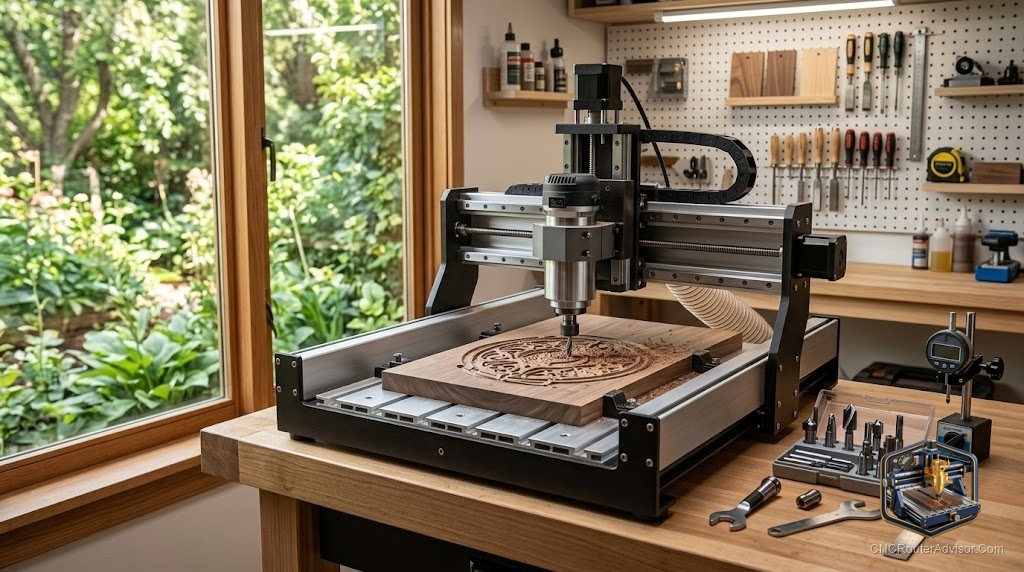
A CNC router at home changes the way you make things. Instead of driving to a shop or outsourcing a sign, you draw it at the kitchen table and cut it in the garage that evening. But a home shop has constraints a commercial one does not: limited space, shared walls, a spouse who notices the noise and the dust, and a single household circuit. The best home CNC setup is the one that respects those realities while still cutting clean, and that comes down to a handful of choices you make early.
A home CNC wood router is a machine sized and set up for home use, cutting and carving wood, plastics, and light materials in a garage, basement, or spare room. Because home shops have limited space, power, and noise tolerance, the priorities are a work area that fits your projects and your room, manageable noise, effective dust control, and a machine rigid enough to cut cleanly. Getting tooling, speeds, and workholding right is what turns a home machine into a source of quality work.
Short answer: a good home CNC wood router balances a work area sized to your projects and space with quiet operation, strong dust control, and enough rigidity for clean cuts. Desktop and benchtop machines suit most homes, cutting signs, small parts, and carving. Use sharp carbide bits at proper feeds and speeds, hold work firmly, and run real dust collection. Match the machine to your room and household as much as to your projects.
What makes a machine right for home
Home use adds constraints beyond the usual specs:
- Size and footprint. The machine must fit your space, and its footprint is larger than the cutting area. Desktop and benchtop machines suit most homes.
- Noise. A trim router is loud; a VFD spindle runs quieter, which matters with shared walls and family nearby.
- Dust control. Essential at home, both for health and for keeping a living space clean.
- Power. Most home machines run on standard household power, but confirm before buying larger units.
- Rigidity. Even a compact home machine needs enough stiffness to cut cleanly, especially in hardwood.
Tooling for home projects
Stock a small, versatile set of carbide bits: upcut or compression spirals for cutting and clean plywood edges, straight bits for grooving, V-bits for lettering, and a ball-nose bit for relief. Carbide holds its edge far longer than high-speed steel, and sharp bits cut cleaner and safer. Add bits as your projects demand rather than buying a huge set up front.
Feeds, speeds, and finish
Clean cuts come from a proper chip load, so the bit shears chips rather than rubbing and burning:
- Set spindle RPM and feed rate together for the bit and material.
- Too slow a feed or too high an RPM burns wood and dulls bits; too aggressive breaks them.
- Build depth over multiple passes rather than one deep, forceful cut.
- Keep chips clearing, since re-cut chips mar the finish and heat the tool.
Fuzzy edges usually mean a dull bit or wrong speeds; burning means too slow a feed or too high an RPM.
Workholding and dust
Hold work firmly with clamps, a clamping kit, or a vacuum setup over a flat spoilboard, since any movement causes chatter and ruined cuts. For dust, pair a dust shoe with a shop vacuum or dust collector. At home this is not optional: wood dust is a health hazard and a housekeeping nightmare, and good extraction keeps both in check.
Product picks
SainSmart Genmitsu PROVerXL 4030 V2 (capable home all-rounder). A rigid desktop machine with a work area generous enough for signs and mid-size projects, a strong community, and clean results once dialed in, all in a home-friendly footprint. Honest flaw: the base setup uses a trim router rather than a quiet spindle, so it is loud, worth planning around in a shared home. On Amazon.
SainSmart Genmitsu 3018-PROVer V2 (compact starter). A small, affordable machine ideal for tight spaces and learning, cutting small signs, plaques, and light parts. Honest flaw: the small work area and lighter build limit project size and cutting force, so you may outgrow it as your ambitions grow. On Amazon.
Who should choose what
Choose a compact machine like the 3018-PROVer V2 if space is tight, you are learning, or your projects are small; skip it if you already know you want to cut larger signs and panels, since you will outgrow it. Choose a larger desktop like the PROVerXL 4030 V2 if you have room and want to grow into bigger work; skip it if your space or household truly cannot handle the size and noise. In both cases, plan dust and noise before the machine arrives.
The bottom line
A home CNC wood router succeeds when it respects the home as much as the work: sized to your space, quiet enough for shared walls, and paired with real dust control, all while staying rigid enough to cut clean. Stock a few sharp carbide bits, run proper feeds and speeds, hold work firmly, and extract dust seriously. Match the machine to your room and household, and a garage or spare room becomes a genuinely capable workshop.
FAQ
What is the best CNC router for home use? One sized to your projects and your space, quiet enough for a shared home, with strong dust control and enough rigidity to cut cleanly. Desktop and benchtop machines suit most homes.
Are home CNC routers loud? A trim router is loud; a VFD spindle runs quieter. In a shared home, noise is worth planning around, including timing and placement of the machine.
Do I need dust collection at home? Yes. Wood dust is a health hazard and a housekeeping problem, so pair a dust shoe with a shop vacuum or dust collector for any home machine.
Will a home CNC run on normal power? Most desktop and benchtop machines run on standard household power, but confirm the requirements before buying larger units.
What can I make with a home CNC router? Signs, plaques, small parts, boxes, inlays, and light carving in wood and plastics, with project size limited by the machine’s work area.
What tooling do I need at home? A small set of carbide bits: an upcut or compression spiral, a straight bit, a V-bit, and a ball-nose bit, adding more as your projects require.
Why are my home cuts rough? Usually a dull bit, wrong feeds and speeds, or poor chip clearing. Use sharp carbide, set a proper chip load, and make sure chips evacuate.
References
- CNCRouterInfo, how to choose a CNC router: https://cncrouterinfo.com/guides/how-to-choose-a-cnc-router/
- BubbleRelief, CNC router projects for beginners: https://bubblerelief.com/cnc-router-projects-for-beginners/