
CNC Woodworking Router Bits Guide: Types, Uses, Sizes, and Selection Tips
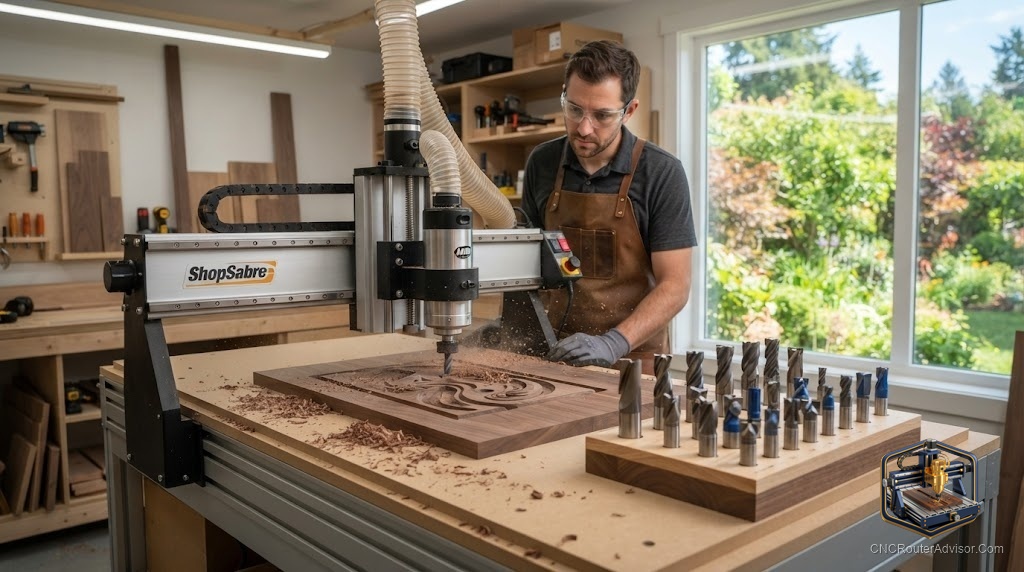
Most people spend weeks agonizing over which machine to buy, then grab whatever bits come in a cheap starter pack and wonder why their cuts look rough. The truth every experienced CNC woodworker learns is that the bit does most of the work. The same machine, with the right bit at the right speed, is the difference between a fuzzy, torn edge and a surface so clean it barely needs sanding. Understanding bits is the fastest way to better results, and it costs far less than upgrading a machine.
CNC woodworking router bits are the cutting tools that do the actual carving, cutting, and detailing in wood, each shaped for a specific job. The main types are upcut, downcut, and compression spirals for clearing and edges, straight bits for general cutting, V-bits for lettering, ball-nose bits for 3D work, and surfacing bits for flattening. Choosing well means matching bit type, size, and flute count to the material and the cut, then running the right speeds so chips clear and edges stay clean.
Short answer: the core CNC wood bits are upcut spirals for fast chip clearing, downcut for clean top edges, compression bits for clean edges on both faces of plywood, straight bits for general cutting, V-bits for lettering and V-carving, ball-nose bits for 3D relief, and surfacing bits for flattening. Match the bit and its flute count to the material and cut, use carbide, keep bits sharp, and set feeds and speeds for a proper chip load so edges come out clean.
The main bit types and what they do
- Upcut spiral end mill. Pulls chips up and out of the cut, great chip evacuation for pockets and deep cuts. The trade is it can fuzz the top edge.
- Downcut spiral. Pushes chips down, leaving a clean top edge, ideal for surfaces that show. Chips clear less easily, so it suits shallower cuts.
- Compression end mill. Combines both: up-cutting at the tip and down-cutting above, giving clean edges on both faces. The go-to for finished plywood parts.
- Straight bit. Simple general-purpose cutting and grooving.
- V-groove (V-bit). Angled bit for crisp lettering and V-carving, the heart of sign work.
- Ball-nose bit. Rounded tip that renders smooth curved surfaces in 3D relief carving.
- Surfacing (spoilboard) bit. Wide flat bit for flattening spoilboards and slabs.
Sizes and flute count
Two numbers shape a bit’s behavior:
- Diameter. Larger bits cut faster and stronger but cannot render fine detail; small bits like 3mm reach tight corners and detail but are fragile and slower. Match diameter to the smallest detail and the internal corner radius your design needs.
- Flute count. Single-flute bits clear chips aggressively, good for softwoods, plastics, and fast clearing. Two-flute bits leave a finer finish. More flutes suit finishing over hogging in wood.
Remember an internal corner can never be tighter than the bit’s radius, so design around your smallest bit.
Material matters
- Softwoods (pine, cedar) cut easily but can fuzz; sharp upcut or compression bits and good chip clearing help.
- Hardwoods (oak, maple, walnut) need sharp carbide and sensible feeds to avoid burning.
- Plywood benefits from compression bits for clean edges on both faces.
- MDF is abrasive and dulls bits faster, so carbide and spares matter.
- Plastics like acrylic and HDPE often cut best with single-flute bits that clear chips and resist melting.
Feeds, speeds, and keeping edges clean
Even the right bit cuts poorly at the wrong speed. Aim for a proper chip load so the bit shears chips rather than rubbing:
- Set spindle RPM and feed rate together for the bit and material.
- Too slow a feed or too high an RPM burns and dulls; too aggressive breaks bits.
- Watch chip evacuation, since re-cut chips ruin finish and heat the tool.
- Control runout and deflection with a good collet and sensible depth per pass.
- Replace dull bits, since a dull tool tears, burns, and breaks.
Product picks
Amana Tool AMS-134 CNC bit set (quality wood tooling). A well-made set from a respected tooling brand, covering common wood cutting needs with clean-cutting carbide. Honest flaw: it is an investment set, more than a beginner may want to spend before knowing which bits they use most. On Amazon.
Genmitsu V-bit and detail bit set (lettering and detail). An affordable way to start V-carving lettering and fine detail, ideal for signs and engraving. Honest flaw: budget bits dull faster than premium tooling, so treat them as consumables and replace as letters soften. On Amazon.
SpeTool single-flute end mills (softwood and plastic). Single-flute geometry clears chips fast in softwoods and plastics, resisting melt and fuzz. Honest flaw: single-flute leaves a slightly coarser finish than a two-flute bit, so switch to two-flute for finishing passes. On Amazon.
Who should skip what
Skip a big premium set if you are just starting; buy a few core bits, an upcut or compression, a straight bit, a V-bit, and a ball-nose, and add as you learn what you use. Skip tiny detail bits until you actually carve fine work, since they break easily in inexperienced hands. And skip the cheapest no-name bits for hardwood and plywood, where dull edges tear and burn.
The bottom line
CNC woodworking router bits do the real work, and a modest kit chosen well beats a machine upgrade for improving your cuts. Learn the core types, upcut, downcut, compression, straight, V, ball-nose, and surfacing, match bit size and flute count to your material and detail, run proper feeds and speeds so chips clear, and keep carbide sharp. Start with a few good bits, add as your projects demand, and your edges will come off the machine cleaner than you thought possible.
FAQ
What bits do I need for CNC woodworking? Start with an upcut or compression spiral for cutting, a straight bit for grooving, a V-bit for lettering, and a ball-nose bit for 3D work, then add as needed.
What is the difference between upcut and downcut bits? Upcut pulls chips up for great clearing but can fuzz the top edge; downcut pushes chips down for a clean top edge but clears chips less easily.
What is a compression bit for? A compression bit up-cuts at the tip and down-cuts above, leaving clean edges on both faces, which makes it ideal for finished plywood parts.
How do I choose bit size? Match diameter to the finest detail and tightest internal corner your design needs, remembering a corner can never be smaller than the bit’s radius.
How many flutes should a wood bit have? Single-flute clears chips aggressively for softwoods and plastics; two-flute leaves a finer finish. Use single for hogging, more flutes for finishing.
Why are my edges rough or burned? Usually wrong feeds and speeds, a dull bit, or poor chip clearing. Set a proper chip load, keep bits sharp, and make sure chips evacuate.
Do I need carbide bits? For wood, yes, especially in hardwood and abrasive MDF. Carbide holds an edge far longer than high-speed steel and cuts cleaner over time.
References
- CNCRouterInfo, best CNC router bits: https://cncrouterinfo.com/guides/best-cnc-router-bits/
- CNC Shop, troubleshooting cutting problems: https://cncshop.com/pages/troubleshooting-cutting-problems