Stone CNC Router Guide: Tooling, Speeds, Workholding, and Finish Quality
The first time a woodworker tries to engrave a granite tile with a normal router bit, the result is usually a chipped surface and a ruined cutter. Stone does not cut like wood or even metal. It is abrasive, brittle, and unforgiving, and it demands a completely different approach to tooling, speed, and cooling. Once you understand those differences, a CNC router can produce beautiful engraved and carved stone. Ignore them and you will destroy tools and crack material.
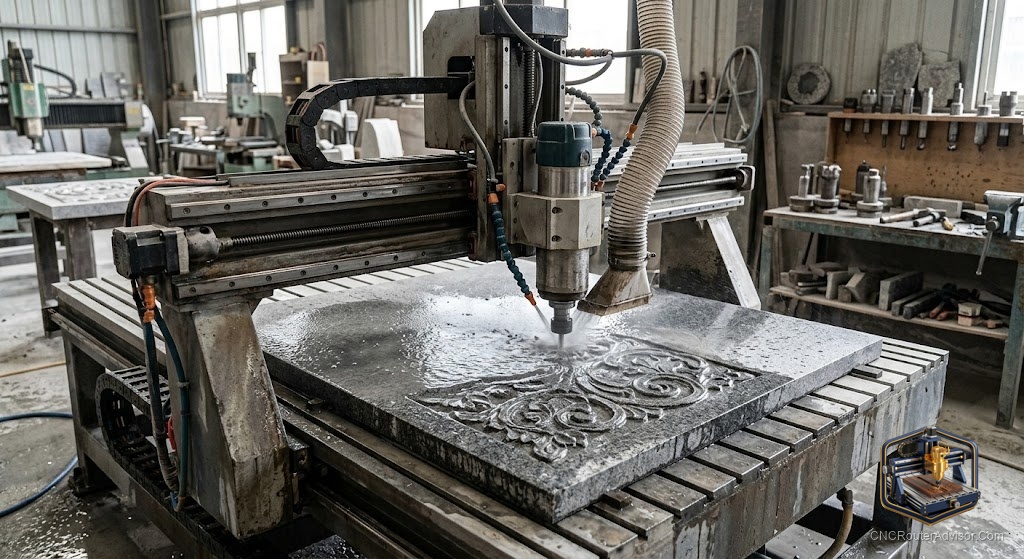
A stone CNC router is a machine set up to cut, engrave, or carve stone materials such as granite, marble, slate, and engineered quartz. The term covers two very different situations: light engraving on a capable hobby router using diamond tooling, and serious cutting or carving on a purpose-built stone machine with a rigid frame and water cooling.
Short answer: a standard CNC router can engrave and lightly etch stone using diamond drag bits or diamond-coated burrs, run at conservative speeds with dust or water control. Deep carving and cutting slabs require a purpose-built stone router with a heavy frame, a water-cooled spindle, and water flooding to manage heat and dust. Match the machine to the depth of work you actually need.
Why stone is its own category
Stone is abrasive rather than shearable. A router bit does not slice stone the way it slices wood; it grinds and fractures the surface. That means:
- Tooling wears fast. Only diamond tooling survives, because ordinary carbide dulls almost instantly on stone.
- Dust is hazardous. Cutting silica-bearing stone produces fine dust that is a serious respiratory hazard. Water suppression or strong extraction is not optional.
- Heat and cracking are real risks. Friction builds heat, and stone can crack from thermal or mechanical stress if you push too hard.
Two levels of stone work
Engraving and etching. For lettering, logos, and shallow decoration on tiles, headstones, and plaques, a rigid hobby or pro router can work with the right tooling. This is the accessible entry point.
Cutting and 3D carving. Profiling slabs, cutting sink openings, or carving reliefs needs a machine built for stone: a heavy steel frame, a water-cooled spindle, and a water bath or flood system. These are industrial machines, not repurposed woodworking routers.
Tooling
- Diamond drag bits. These do not spin to cut; a diamond tip drags across the surface to scribe fine lines. Excellent for lettering and detailed engraving on hard stone, and gentle on the machine.
- Diamond-coated burrs and end mills. Spinning tools with a diamond grit surface, used for deeper engraving and light carving. They need cooling.
- Sintered diamond profile tools. For real cutting and edge profiling on purpose-built machines.
Speeds and cooling
Stone wants controlled, patient cuts. Take shallow depths per pass and let the diamond grit do the grinding. Cooling is the difference between success and cracked material:
- Water is the standard for spinning diamond tools, flushing dust and carrying away heat.
- Dust extraction paired with light misting can work for shallow diamond-drag engraving where flooding is impractical.
Never dry-cut silica stone without serious respiratory protection and extraction.
Workholding and finish
Stone is heavy and brittle, so it must sit flat and fully supported to avoid cracking under tool pressure. Bed the piece on a flat sacrificial surface and clamp gently but securely at the edges. Finish quality on engraving comes from tool sharpness and a slow final pass; carved surfaces are refined with progressively finer diamond tooling and hand polishing.
The bottom line
Match the machine to the job. For engraving tiles, plaques, and headstones, diamond drag bits or diamond burrs on a rigid router deliver clean results with proper dust and heat control. For cutting slabs and 3D carving, you need a purpose-built stone router with a water-cooled spindle and flood cooling. In both cases, diamond tooling, patience, and dust safety are non-negotiable.
FAQ
Can a normal CNC router cut stone? It can engrave and lightly etch stone with diamond tooling and proper cooling. It cannot cut slabs or carve deeply; that needs a purpose-built stone machine.
What bits cut stone? Diamond drag bits for scribed engraving, diamond-coated burrs and end mills for deeper work, and sintered diamond profile tools for cutting on industrial machines.
Do I need water? For spinning diamond tools, yes. Water cools the tool and suppresses hazardous dust. Diamond drag engraving can use extraction with light misting instead.
Is stone dust dangerous? Yes. Silica dust from cutting stone is a serious respiratory hazard. Use water suppression or strong extraction and appropriate protection.
Can I engrave granite headstones with a hobby machine? Yes, a rigid machine with a diamond drag bit engraves granite lettering well, which is a common use.
Why did my stone crack? Usually too deep a pass, poor support under the piece, or thermal stress from inadequate cooling.
What finish can I expect? Crisp scribed lines from drag bits, and smooth carved surfaces when you step down through finer diamond tooling and polish.
References
- CNCRouterInfo, how to choose a CNC router: https://cncrouterinfo.com/guides/how-to-choose-a-cnc-router/
- CNC Dad, best CNC router for beginners: https://www.cnc-dad.com/blog/best-cnc-router-for-beginners/