
Cutting Aluminum With a CNC Router: The Technique That Saves Your Bits
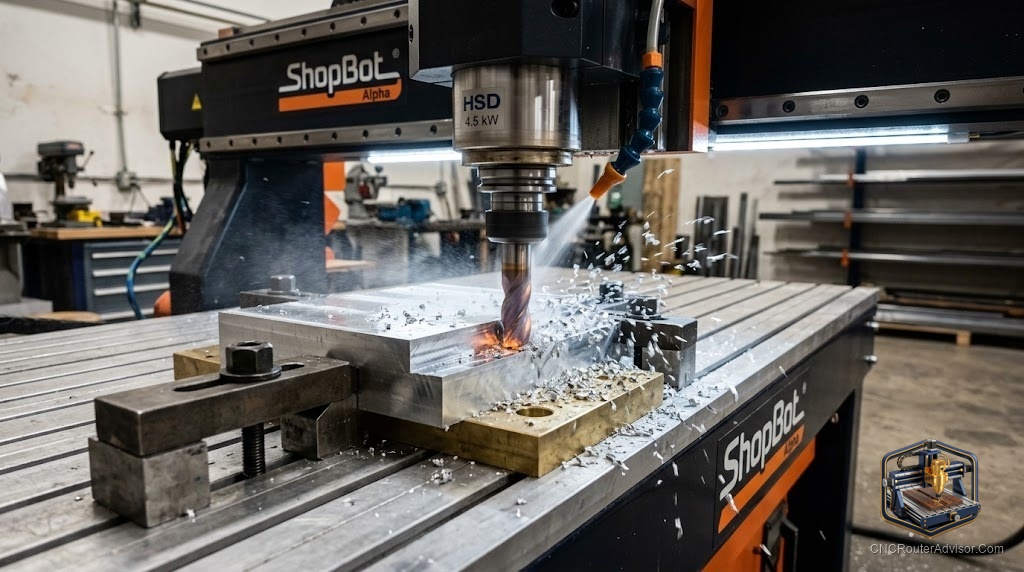
Aluminum is the material that separates people who understand their router from people who just push buttons and hope. Wood forgives clumsy settings. Aluminum does not. Feed too slowly and the tool rubs, overheats, and welds a chip to itself. Push too hard on a flexy machine and the bit snaps. Skip chip clearing and the cutter grinds swarf into a mess. But none of this is mysterious. Cut aluminum well and it stops feeling like luck.
This is a technique guide. For choosing a machine for metal, see our aluminum CNC router guide. Here we cover tooling, feeds and speeds, workholding, and finish.
What makes aluminum different
Aluminum behaves unlike wood in two ways. First, it is gummy: it wants to stick to the cutting edge, and once it does, the tool stops cutting, builds heat, and welds more chips on in a runaway cycle. Second, it demands rigidity: metal pushes back with real force and any machine flex becomes chatter that wrecks finish and breaks tools.
The cutter: fewer flutes, solid carbide
Use a single-flute (O-flute) or two-flute solid carbide end mill. Fewer flutes mean bigger gullets that clear gummy chips before they weld. Avoid multi-flute steel-cutting bits, which clog almost instantly in aluminum.
Feeds and speeds: make a chip, not dust
The beginner instinct is to slow the feed way down. That is exactly backward. Too little feed means the edge rubs, heat builds, and chips weld on. You want a real chip on every pass:
- Keep the feed up enough to form a visible chip.
- Take a shallow depth of cut to control load without slowing the spindle much.
- Start from manufacturer numbers. Tooling makers publish feeds and speeds for their cutters in aluminum.
Good chips come off silvery and warm. Blue or brown chips and screeching mean too much heat.
Climb milling and adaptive paths
Climb milling (cutter rotation moves with feed direction) generally leaves a better finish. Adaptive or trochoidal toolpaths take a constant light radial engagement in a rolling motion, keeping tool load steady and heat down. Use adaptive clearing for aluminum when your CAM offers it.
Chip evacuation and lubrication
An air blast or air-assist nozzle clears the slot so the cutter never recuts its own swarf. Use a light cutting oil or aluminum cutting fluid. Never dry-cut aluminum aggressively.
Workholding: rigid or bust
Aluminum cutting forces will pull weakly held parts loose. Use proper clamps, a fixture plate with T-slots, or a vise. Solid workholding also lets you run the confident feeds that keep the tool cutting rather than rubbing.
Getting a clean finish
A separate light finishing pass with a climb path cleans up walls. Keep the tool sharp. Good chip clearing and lubrication show up directly in finish. A spring pass (final pass at the same depth) removes deflection-left material.
The bottom line
Cutting aluminum on a router is about two truths: aluminum welds to a rubbing tool, and metal punishes a flexing machine. Use a single- or two-flute solid carbide cutter, keep the feed up while taking shallow depths, use adaptive toolpaths and climb finishing, clear chips with air and cut with lubricant, and clamp the work solidly.
Frequently asked questions
Why do my bits keep breaking? Feed is too low, so the tool rubs, builds heat, and welds chips. Increase feed, reduce depth, clear chips with air.
What bit for aluminum? Single-flute (O-flute) or two-flute solid carbide made for aluminum. Avoid multi-flute steel-cutting bits.
Do I need coolant? Not a flood system, but a light cutting oil and air blast dramatically extends tool life.
What are good feeds and speeds? Start from tooling manufacturer numbers. Aim for silvery, warm chips.
Climb mill or conventional? Climb milling gives better finish and is preferred for finishing passes on a rigid machine.
How do I get a smooth finish? A separate light finishing pass with climb path, sharp tool, chip clearing, lubrication, and a spring pass.
References
- Tooling manufacturer feeds-and-speeds charts. CAM documentation on adaptive toolpaths.