
Aluminum CNC Router Guide: Tooling, Speeds, Workholding, and Finish Quality
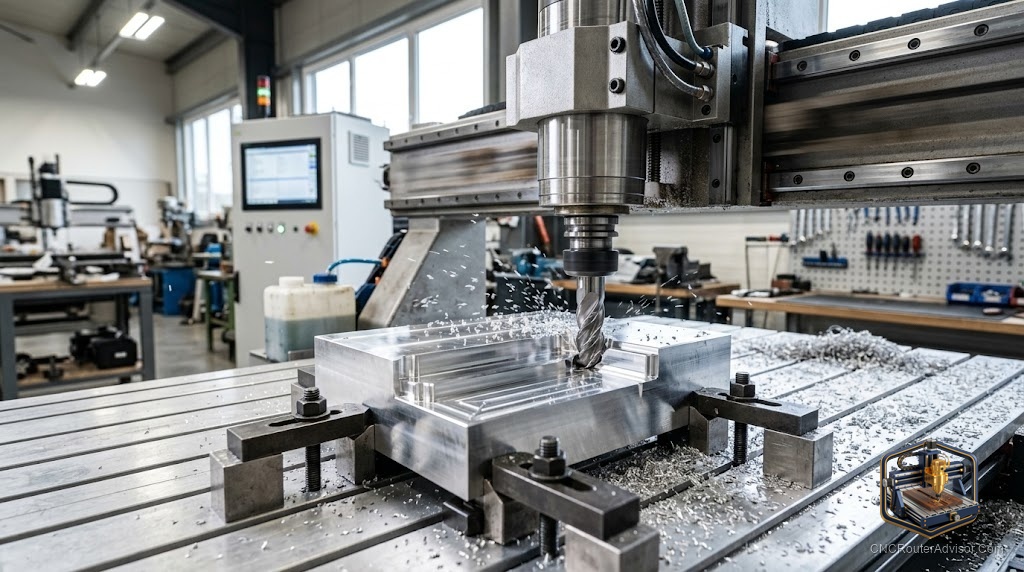
The first time most people try aluminum on a router, they treat it like a slower version of wood. They plunge in with a two-flute wood bit at full RPM, hear a horrible screech, and pull out a smeared, gummy edge with a bit welded shut by melted metal. Aluminum on a CNC router is absolutely doable, and it is genuinely satisfying, but it runs by different rules than wood. Ignore them and you fight the material. Respect them and a router turns 6061 into clean, bright parts.
An aluminum CNC router is a rigid router-style machine set up to cut non-ferrous aluminum using the right tooling, feeds and speeds, workholding, and chip control. Success rests on four pillars: a single-flute or dedicated aluminum bit, correct chip load rather than blind RPM, rock-solid workholding, and constant chip evacuation with air or coolant. Get those aligned and finish quality follows.
The verdict up front: you can cut aluminum on a capable router, but only a rigid one. A flexible belt-driven machine will chatter, deflect, and disappoint. If aluminum is a real goal, prioritize rigidity, then tooling, then dial feeds and speeds patiently. This is the one material where machine stiffness stops being optional.
Tooling: single flute is the whole secret
Wood bits fail in aluminum because they cannot clear chips fast enough, so the chips pack, re-cut, heat up, and weld to the tool. The fix is a single-flute or dedicated aluminum end mill (often an “O-flute”), which leaves a large open flute to eject chips before they can re-weld.
Amana Tool’s aluminum-cutting spirals are a well-documented example, with published speed charts for ZrN-coated single O-flute bits. Coatings like ZrN reduce the aluminum’s tendency to stick. For small hobby routers, a single-flute carbide bit in 1/8 inch or 1/4 inch is the sensible starting point. Two-flute aluminum-specific bits work on rigid machines at the right parameters, but single-flute is the most forgiving place to begin.
Speeds and feeds: chase chip load, not RPM
The beginner instinct is to slow the feed and crank the RPM. That is exactly backward and it is what causes rubbing and melting. The goal is a chip thick enough to break cleanly and carry heat away with it, which means matching spindle speed and feed rate to a target chip load.
Manufacturer data gives you a real starting point. Amana’s chart for small-diameter single O-flute bits centers on roughly 18,000 RPM with a chip load in the range of 0.002 to 0.004 inch per tooth and a depth of cut around one tool diameter, reducing feed as you go deeper. Community results on hobby machines echo the same neighborhood: around 18,000 RPM with a moderate feed and light depth, adjusting until chips come off as distinct flakes rather than dust or smears. Use adaptive or trochoidal toolpaths to keep tool engagement low and heat down, and always treat published numbers as starting points to tune, not gospel.
Workholding: aluminum does not forgive movement
Aluminum cutting loads are higher than wood, and a part that shifts even slightly will chatter, ruin the finish, and often snap the bit. Double-sided tape alone, which many people rely on for wood, tends to let go once the stock heats up, a failure owners describe repeatedly. Use mechanical clamps, a proper vise or fixture, or tape plus glue methods rated for the load, and keep the stock as flat and supported as possible. Rigidity in the workholding matters as much as rigidity in the machine.
Chip evacuation and finish quality
Heat is the enemy of a clean aluminum edge, and chips carry heat away, so getting them out of the cut is half the finish battle. An air blast clears chips and cools the cut on lighter work. For heavier or slotting cuts, a mist coolant or even a spray of alcohol keeps temperatures down and stops chips welding. Burrs at the edges usually mean the feed is too low or the bit is dull; a sharp bit at the right chip load leaves a bright, near-polished surface that needs little cleanup. Climb milling generally leaves a better finish on aluminum than conventional, on a rigid machine.
Who should not try aluminum on a router
If your machine is a light belt-and-wheel desktop unit, aluminum will frustrate you more than it teaches you. It can nibble thin, soft aluminum at tiny depths, but expect chatter and poor finish. And if you need production volumes of precise aluminum parts, a router is the wrong tool; a mill is built for that load. A router is best for occasional, light-to-moderate aluminum work on a stiff frame.
The bottom line
Aluminum on a CNC router works when four things line up: a single-flute aluminum bit, a real chip load instead of high RPM and a timid feed, workholding that will not budge, and chips cleared by air or coolant. Above all, it demands a rigid machine, so if aluminum matters to you, buy stiffness first. Start from manufacturer speed charts, watch the chips (flakes good, dust and smears bad), and tune from there. Do that and a router you thought was just for wood starts turning out bright, clean metal parts.
Frequently asked questions
Can a CNC router cut aluminum? Yes, a rigid router can cut aluminum with a single-flute bit, correct chip load, solid workholding, and chip clearing by air or coolant. Flexible belt-driven machines struggle and are best kept to very light aluminum work.
What bit should I use for aluminum on a router? A single-flute or dedicated aluminum end mill, often an O-flute, sometimes coated (for example ZrN) to reduce sticking. Single-flute clears chips before they re-weld, which is the main failure mode with wood bits.
What RPM and feed should I use for aluminum? Start from manufacturer charts. For small single-flute bits, roughly 18,000 RPM with a chip load around 0.002 to 0.004 inch per tooth and light depth of cut is a common starting point. Tune until chips come off as clean flakes.
Why is my aluminum smearing or the bit clogging? Usually the feed is too slow and RPM too high, so the bit rubs and heats instead of cutting. Increase chip load, use a single-flute bit, add air or coolant, and take shallower passes.
How do I hold aluminum down while cutting? Use mechanical clamps, a vise, or a rated fixture. Double-sided tape alone often releases once the stock heats up. Keep the part flat and fully supported to prevent chatter.
Do I need coolant to cut aluminum on a router? An air blast is enough for light work and helps clear chips. For heavier or slotting cuts, mist coolant or an alcohol spray reduces heat and prevents chips welding to the tool.
References
- Amana Tool, “ZrN Coated Solid Carbide Aluminum Cutting Spiral Single O-Flute Speed Chart” (amanatool.com)
- Harvey Performance, “Attacking Aluminum: a Machining Guide” (harveyperformance.com)
- Chief Delphi technical forum, “CNC Aluminum: Recommended Speeds/Bits” (chiefdelphi.com)