Small CNC Wood Router Guide: Tooling, Speeds, Workholding, and Finish Quality
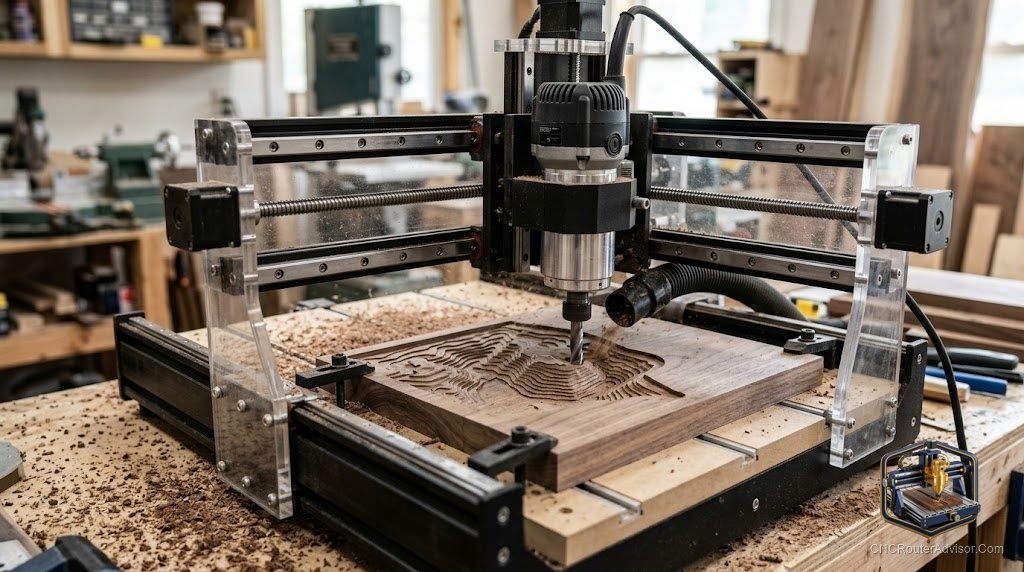
A small CNC wood router is the machine that convinces people the hobby is for them. It fits on a bench, it does not intimidate, and it turns a design on screen into a real carved object faster than you expect. But small does not mean forgiving. A compact machine has less mass and rigidity than a big one, so getting clean cuts leans even harder on good technique. The reward is that once you understand how to run it, a small wood router produces work that looks like it came off a machine three times its size.
This guide is about getting those results: the tooling, speeds, workholding, and finishing habits that make a small wood router punch above its weight.
What a small CNC wood router is
A small CNC wood router is a compact benchtop machine that cuts wood, and usually soft plastics, over a modest work area using the X, Y, and Z axes. It handles plywood, MDF, and hardwoods like oak, maple, and walnut, along with softwoods like pine, cedar, and poplar, and plastics such as acrylic and HDPE. Most run a trim router or a small spindle and a GRBL controller.
Its strengths are footprint, cost, and approachability. Its constraint is size and rigidity: a lighter frame and smaller work area mean you cut smaller parts and cannot muscle through material as aggressively as a large machine. That constraint shapes everything about how you run it well.
The short answer
To get clean results from a small wood router, respect its size. Use sharp, appropriately sized bits, often a single flute or small diameter spiral, run feeds and speeds that make a real chip rather than heat, take shallower passes than a big machine would, hold the work down firmly, and clear chips as you go. Small machines reward light, smart cutting over brute force. Push too hard and a compact frame flexes and chatters. Work with its limits and the finish quality rivals much larger machines on the parts it is sized to make.
Tooling for a small machine
Bit choice matters more on a small machine because it has less power and rigidity to spare. Smaller diameter bits cut with less force, which suits a lighter frame, and single flute bits clear chips well at the higher RPM of a trim router. For clean top surfaces use a downcut or compression spiral, and for general pockets an upcut spiral evacuates chips upward. Keep bits sharp, because a dull bit forces the little machine to push harder, which causes flex, burning, and fuzzy edges. Match bit size to your detail: fine lettering and small parts want small bits and light passes.
Speeds: light and smart beats forceful
On a small machine, the winning strategy is shallow depth of cut with a healthy feed rate, so each pass removes a little cleanly rather than straining the frame. Aim for a real chip load: the bit should make chips, not dust. If you see burn marks, the bit is rubbing, so raise the feed or lower the RPM. If you get chatter, reduce the depth of cut. A small router will make beautiful parts if you let it take many light bites instead of a few heavy ones. Patience in the speed settings is what separates crisp results from torn edges.
Workholding on a compact bed
A small machine gives you less room, so efficient workholding matters. Low profile clamps on a wasteboard handle thicker stock without the gantry hitting them. For thin sheets and small parts, painter’s tape plus cyanoacrylate glue creates a strong, low profile hold that leaves the top surface clear for the cutter. Double sided tape works for some parts. Whatever you use, make sure nothing can lift as the final pass releases the part, because a small machine throwing a loose part is still dangerous. Keep clamps clear of the tool path on a tight bed.
Finish quality: small machine, clean results
Good finish on a small router comes from combining the basics: sharp small bits, light passes at the right chip load, firm workholding, and chip clearing so debris is not recut. Add a light finishing pass on the final contour with a small stepover to clean the wall, and keep your wasteboard flat so depth stays even across the part. Dust collection with even a shop vacuum and a small dust shoe keeps the cut clear and the finish clean. Do these and a compact machine produces detail and edge quality that surprises people used to thinking small means rough.
Who should skip a small wood router
Skip a small machine if you already know you need to cut large panels or furniture parts, because you will fight the work area constantly and outgrow it fast. Size up from the start instead. Skip it if your main material is metal, which needs a rigid, purpose built machine. And skip the very cheapest tiny machines with flexible frames and no support, because their flex undermines the finish and their lack of help slows your learning. A small router should be compact and capable, not just cheap.
Comparison: small wood router technique by task
| Task | Bit | Pass strategy | Workholding |
| Fine lettering, detail | Small single flute or V-bit | Very light passes | Tape and glue |
| Pockets and clearing | Small upcut spiral | Shallow, healthy feed | Clamps or tape |
| Clean top surface | Downcut or compression | Light finishing pass | Firm hold, no lift |
| Small plastic parts | Single flute | Lower RPM, avoid melting | Tape and glue |
For a compact, well supported small wood router, the Genmitsu 3018 PROVer V2 is a popular starting machine at this listing, and the slightly larger Genmitsu 3020 PRO MAX offers more room at this listing. When you are ready for a bigger bed, the Genmitsu 4040 PRO is at this listing.
The verdict
A small CNC wood router is a genuinely capable machine when you run it on its own terms. Its lighter frame and compact bed mean you win with light, smart cutting rather than force: small sharp bits, shallow passes at a real chip load, firm workholding, and diligent chip clearing. Do that and the finish rivals machines far larger, on the parts it is sized to make. Just be honest about size, because the one regret small machine owners share is wanting to cut bigger than the bed allows. If your projects fit, a small wood router is one of the best value entries into the craft.
Frequently asked questions
Are small CNC wood routers any good? Yes, on the parts they are sized for. With sharp small bits, light passes, and firm workholding, a compact machine produces finish quality that rivals much larger machines. The main limit is work area, not cut quality.
What can a small wood router cut? Wood including plywood, MDF, and hardwoods and softwoods, plus soft plastics like acrylic and HDPE. Rigid small machines can touch soft aluminum with care, but wood and plastic are where they excel.
Why does my small router chatter or burn? Chatter usually means the depth of cut is too aggressive for the frame, so reduce it. Burning means the bit is rubbing, so raise the feed or lower the RPM. Small machines want many light bites, not a few heavy ones.
What bits work best on a small machine? Smaller diameter and single flute bits cut with less force, which suits a lighter frame. Use downcut or compression spirals for clean top surfaces and V-bits for lettering. Keep everything sharp.
How do I hold small parts down? Painter’s tape on the wasteboard and part with cyanoacrylate glue between them gives a strong, low profile hold that leaves the surface clear. Make sure parts cannot lift as the final pass releases them.
Will I outgrow a small wood router? You might if you plan to cut large panels or furniture parts, since the work area is the real limit. If your projects are small signs, crafts, and detail work, a small router can serve you for a long time.
References
- CNC Router Info, How to Choose a CNC Router: https://cncrouterinfo.com/guides/how-to-choose-a-cnc-router/
- Bubble Relief, CNC Router Projects for Beginners: https://bubblerelief.com/cnc-router-projects-for-beginners/