
Amana CNC Router Bits: What the Brand Offers and When Its Worth It
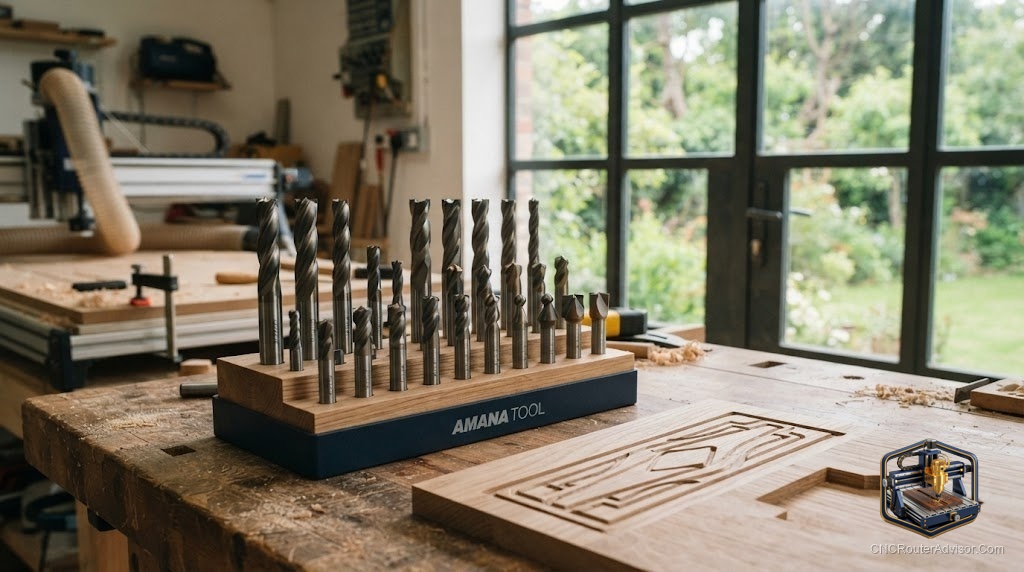
Ask a room full of experienced CNC woodworkers which bits they trust, and the Amana name comes up fast. It has earned a reputation as a premium American tooling brand, the bits people reach for when finish quality really matters. But premium tooling is not automatically the right choice for every job or every budget, and buying a top-tier bit for a task that does not need one is just spending money. This guide explains what Amana offers, why its bits command their reputation, and when they are genuinely worth it versus when a cheaper bit will do.
I will be honest about the value question throughout, because the goal is the right bit for the job, not the most expensive one on the shelf.
What Amana bits are
Amana Tool is a long-established maker of premium CNC router bits and end mills, the cutting tools a CNC router spins to carve material as it moves across the X, Y, and Z axes. Amana’s range covers the full spread of bit types: upcut and downcut spirals, compression bits for clean plywood faces, straight bits, V-groove bits for lettering, ball-nose bits for 3D carving, and surfacing bits for flattening. What sets the brand apart is manufacturing quality, the carbide grade, the grind precision, and the consistency that together produce clean cuts and long tool life.
That quality translates into real, measurable benefits: lower tool runout, sharper and longer-lasting edges, and better finish, especially in demanding materials and on visible surfaces. It also comes at a premium price. Understanding when that premium pays off is the key to buying Amana wisely, which is what the rest of this guide covers.
The short answer
Choose Amana bits when finish quality, tool life, and consistency justify the premium, such as production work, visible finished surfaces, hardwood, and demanding materials. For rough work, learning, or occasional cuts where you might break a bit anyway, a budget bit is the sensible choice. Match the tool’s quality to the value of the cut.
A proven Amana workhorse for fast material removal on a rigid machine is the 46133 roughing spiral: Check on Amazon . For learning cuts, lettering practice, or jobs where breakage is likely, an inexpensive set such as this Genmitsu V-groove pack lets you develop skill without risking premium tooling: Check on Amazon
Why Amana earns its reputation
| Amana strength | What it means for your cut |
| High-grade carbide | Sharper edges that last longer |
| Precise grinding | Lower runout and cleaner finish |
| Consistency | Predictable results bit to bit |
| Broad range | A correct tool for most jobs |
| Specialized coatings | Better performance in tough materials |
These strengths matter most where finish and reliability count. On a production run, a longer-lasting bit means fewer changes and consistent parts. On a visible surface, lower runout and a sharper edge mean less sanding. In hardwood, a quality edge resists the burning that dull bits cause.
When the premium pays off
Amana bits are worth their price when the cut has real value. If you sell your work, consistency and finish protect your reputation and reduce rework. If you cut hardwood or expensive stock, a quality bit protects the material and delivers a cleaner result. If you run production, longer tool life and predictability save time and money over many parts. And on visible finished surfaces, the reduced sanding alone can justify the cost. In all of these, the premium bit is not an indulgence, it is the economical choice measured across the whole job.
When a cheaper bit is smarter
Equally, there are times a budget bit is the wiser buy. When you are learning feeds and speeds and likely to break bits, practice on inexpensive tooling and save the premium bits for when your technique is sound. For rough hogging in abrasive material like MDF that dulls any bit quickly, an affordable bit treated as a consumable makes sense. And for occasional hobby cuts where finish is not critical, a cheaper bit does the job fine. Spending premium money on a cut that does not need it is not quality, it is waste.
Getting the most from any bit
Even the best bit underperforms if used carelessly. Seat it fully in a clean collet to minimize runout, run feeds and speeds that produce a real chip load so it cuts rather than rubs, clear chips to keep it cool, and store bits so their edges do not knock together. A well-used budget bit can outcut a premium bit run badly. Amana quality gives you a higher ceiling, but technique is what reaches it, so pair good tooling with good habits.
Who should skip premium bits
Skip premium Amana bits if you are a beginner still breaking tools while learning, since inexpensive bits let you build skill without the sting of ruining costly ones. Skip them for rough work in abrasive material where any bit is a consumable. And if your cuts are occasional and finish is not critical, a budget bit serves fine. Reserve Amana for the jobs where finish, tool life, and consistency genuinely earn back the premium.
The verdict
Amana CNC router bits deserve their premium reputation, delivering sharper edges, longer life, lower runout, and consistent finish that matter most in production, hardwood, expensive stock, and visible surfaces. Buy them when the value of the cut justifies the cost, and reach for budget bits when you are learning, hogging abrasive material, or making occasional cuts where finish is not critical. Match the tool’s quality to the job, pair good bits with good technique, and you will spend your tooling budget where it actually improves your work. Quality tooling is an investment, but only when the cut is worth it.
The best bit is the one right-sized to the job. Sometimes that is an Amana, and sometimes it honestly is not.
Frequently asked questions
Are Amana router bits worth the price? For production, hardwood, expensive stock, and visible finished surfaces, yes. Their finish, tool life, and consistency justify the premium where the cut has real value.
When should I use a cheaper bit instead? When learning and likely to break bits, when hogging abrasive material like MDF, or for occasional hobby cuts where finish is not critical.
What makes Amana bits better? High-grade carbide, precise grinding, and consistency, which give sharper, longer-lasting edges, lower runout, and cleaner finish than typical budget bits.
Do premium bits need special settings? No, but any bit needs correct feeds and speeds, a clean collet, and good chip clearing. Technique determines whether you reach a premium bit’s higher ceiling.
Which Amana bit should I start with? A versatile roughing or general-purpose spiral for material removal is a common first choice, added to a small set as your projects demand specific shapes.
Will a premium bit fix rough cuts on its own? Not by itself. A quality bit raises the ceiling, but runout, feeds and speeds, and chip clearing still determine the actual finish you get.
References
- Amana Tool CNC router bits and technical data: https://www.amanatool.com
- CNCRouterInfo, best CNC router bits: https://cncrouterinfo.com/guides/best-cnc-router-bits/
- CNC Shop, troubleshooting cutting problems: https://cncshop.com/pages/troubleshooting-cutting-problems