
Woodworking CNC Router: Tooling, Technique, and Finish Quality
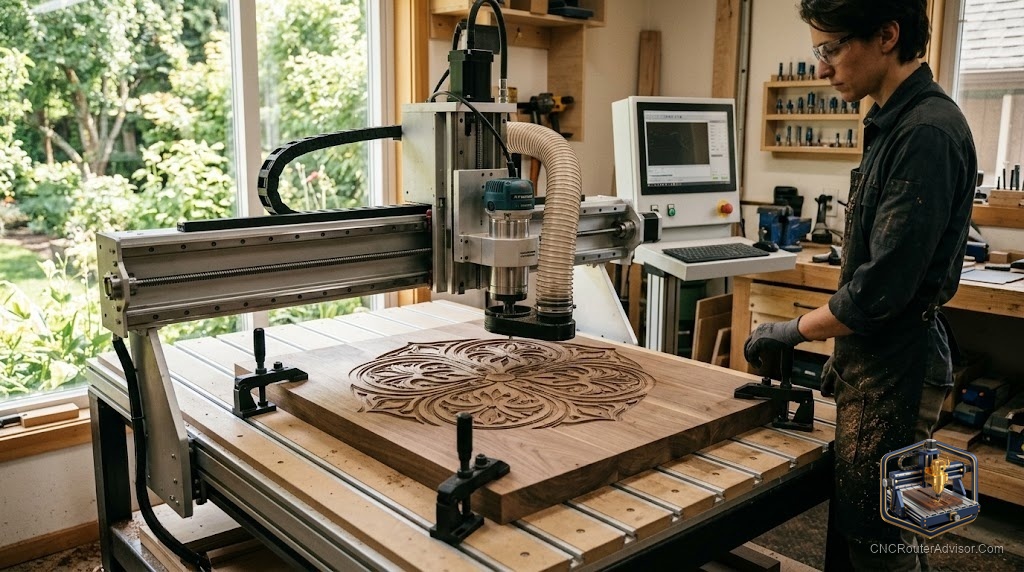
Woodworking is where a CNC router feels less like a gadget and more like a craftsman’s partner. It cuts joinery that fits, carves detail your hands could not, and reproduces a design faithfully across a dozen parts. But wood is a living, variable material, and the router that makes flawless parts for one woodworker makes fuzzy, burnt ones for another. The difference is technique, and this guide is about the technique that produces furniture-grade results.
Whether you are choosing a machine for woodworking or trying to get more from the one you own, this is where clean cuts actually come from: the right bit, the right speeds, solid workholding, and respect for the wood.
What a woodworking CNC router is
A woodworking CNC router is a Computer Numerical Control machine set up to cut wood and wood-based sheet goods by moving a spinning cutter across the X, Y, and Z axes according to G-code. For woodworking specifically, three things matter most: enough rigidity to cut hardwood cleanly, a work area matched to your parts, and enough spindle power to remove material without burning or stalling.
Wood is not one material but many, and a woodworking router has to handle that range. Plywood and MDF behave differently from solid oak, maple, or walnut, and softwoods like pine and cedar differ again. The machine sets the ceiling on what is possible, but your choice of bit, feeds and speeds, and workholding decides whether you reach that ceiling or fall short of it. The rest of this guide focuses on reaching it.
The short answer
For woodworking, choose a rigid machine with a work area suited to your parts, then master a few bits and settings. Use a compression bit for clean plywood edges, upcut spirals for general solid-wood cutting, and V and ball-nose bits for detail and carving. Run feeds and speeds that cut rather than rub, take manageable passes, and hold the work solidly.
A rigid mid-size machine covers most home woodworking well, and the Genmitsu 4040-PRO MAX with its linear rails and stronger spindle is a strong value entry into serious wood work: Check on Amazon . For larger production woodworking, premium brands like Carbide 3D, Onefinity, and Sienci step up in rigidity and support.
Bits that make woodworking clean
| Bit | Woodworking job |
| Compression | Clean top and bottom edges on plywood |
| Upcut spiral | General cutting and chip clearing in solid wood |
| Downcut spiral | Clean top surface on visible parts |
| V-bit | Lettering, signs, decorative V-carving |
| Ball-nose | 3D relief and smooth curved carving |
| Surfacing bit | Flattening slabs and wasteboards |
Keep these sharp. A dull bit is the most common cause of burning in hardwood and fuzzing in softwood, and no machine setting compensates for a worn edge.
Feeds, speeds, and the grain
Good woodworking cuts come from a real chip load, where each edge takes a genuine bite and produces chips rather than dust. Cut too slowly and the bit rubs, which burns hardwood and dulls the tool. On solid wood, grain direction also matters, since cutting against the grain invites tear-out. A skilled setup chooses cut direction and pass depth with the grain in mind, takes manageable passes rather than one deep aggressive cut, and lets the machine cut steadily. Listen for a clean, consistent sound, and treat squealing or chatter as a signal to adjust feed, speed, or depth.
Workholding and dust for wood
Wood parts must not move mid-cut, so hold them well. Screws into the wasteboard lock down sheet goods, clamps secure solid stock, and tape suits thin flat parts. Whatever you choose, keep the hold-down clear of the toolpath and firm enough that nothing shifts. Woodworking also produces enormous fine dust, and MDF and plywood are the worst offenders, so a dust shoe connected to a shop vac or dust collector plus eye and respiratory protection are essential. Set up dust control before your first serious project, not after.
Materials and their quirks
Plywood cuts cleanly with a compression bit but can chip with the wrong one. MDF carves crisp detail but dulls bits quickly and makes the finest, most unpleasant dust. Hardwoods like oak, maple, and walnut cut beautifully but burn if the bit is dull or the feed too slow. Softwoods like pine and cedar are easy but fuzz, rewarding sharp bits and a light finishing pass. Knowing each material’s quirk lets you pick the bit and pass depth that suit it, which is the heart of furniture-grade results.
Who should skip a woodworking router
Skip a large woodworking router if you only make occasional small pieces and already own good hand tools, since a compact machine or even a service may suit you better. Skip the lightest machines if you want clean hardwood joinery, because a flexible frame will fight deep cuts, and a rigid machine is worth the investment. And if you cannot commit to dust collection, hold off until you can, because furniture-scale wood dust is a genuine health concern. Buy the machine your projects and your shop can truly support.
The verdict
A woodworking CNC router rewards rigidity and technique in equal measure. Choose a stiff machine sized to your parts, master a handful of bits, run feeds and speeds that cut rather than rub, respect the grain, and hold the work solidly with real dust control. A rigid mid-size machine is a genuine entry into furniture-grade woodworking, while production and large-panel work call for premium or large-format machines. Buy for stiffness, learn the feel of a clean cut, and a CNC router becomes the most productive tool in your wood shop.
Wood forgives less than plastic and rewards skill more. Bring both the right machine and the right technique, and the results will show it.
Frequently asked questions
What makes a good woodworking CNC router? Rigidity to cut hardwood cleanly, a work area matched to your parts, and enough spindle power to remove material without burning. Stiffness matters most.
Which bit is best for woodworking? A compression bit for clean plywood edges, upcut spirals for general solid-wood cutting, and V or ball-nose bits for detail and carving. Keep all of them sharp.
Why does my hardwood burn when cutting? Usually a dull bit or too slow a feed, which makes the bit rub instead of cut. Sharpen or replace the bit and increase the feed to a proper chip load.
How do I avoid tear-out in solid wood? Cut with the grain in mind, choose an appropriate bit, and take manageable passes. Cutting against the grain and aggressive deep passes invite tear-out.
Do I need dust collection for woodworking? Yes. Cutting wood, especially MDF and plywood, produces large amounts of fine, unhealthy dust. Dust collection and respiratory protection are essential.
Can a mid-size machine do real furniture work? A rigid mid-size machine handles cabinet doors, boxes, and smaller furniture parts well, and can tile larger pieces. Full-sheet cabinet work suits a large-format machine.
References
- CNCRouterInfo, how to choose a CNC router: https://cncrouterinfo.com/guides/how-to-choose-a-cnc-router/
- Bubble Relief, CNC router projects for beginners: https://bubblerelief.com/cnc-router-projects-for-beginners/
- Amana Tool CNC router bits and technical data: https://www.amanatool.com