
Hobby CNC Wood Router: Tooling, Speeds, and Getting a Clean Finish
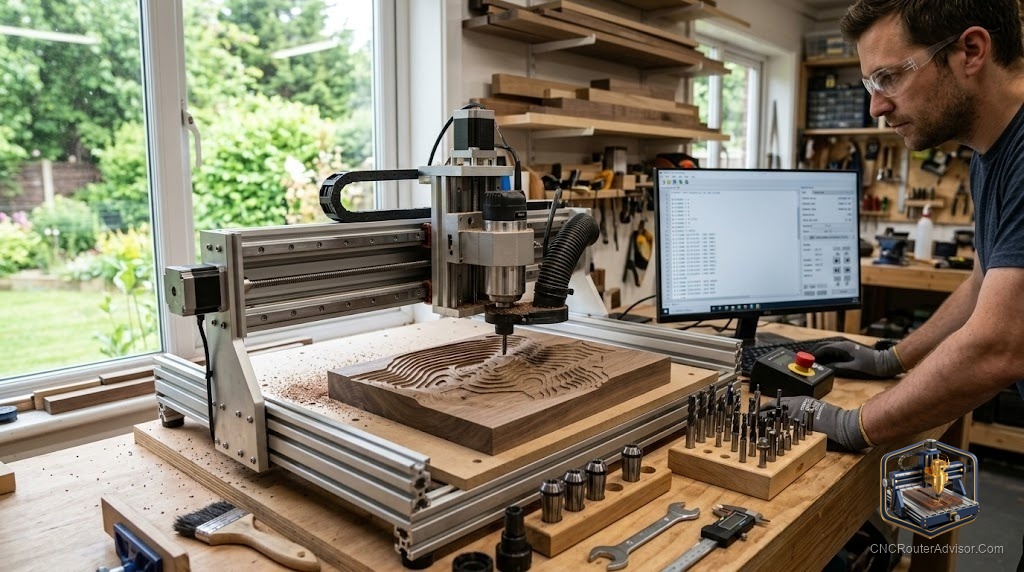
The gap between a hobby CNC wood router that delights you and one that frustrates you is rarely the machine itself. It is what you do with it. I have watched the same model produce gorgeous signs in one shop and fuzzy, burnt disappointments in another, and the difference came down to bits, feeds and speeds, workholding, and dust control. Get those four right and a modest hobby machine punches far above its price.
This guide is about the technique that makes a hobby wood router sing, not just the specs on the box. If you already own a machine or are about to, this is where the good results actually come from.
What a hobby CNC wood router is
A hobby CNC wood router is a compact, affordable Computer Numerical Control machine that carves wood by moving a spinning cutter across the X, Y, and Z axes according to G-code. It is sized and priced for home makers rather than production shops, which means a smaller work area, a lighter frame, and often a trim router instead of an industrial spindle.
That hobby positioning shapes how you should run it. A lighter frame means you cut with shallower, smarter passes rather than brute force. A trim router means noise and a fixed speed range to work around. None of this limits the beauty of what you can make. It just means your technique, not the machine’s horsepower, is what carries the result. The good news is that technique is learnable, and this guide walks through the parts that matter most.
The short answer
To get clean results from a hobby wood router, match the bit to the job, set feeds and speeds that cut rather than rub, hold the work rock-solid, and clear chips as you go. Use a single-flute or upcut bit for chip evacuation in most wood, take shallow passes on a light frame, and never let the bit dwell in one place. A rigid entry machine such as the Genmitsu 4040-PRO gives you room to practice all of this: Check on Amazon
The single biggest finish improvement for plywood is a compression bit, which cuts clean on both faces. For general wood carving, a good set of quality bits matters more than almost any machine upgrade.
Choosing the right bit for the wood
Bit choice is where hobby results are won or lost. Each type has a job.
Upcut and single-flute bits pull chips up and out of the cut, which keeps the cut cool and clean in most solid wood and is the safest default for a hobby machine.
Compression bits cut downward on top and upward on the bottom, leaving clean edges on both faces of plywood, which is the single best upgrade for cabinet and sheet-good parts.
V-bits and ball-nose bits handle lettering, decorative carving, and 3D relief work, the projects that make people fall in love with the hobby.
Straight bits suit simple pockets and slots. A modest set of quality bits, kept sharp, outperforms a large drawer of worn ones.
Feeds, speeds, and the finish they produce
The most common hobby mistake is cutting too timidly. When the bit moves too slowly for its spin speed, it rubs instead of cutting, which burns hardwood and dulls the tool. Aim for a real chip load, meaning each edge takes a genuine bite and produces chips rather than dust. On a light hobby frame, keep the depth of cut shallow and let multiple passes do the work instead of one deep aggressive pass that makes the gantry flex and chatter. Listen to the machine. A clean cut sounds steady, while rubbing squeals and chatter rattles.
Workholding and dust on a hobby machine
| Need | Simple hobby solution |
| Hold sheet goods flat | Screws into the wasteboard |
| Hold small parts | Low-profile clamps or tape |
| Capture chips | Dust shoe plus a shop vac |
| Set Z accurately | An inexpensive touch probe |
| Protect yourself | Eye and respiratory protection |
A part that shifts mid-cut ruins the part and often the bit, so clamp harder than feels necessary. And even a small wood router throws a surprising amount of fine dust, so a dust shoe and shop vac plus eye and lung protection are essential from day one, not afterthoughts.
Materials a hobby router handles well
Hobby wood routers happily cut plywood, MDF, softwoods like pine and cedar, and hardwoods like oak, maple, poplar, and walnut, along with plastics like acrylic, HDPE, and Delrin. Each behaves differently. MDF carves crisp detail but makes the worst dust. Hardwood cuts beautifully but punishes dull bits with burns. Softwood is easy but can fuzz. Knowing your material lets you pick the bit and pass depth that suit it, which is the heart of a clean finish.
Who should skip a hobby machine
Skip a hobby wood router if you need to cut full sheets regularly, because constant tiling on a small bed will wear you down and a large-format machine is the right tool. Skip the lightest models if you already know you want aggressive hardwood or metal work, since a light frame will fight you and a rigid mid-size or metal-capable machine is worth the stretch. And if you cannot set up dust control and hearing protection, resolve that first, because a hobby router in an untreated room quickly becomes unpleasant.
The verdict
A hobby CNC wood router rewards technique more than horsepower. Choose the right bit for the wood, run feeds and speeds that cut instead of rub, hold the work solidly, clear chips constantly, and protect yourself from dust, and a modest machine produces work that looks anything but modest. Buy a rigid entry machine, invest in a small set of quality bits, and spend your first weeks learning the feel of a good cut. That skill, not a bigger machine, is what turns a hobby router into a tool you are proud of.
The machine only spins the bit. You are the one who makes it beautiful.
Frequently asked questions
What bit should I use on a hobby wood router? An upcut or single-flute bit is the safe default for most solid wood because it clears chips well. Use a compression bit for clean plywood edges and V or ball-nose bits for carving.
Why is my hobby router burning the wood? Usually the feed rate is too slow for the spin speed, so the bit rubs instead of cutting. Increase the feed, keep the bit sharp, and take shallower passes.
How deep can a hobby machine cut per pass? Less than a heavy machine. Take shallow passes and let multiple passes reach full depth, which avoids the flex and chatter a light frame produces under deep cuts.
What wood can a hobby CNC router cut? Plywood, MDF, softwoods like pine and cedar, and hardwoods like oak, maple, and walnut, plus plastics like acrylic and HDPE. Each needs a suitable bit and pass depth.
Do I need dust collection for a hobby machine? Yes. Even small wood routers produce fine, unhealthy dust. A dust shoe with a shop vac plus eye and respiratory protection is essential.
What is the best upgrade for cleaner cuts? Quality bits kept sharp, and a compression bit for plywood. Good tooling improves finish more than most machine upgrades on a hobby router.
References
- CNCRouterInfo, how to choose a CNC router: https://cncrouterinfo.com/guides/how-to-choose-a-cnc-router/
- Bubble Relief, CNC router projects for beginners: https://bubblerelief.com/cnc-router-projects-for-beginners/
- Amana Tool CNC router bits and technical data: https://www.amanatool.com